
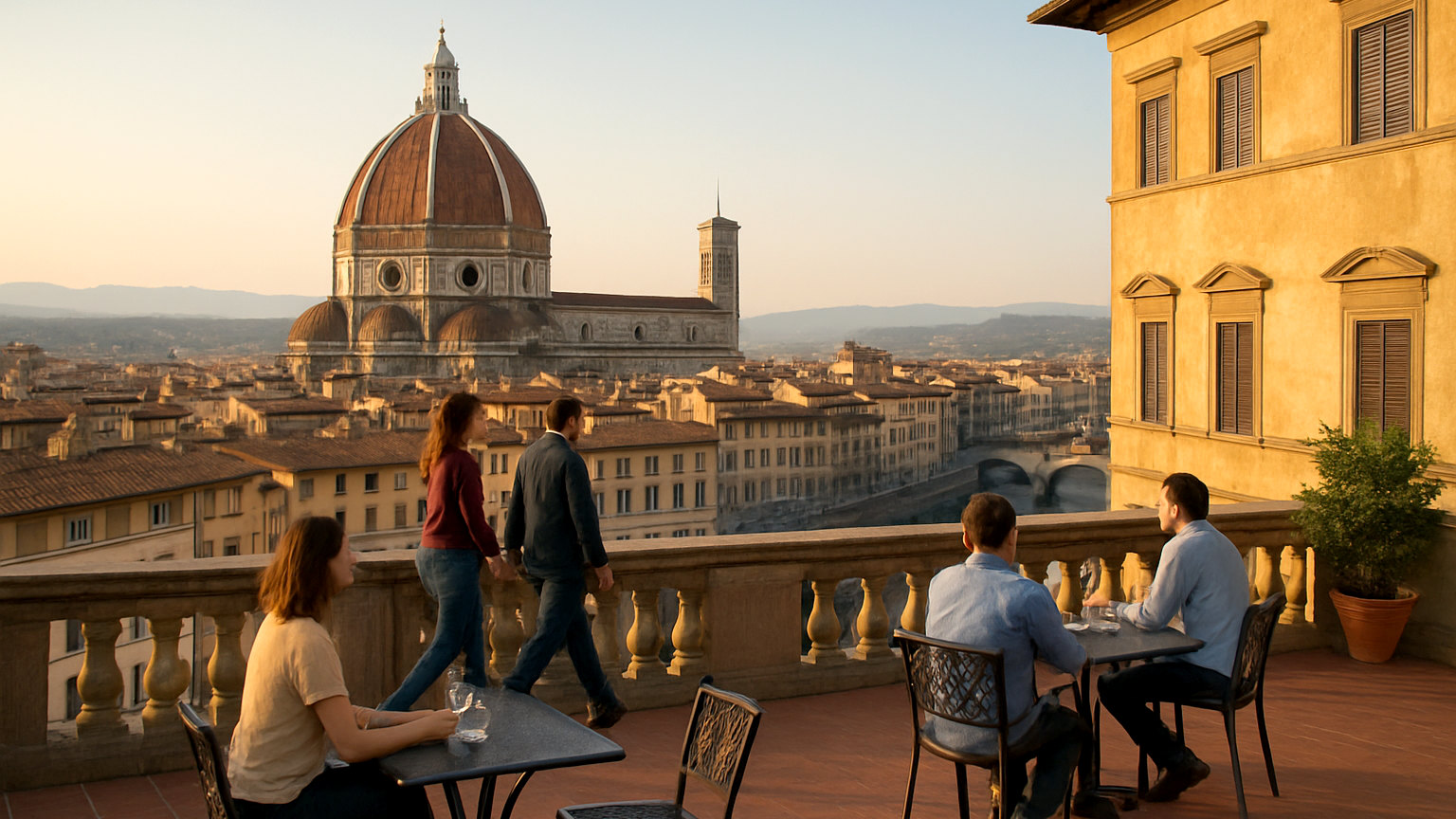
Florence holds an extraordinary concentration of Renaissance art and architecture inside an area you can cross on foot in twenty minutes. That density makes it one of the easiest European cities to see properly in a short stay, provided the two museums that need advance booking are dealt with before you arrive.
How long do you need?
Three nights. Two full days covers the Duomo complex, the Uffizi and the Accademia with time left over. A third day allows the Oltrarno, a Tuscan hill town or simply a slower pace, which Florence rewards.
What are the essential sights?
The Duomo complex, meaning the cathedral, Brunelleschi dome, Giotto bell tower and the baptistery, sold on a combined ticket. The Uffizi for Botticelli and the early Renaissance. The Accademia for Michelangelo David, which takes twenty minutes and is worth them. The Ponte Vecchio. The Bargello for sculpture, which is excellent and almost empty compared with the other two.
What should you book ahead?
The Uffizi and the Accademia, both of which use timed entry and both of which have long queues for anyone without one. The dome climb requires a separate timed slot and sells out days ahead in season. These three bookings are the whole of the advance planning Florence requires.
Where are the best views?
Piazzale Michelangelo, on the hill south of the river, which gives the classic panorama and is a twenty-minute walk or a short bus ride. The Bardini Garden below it is quieter with a similar view. The dome climb and the bell tower both look out over the city, and the bell tower has the better view because it includes the dome.
Where should you stay?
The Oltrarno, south of the river, for artisan workshops, better restaurant prices and a genuine neighbourhood five minutes from the centre. Santa Croce for central and lively. San Marco for quiet and proximity to the Accademia. The streets immediately around the Duomo are the most expensive and the noisiest.
Where should you eat?
The Oltrarno and Sant Ambrogio, away from the Duomo. Florentine cooking is simple and meat-led: bistecca alla fiorentina is a large rare T-bone sold by weight and intended to be shared, ribollita is the bread and vegetable soup, and lampredotto is the tripe sandwich sold from street carts and is better than it sounds.
When is the best time to visit?
April, May, late September and October. July and August are extremely hot, the city sits in a valley that traps the heat, and the queues are at their worst. Winter is cool, quiet and the museums are at their most civilised.
What is worth a day trip?
Siena, ninety minutes by bus, which is the best single day out. Pisa is an hour by train and is a two-hour stop rather than a day. San Gimignano for the towers. Lucca for the walled centre and the bicycle ride around the ramparts.
What do people get wrong?
Booking the Uffizi and the Accademia on the same day, which is a great deal of standing. The second is ordering bistecca alla fiorentina for one person, since it is priced per kilo and arrives accordingly.
How much should you budget?
Florence is mid-priced for Italy, with accommodation the main variable and the Oltrarno noticeably cheaper than the streets around the Duomo. The museum tickets add up, since the Uffizi, the Accademia and the Duomo complex together are a significant sum, so decide which matter rather than buying all three by reflex.
How do you get around?
Entirely on foot. The historic centre is small, largely pedestrianised and ringed by a restricted traffic zone with automatic cameras, so a hire car is a liability rather than a help. Buses cover the hills to Piazzale Michelangelo and Fiesole.
For the next step, see Madrid City Guide: Art, Tapas and Neighbourhoods, or browse the full Destinations section.
The short answer
Three nights in the Oltrarno. Book the Uffizi, the Accademia and the dome climb before you travel, split the two galleries across different days, walk up to Piazzale Michelangelo at sunset, and eat south of the river.


