
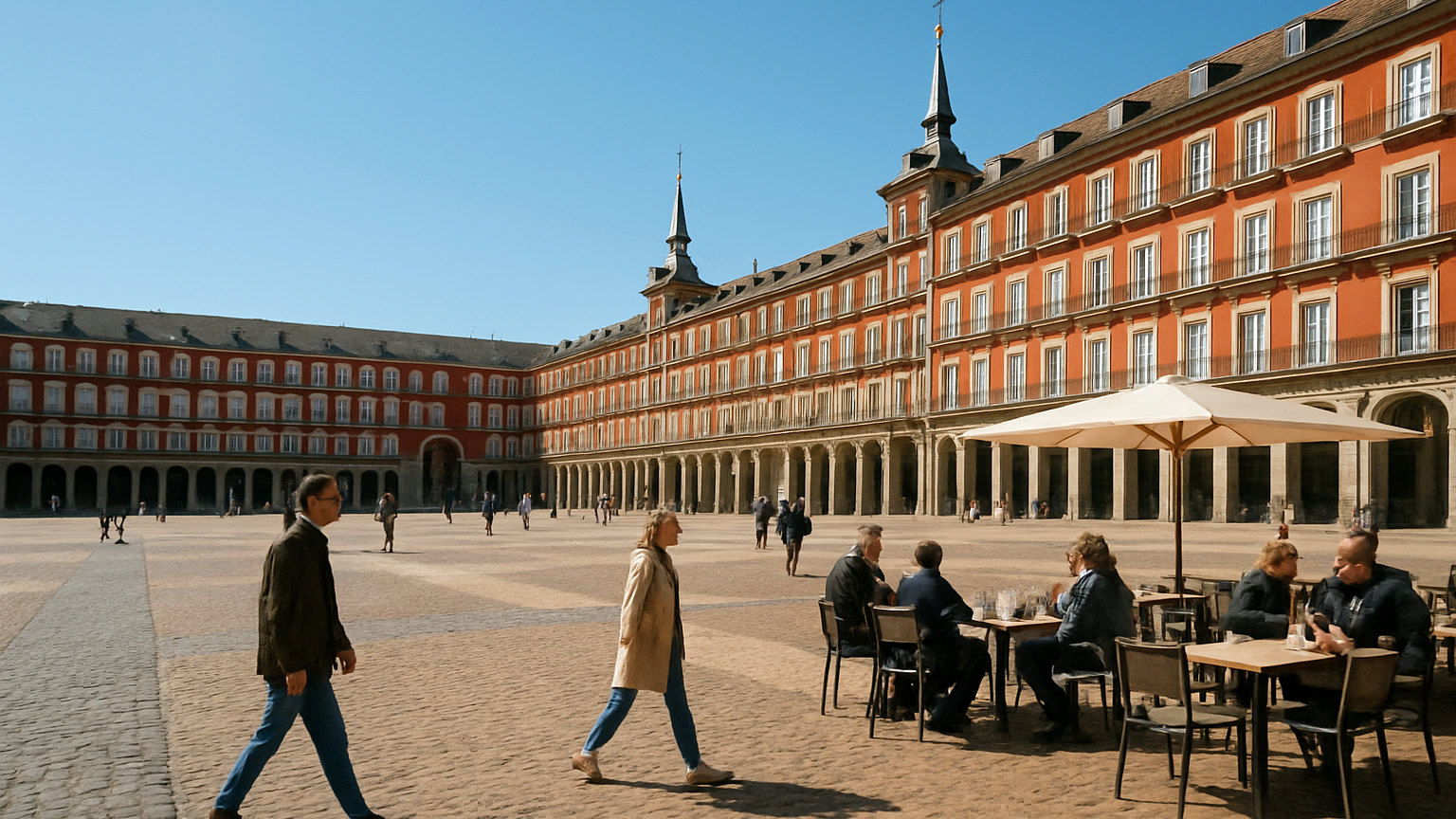
Madrid is the European capital most often skipped in favour of Barcelona, and the comparison is misleading. It has no beach and no single monument that appears on a postcard, and it has the finest art collection in Spain, the best eating in the country and a street life that runs later than anywhere else in Europe.
How long do you need?
Three nights, four with a day trip. Madrid is a city to spend evenings in rather than to tick off, and a short stay gives you the museums without the part that makes people want to return.
What are the essential sights?
The Prado, which holds Velazquez, Goya and Bosch and is among the two or three greatest galleries in the world. The Reina Sofia for twentieth-century Spanish art including Guernica. The Thyssen-Bornemisza, which fills the gaps between the other two. The three sit within ten minutes of each other on the Paseo del Prado. Beyond the art, the Royal Palace, the Retiro park and the Plaza Mayor.
Are the museums free at any time?
Yes, and it is worth planning around. The Prado is free in the last two hours of the day, the Reina Sofia for the last two hours on most evenings and all day Sunday afternoon, and the Thyssen has a free window on Mondays. The queues at those times are long, so arriving thirty minutes early matters.
Where should you stay?
La Latina for tapas and the Sunday Rastro market. Malasana for bars, vintage shops and a younger feel. Chueca for nightlife and restaurants. Salamanca for a smart, quiet, expensive option. Sol is the most central and the most touristed, and is noisy at all hours.
How does eating work?
Later than visitors expect, and this is the single thing that ruins most first trips. Lunch runs from two to four and dinner rarely starts before half past nine. Tapas are usually ordered and paid for rather than given free, unlike in Granada. La Latina on a Sunday afternoon, moving between bars along Cava Baja, is the classic Madrid experience.
How do you get around?
The metro is one of the best in Europe, cheap, clean and extensive, with a flat fare in the central zone. The centre is walkable and the museums are all within a short stroll of each other. The airport is connected directly by metro with a small supplement.
When is the best time to visit?
April to June and September to November. July and August are genuinely punishing, with temperatures regularly above thirty-five degrees and much of the city on holiday. Winter is cold and dry and the city is at its most comfortable for walking and eating.
What is worth a day trip?
Toledo, thirty minutes by fast train, a walled hilltop city that was the medieval capital and holds El Greco paintings in the buildings they were painted for. Segovia for the Roman aqueduct and the castle. Both are among the best day trips in Europe.
What do people get wrong?
Arriving at a restaurant at seven expecting dinner, and concluding the food is poor when the kitchen has not properly started. The second is treating Madrid as a two-night stop before Barcelona, which reverses the order of merit for most travellers who try both.
What should you book ahead?
Timed entry for the Prado and the Reina Sofia in peak months, and the Royal Palace, which closes without much notice for state functions. The free evening slots cannot be booked and work on a queue. Flamenco in a small venue and any well-known restaurant should be reserved, since walk-ins are difficult after nine. Toledo and Segovia trains should also be bought in advance, as the cheap fares sell out first.
Anyone weighing this up will also want Dublin City Guide: What to See in Two Days, along with the rest of the Destinations section.
The short answer
Four nights in La Latina or Malasana. The Prado and the Reina Sofia on separate days, tapas along Cava Baja on a Sunday, dinner after nine, and a day in Toledo.


