
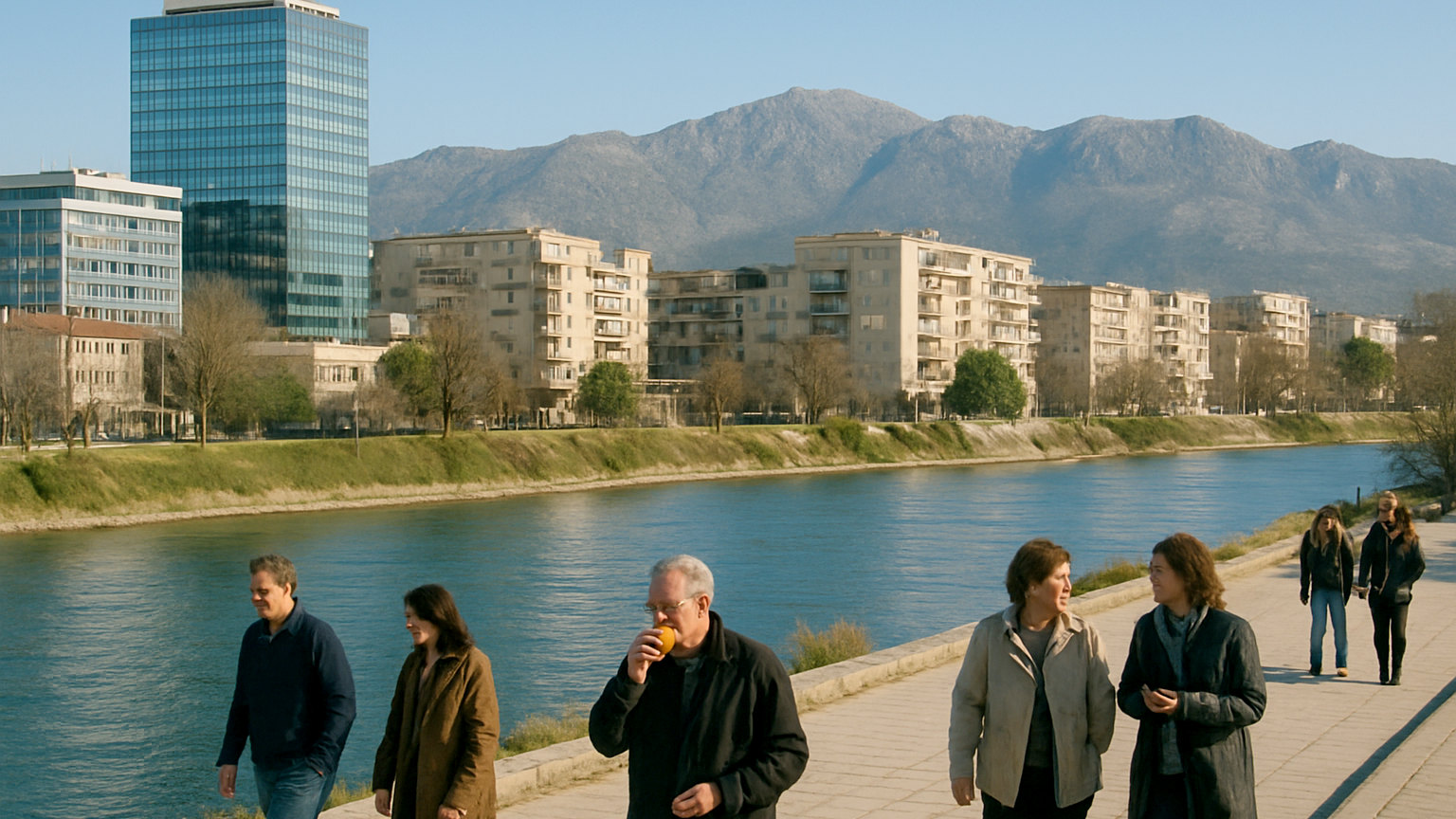
Podgorica is the capital of Montenegro and the part of the country almost nobody travels to see. It was largely destroyed in the Second World War and rebuilt as a functional modern city, and it is best understood as a base rather than a destination.
Is it worth a stay?
For a night, as an arrival or departure point, or as a base for the interior. For a holiday in itself, no. Montenegro attractions are the coast and the mountains, and the capital has neither.
What is there to see?
Stara Varos, the small surviving Ottoman quarter with a clock tower and a mosque. The Millennium Bridge over the Moraca. The Moraca river gorge within the city, which is swimmable in summer. A couple of good museums and a pleasant park.
All of it takes half a day at most.
Why would you stay there?
Flights, prices and position. The airport is fifteen minutes from the centre, accommodation costs less than on the coast, and the city sits within reach of both the mountains and the sea, which no coastal town does.
What is nearby?
Lake Skadar, the largest lake in the Balkans, half an hour away with boat trips and birdlife. Ostrog monastery, built into a cliff face, around ninety minutes. Cetinje, the old royal capital, forty minutes.
How far is the coast?
Kotor is around ninety minutes by road, Budva a little over an hour, and Sveti Stefan slightly further. A day trip to the Bay of Kotor from Podgorica is entirely feasible, though staying on the coast is better if that is why you came.
What about the mountains?
Durmitor national park and the Tara canyon are two to three hours north on a spectacular road. The train north to Bijelo Polje and on towards Belgrade crosses high viaducts and is among the most scenic rail journeys in Europe.
How expensive is it?
Considerably cheaper than the Montenegrin coast, which is priced for summer tourism. Montenegro uses the euro despite being outside the eurozone.
When should you go?
Spring and autumn. Podgorica sits in a basin and is one of the hottest cities in Europe in July and August, regularly exceeding forty degrees, which makes summer sightseeing unpleasant.
Do you need a car?
For the interior, yes. Buses serve the coast and the main towns adequately, and Skadar, Ostrog and Durmitor are all considerably easier with a car.
Is it safe?
Yes, with ordinary precautions. It is a small, quiet city and visitors attract no particular attention.
What about the food?
Balkan grilled meat, Adriatic fish brought inland, and strong local wine from the Vranac grape, all considerably cheaper than on the coast. The Montenegrin interior also produces a good hard cheese and smoked ham from the Njegusi area.
Is the airport useful?
Very, and it is the main practical reason to be there. Podgorica airport takes flights from several European cities and is a short drive from the centre, frequently at lower fares than Tivat on the coast.
How does it compare with the coast?
Not favourably, and that is the point. Kotor, Perast and Budva are why people come to Montenegro, and Podgorica is the practical city where the country actually works. Treating it as infrastructure rather than as a rival to the coast is the right expectation.
Is English spoken?
Widely among younger people and in anything tourism-facing. Montenegrin is closely related to Serbian and Croatian, written in both alphabets.
How long has it been the capital?
Since nineteen forty-six, when it was named Titograd and rebuilt after heavy wartime bombing destroyed most of the older city. That history explains why so little survives from before, and why the layout is modern rather than medieval.
What Is There to See in Chisinau? goes into more detail on a closely related question, and the rest of our Destinations section covers the wider subject.
The short answer
Worth a night as a base rather than a destination. The city itself takes half a day, and the reasons to be there are Lake Skadar, Ostrog, Durmitor and cheap access to the coast. Avoid July and August, when it is among the hottest cities in Europe.


