
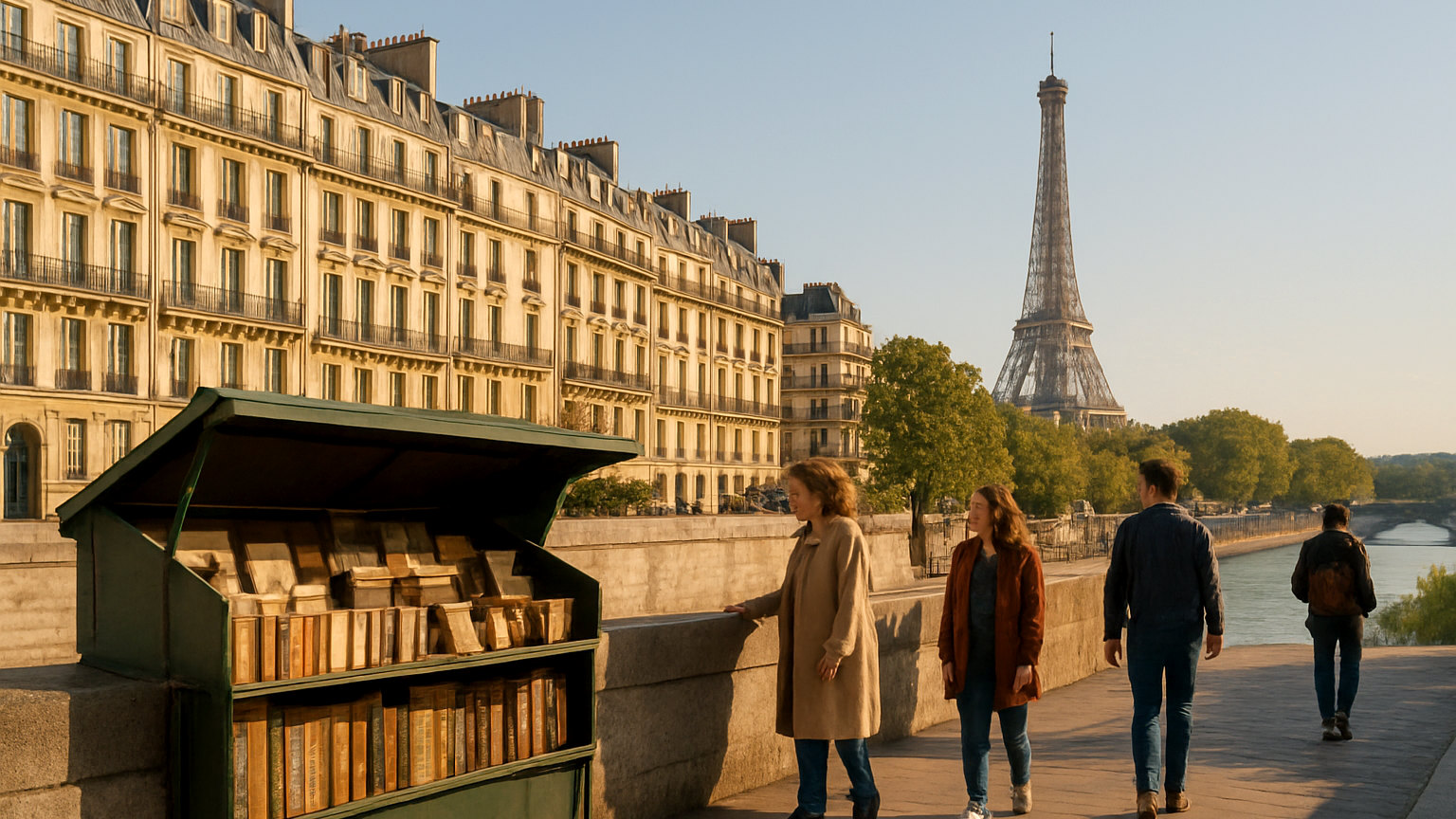
Paris is the most visited city in Europe and the one most often experienced as a checklist. The version people remember is almost never the one built around ticking off monuments; it is the one where they picked three or four things and walked between them. The city is unusually well suited to that, because the walking is the point.
How long do you need?
Three nights minimum, four to include Versailles or a slower pace. Paris is large but the central arrondissements are compact, and almost everything of interest sits within a walkable core along the Seine.
What are the essential sights?
The Louvre, which is too large to do properly and should be treated as a two-hour visit to specific rooms rather than an attempt at the whole thing. The Musee d Orsay, which is smaller, better organised and holds the Impressionists, and which many visitors prefer. Notre-Dame, reopened after the fire. The Eiffel Tower, Sainte-Chapelle for the stained glass, and Montmartre for the hill and the view rather than the square at the top.
What should you book ahead?
The Eiffel Tower, which sells out weeks in advance for the summit. The Louvre and Orsay timed slots. Sainte-Chapelle. Versailles, where the timed palace entry matters and the gardens do not. Catacombs tickets, which go quickly. Almost nothing else needs it.
Which arrondissement should you stay in?
The Marais in the 3rd and 4th for the best combination of central location, character and restaurants. Saint-Germain in the 6th for classic Paris at a price. The 11th around Oberkampf for lower prices and a younger, more local feel. The 5th near the Pantheon for quiet and walkability. Avoid the immediate area around the Gare du Nord and the streets directly beneath the Eiffel Tower.
Where should you eat?
Anywhere with a short handwritten menu that changes, and nowhere with a laminated one in six languages. The set lunch menu is the best value meal in the city and is often half the price of the same kitchen at dinner. Bakeries are for breakfast, and the queue outside one at eight in the morning is a reliable quality signal.
How do you get around?
The metro, which is dense, frequent and cheap, with carnet-style ticket bundles or a travel pass working out far better than single fares. Walking covers more than people expect: the Louvre to Notre-Dame is twenty minutes. The Batobus river service is slower than the metro and considerably more pleasant.
When is the best time to visit?
April to June and September to October. August is the month locals leave, and a surprising number of restaurants and small shops close for several weeks. Winter is cold and grey and the museums are at their emptiest, which for some people is the whole argument.
What do people get wrong?
Not saying bonjour before speaking, which accounts for a large share of the perceived rudeness visitors report, and is genuinely expected on entering any shop. The second is attempting the Louvre, Orsay and Versailles in two days, which produces exhaustion rather than memory.
How much should you budget?
Accommodation is the largest line and varies enormously by arrondissement, with the 11th and 20th running well below the 6th and 7th for a similar journey time. Museums are moderate and several are free on the first Sunday of the month. The genuine saving is eating the set lunch and treating dinner as the lighter meal, which reverses the usual British habit and halves the food budget.
What is worth a day trip?
Versailles, which needs most of a day and a booked palace slot. Giverny for the Monet gardens between April and October. Reims for champagne houses, forty-five minutes by fast train.
Barcelona in Three Days: What to See and Skip goes into more detail on a closely related question, and the rest of our Destinations section covers the wider subject.
The short answer
Four nights in the Marais or the 11th. Book the Eiffel Tower and one big museum, walk the river between them, eat the set lunch, and greet people before you ask them anything.


