
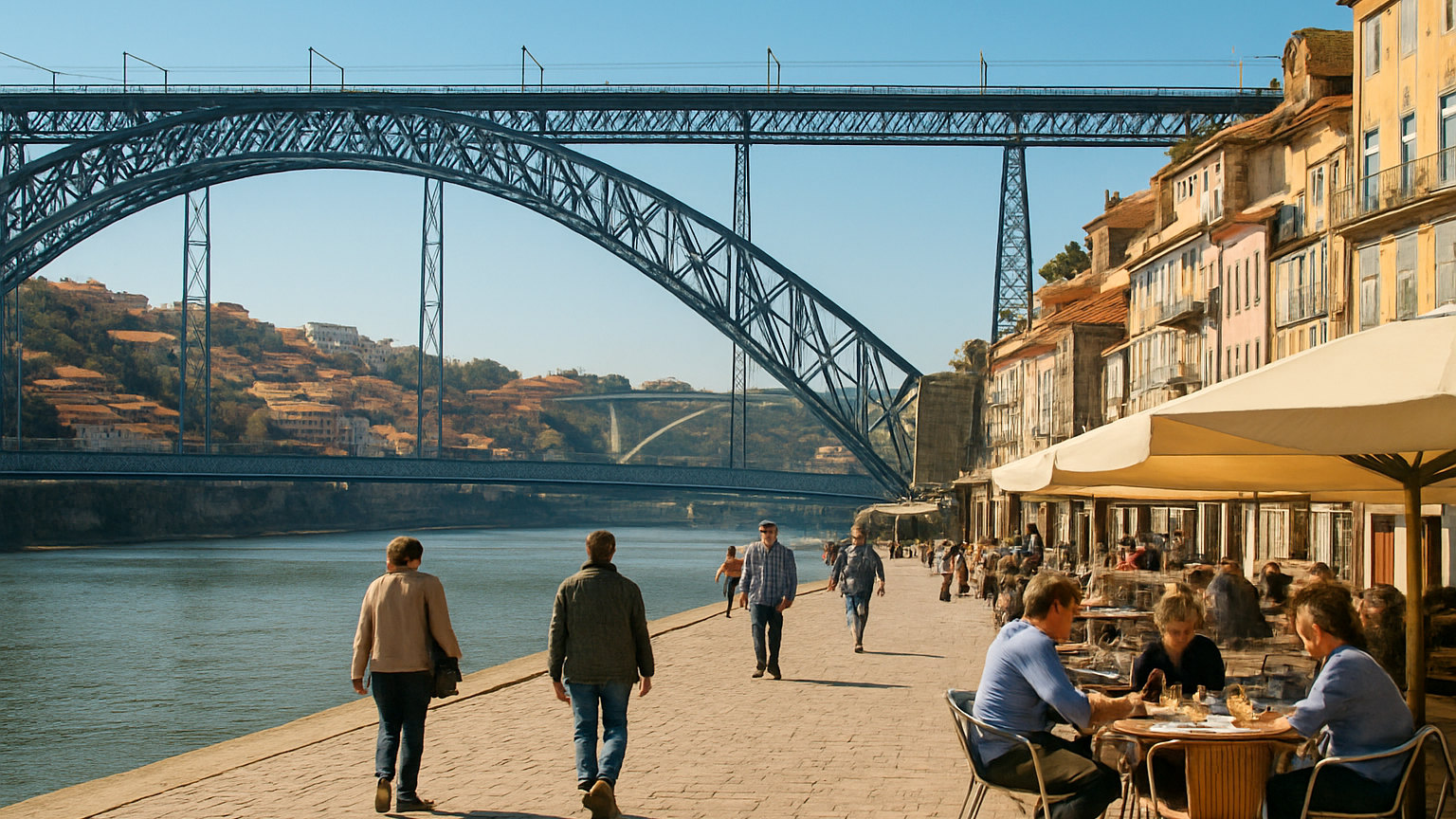
Porto is Portugal second city and in some ways its more atmospheric one: a dense tumble of tiled buildings dropping down a gorge to the Douro, with the port lodges facing it from the opposite bank. It is smaller than Lisbon and can be covered properly in three nights, which makes it one of the best value short breaks in western Europe.
How long do you need?
Three nights for the city, four or five to add the Douro valley, which is the strongest reason to extend. Porto is compact and steep, and two full days covers the centre without rushing.
What are the essential sights?
The Ribeira, the riverside district of narrow tiled houses that is UNESCO listed. The Dom Luis I bridge, whose upper deck carries the metro and a walkway with the best view in the city. Sao Bento station, whose entrance hall is covered in twenty thousand blue azulejo tiles. The Clerigos tower for the climb. The Bolsa Palace and the church of Sao Francisco with its gilded interior.
Should you visit the port lodges?
Yes, and they are across the river in Vila Nova de Gaia rather than in Porto itself, reached by walking the lower deck of the bridge. Taylors, Grahams and Sandeman run tours with tastings, and the smaller houses are quieter and often better. A tasting flight explains the difference between ruby, tawny and vintage far better than any description.
Is Livraria Lello worth the queue?
The bookshop with the red staircase now charges for entry, redeemable against a book, and the queue is long and the interior packed. It is genuinely beautiful and it is a small shop full of people photographing it. Go at opening or skip it; the Clerigos tower next door is a better use of the same hour.
Where should you stay?
Near Aliados or Bolhao for central, flat and walkable. The Ribeira for the setting, accepting the climbs and the noise. Cedofeita and Miguel Bombarda for a quieter, more local feel with galleries and independent shops. Gaia across the river for views back at the city.
Where should you eat?
Away from the Ribeira waterfront, where prices are set for the view. The francesinha is the local dish, a layered meat sandwich under melted cheese and beer sauce, and it is enormous. Bolhao market and the surrounding streets are the best area for traditional food at normal prices.
How do you get around?
On foot, with the caveat that Porto is built on a gorge and the climbs are steep. The metro is clean and reaches the airport and the beaches at Matosinhos. The Gaia cable car saves the climb back up from the port lodges. Tram 1 along the river to Foz is slow and pleasant.
When is the best time to visit?
May, June and September, with September and early October best if the Douro harvest interests you. Porto is wetter than Lisbon in winter and mild rather than cold. The Sao Joao festival on the night of 23 June is one of the largest street parties in Europe.
What is worth a day trip?
The Douro valley, reached by a slow train along the river that is one of the best rail journeys in Europe, or by boat. Guimaraes and Braga inland for history. Aveiro for canals and painted boats.
How much should you budget?
Porto is the best value major city in western Europe for eating and drinking, and noticeably cheaper than Lisbon for accommodation. Port tastings are inexpensive, and the set lunch in a neighbourhood restaurant costs a fraction of dinner on the Ribeira waterfront for better cooking. Museum entry is low and several of the best viewpoints, including both decks of the bridge, cost nothing at all.
Seville City Guide: Alcazar, Cathedral and Barrios goes into more detail on a closely related question, and the rest of our Destinations section covers the wider subject.
The short answer
Three or four nights near Aliados. Walk the upper deck of the Dom Luis bridge at sunset, take a tasting at a smaller port lodge, eat away from the river, and give the Douro a full day by train.


