
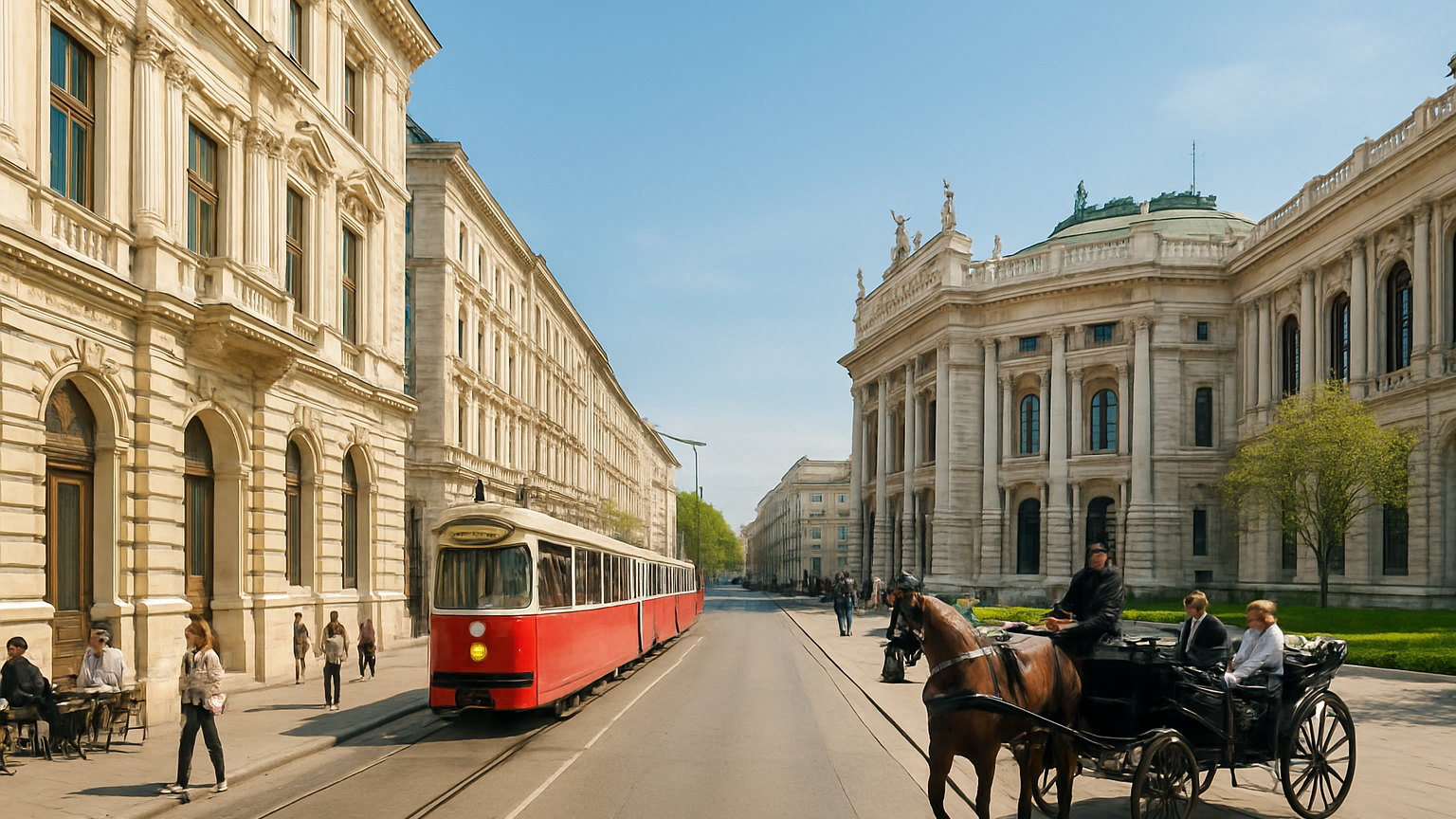
Vienna was the capital of an empire of fifty million people and still looks like it. The scale of the public buildings, the width of the Ringstrasse and the quality of the art collections all belong to a much larger city than the one that exists now, which is a large part of the appeal.
How long do you need?
Three nights, four if the museums matter. Vienna rewards a slow pace more than most cities, because sitting in a coffee house for two hours is not wasting time here; it is the intended use.
What are the essential sights?
Schonbrunn Palace, the Habsburg summer residence, with gardens that are free and a palace tour that is not. The Hofburg, the winter palace, containing the imperial apartments and the Sisi Museum. The Kunsthistorisches Museum, which holds one of the great art collections in Europe including the largest group of Bruegel paintings anywhere. The Belvedere for Klimt, including The Kiss. St Stephens Cathedral in the centre.
What are the coffee houses?
A UNESCO-listed tradition and a genuine institution. The convention is that you order one coffee, are brought a glass of water with it, and may then sit for as long as you like reading the newspapers provided. Cafe Central and Cafe Sacher are the famous ones and have the queues to match. Cafe Sperl, Cafe Hawelka and Cafe Pruckel are better and quieter.
Can you see a concert cheaply?
Yes, and this is the best-value thing in the city. The State Opera sells standing tickets for a few euros on the day, queued for shortly before the performance, and the Musikverein does something similar. Ignore the people in period costume selling concert tickets on the street, which are aimed at tourists and are not the real thing.
Where should you stay?
The 1st district inside the Ring for the grandest and most expensive option. The 7th, Neubau, for the best balance of character, restaurants and price. The 4th and 5th near Naschmarkt for a lively local feel. Vienna is compact enough that anywhere inside or just outside the Ring works.
Where should you eat?
Beisl, the traditional neighbourhood taverns, for schnitzel and goulash. The Naschmarkt for a long food market with stalls and restaurants. Wiener schnitzel is veal and the pork version is cheaper and labelled differently. The heuriger wine taverns on the city outskirts, where producers serve their own wine, are the local speciality most visitors never reach.
How do you get around?
The U-Bahn, trams and buses are excellent and a multi-day pass is good value. Tram 1 and 2 circle the Ringstrasse and pass most of the grand buildings for the price of a normal fare, which is the cheapest city tour available.
When is the best time to visit?
April to June and September to October. December for the Christmas markets, which are among the best in Europe and very busy. July and August are hot and the city empties of locals. January and February are cold and are ball season, which is a genuine spectacle.
What do people get wrong?
Buying concert tickets from costumed sellers on the street. The second is rushing the coffee houses, which defeats the point of them entirely.
How much should you budget?
Vienna is mid-priced and cheaper than Paris or Amsterdam for accommodation of the same standard. The palaces and major museums are the main expense and a Vienna Pass rarely pays for itself unless you are visiting several a day. Coffee houses are not cheap and the price buys the seat for as long as you want it, which changes the calculation.
What is worth a day trip?
The Wachau valley along the Danube for vineyards and the abbey at Melk. Bratislava, an hour away by train or boat, which makes an easy second country for a day.
See also Venice in Two Days: What to See and When to Go, which covers a related part of the same decision, and our other Destinations guides.
The short answer
Three or four nights in Neubau or inside the Ring. Schonbrunn in the morning, the Kunsthistorisches or the Belvedere in the afternoon, standing tickets at the opera, and at least one long afternoon in a coffee house doing nothing.


