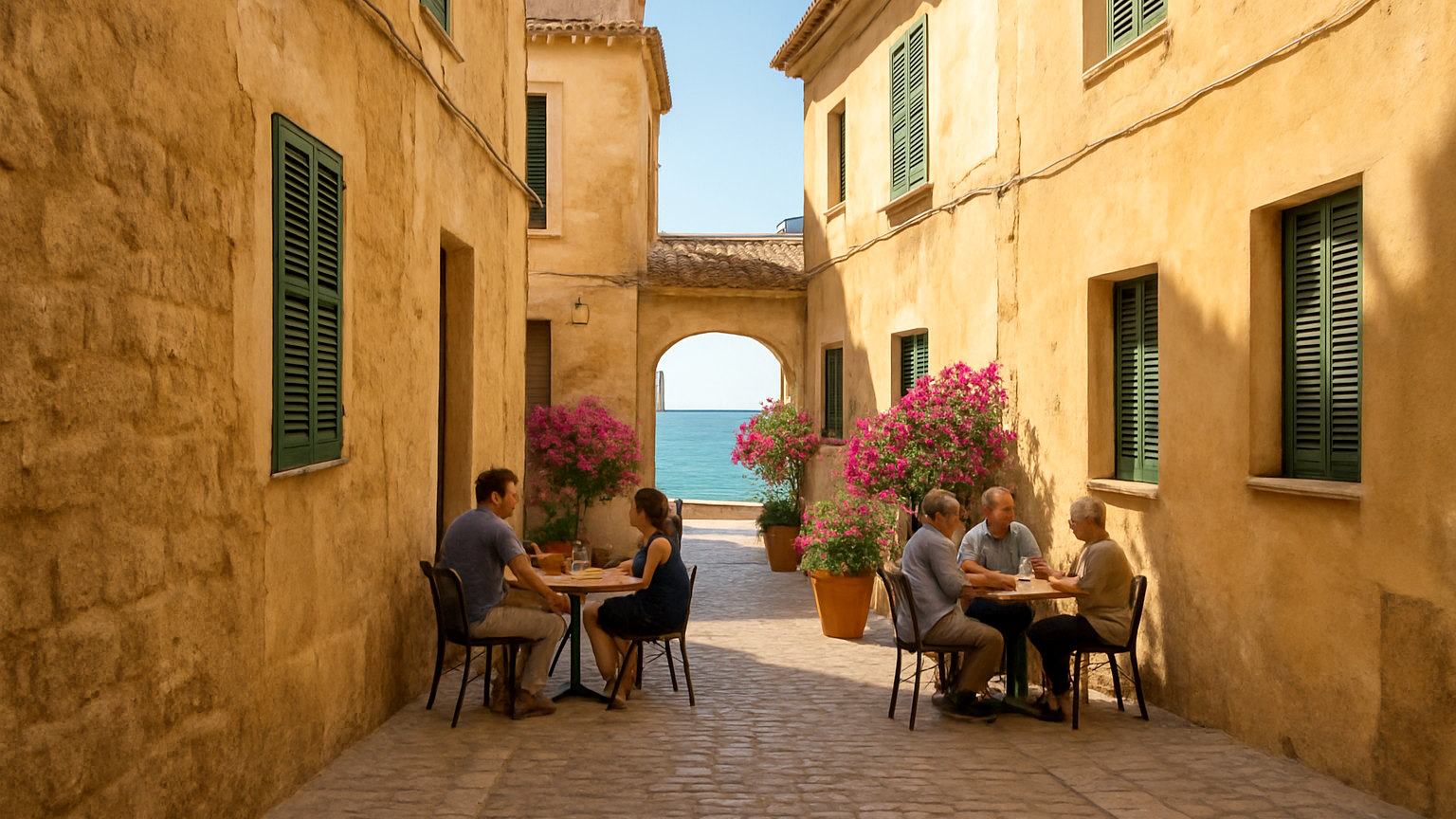
Cadiz occupies a narrow spit almost entirely surrounded by the Atlantic, which is why the old town is compressed into a dense knot of lanes and why the light in it is unusual. It claims to be the oldest continuously inhabited city in western Europe, it has a long city beach, and it receives a small fraction of the visitors that Seville an hour away does.
How long do you need?
Two or three nights, or a week if you are using it as a base for the Costa de la Luz. The old town is small and can be walked in a morning, and the pleasure of the place is in repeating that walk at different hours.
What is there to see?
The cathedral with its yellow-tiled dome, whose bell tower gives the best view over the rooftops and the sea on both sides. The Torre Tavira with its camera obscura. The Roman theatre, discovered in the seventies beneath the old quarter. The Central Market, which is one of the best food markets in Andalusia. The sea walls and the two castles guarding the bay.
What are the beaches like?
La Caleta is the small city beach between two castles in the old town and is the most photogenic. La Victoria, in the newer part of the city, is a long stretch of proper Atlantic sand used by residents rather than visitors and is genuinely excellent. The water is cooler than the Mediterranean, around twenty-two degrees in August, and the wind is a factor.
What is the carnival?
The largest in mainland Spain and quite unlike the Rio version. It runs for around ten days in February and is built around chirigotas, satirical singing groups who perform in the streets and in a formal competition, with lyrics about politics and local life. Accommodation books out months ahead and prices multiply.
Where should you stay?
The old town, in one of the barrios such as La Vina or Santa Maria, for atmosphere and walkability. The area near Playa La Victoria for a beach holiday with the city attached. Cadiz is small enough that both are a twenty-minute walk apart.
Where should you eat?
La Vina, the old fishermen quarter, which is the eating district. Fried fish is the speciality here and is sold by weight from freidurias, wrapped in paper and eaten standing. Tortillitas de camarones, thin shrimp fritters, are the local dish. Sherry from nearby Jerez is the drink.
What is worth a day trip?
Jerez de la Frontera for sherry bodegas and the equestrian school. Bolonia and Zahara de los Atunes down the Costa de la Luz for enormous empty beaches. Vejer de la Frontera, a white hill town inland. Seville, an hour and a half by train.
When is the best time to visit?
April to June and September to October. Cadiz is milder in summer than inland Andalusia because of the Atlantic, which makes it a genuine escape from Seville in July and August. Winter is mild and the city is at its emptiest except during carnival.
How much should you budget?
Cadiz is one of the better value coastal cities in Spain, with accommodation well below Seville or Malaga outside carnival. Eating is inexpensive, particularly the fried fish shops, and the beaches are free and largely unorganised, which removes the sunbed cost entirely.
How do you get there?
Direct trains from Seville take around an hour and forty minutes and run frequently, and the line from Jerez is shorter still. Jerez airport is around forty minutes away with a limited schedule, and Seville and Malaga both have far more flights. A car is unnecessary in the city, where the old town is walkable and parking is difficult, and useful for the beaches down the Costa de la Luz.
Sitges: The Beach Town Half an Hour From Barcelona is the natural next read, alongside the wider Destinations section.
The short answer
Three nights in the old town. Climb the cathedral tower, swim at La Victoria rather than La Caleta, eat fried fish in La Vina, and take a day in Jerez. Come in February only if you want the carnival and have booked early.