
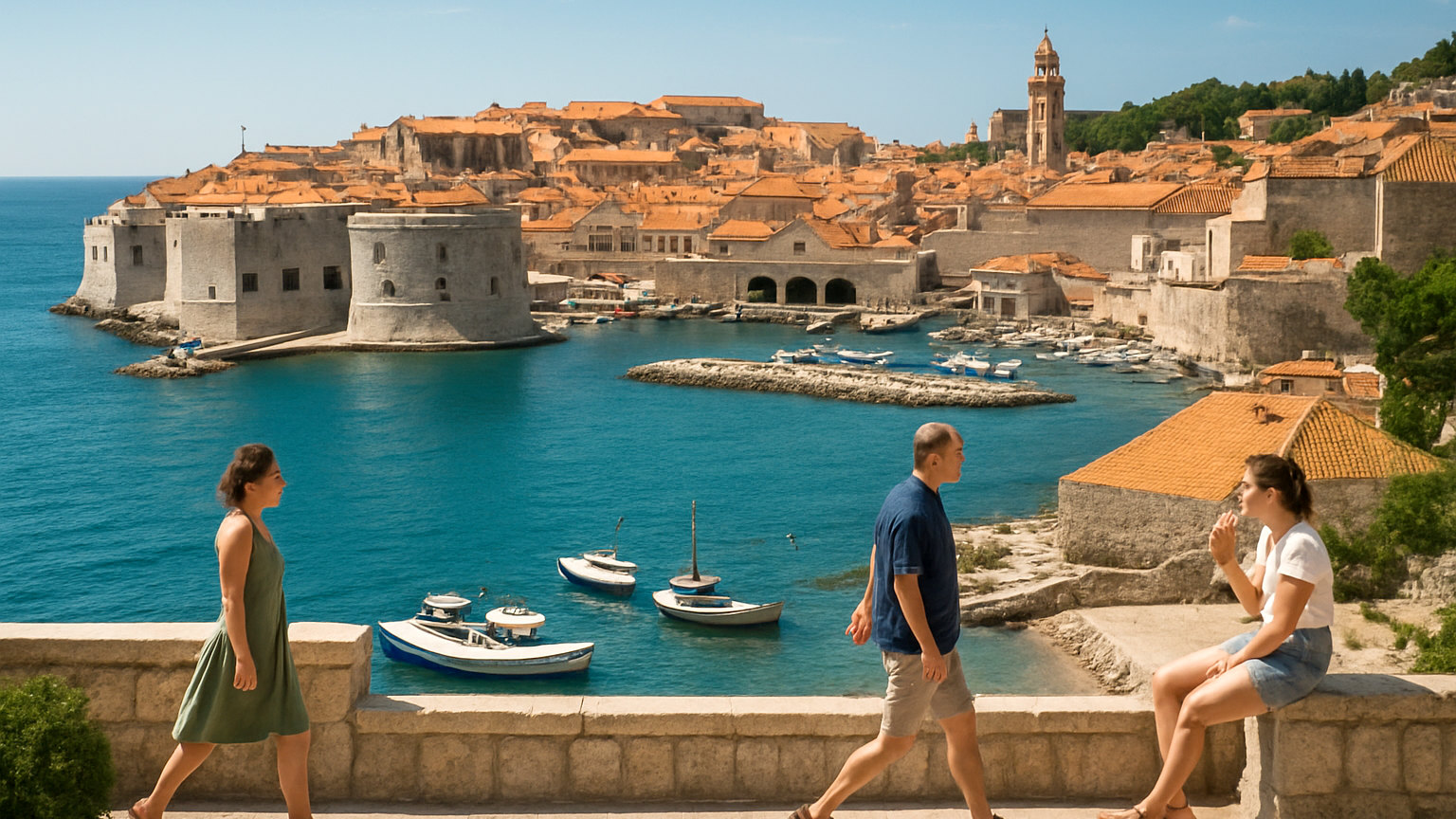
Dubrovnik old town is a walled limestone city on the Adriatic and is genuinely one of the most impressive urban set pieces in Europe. It is also very small, enclosed, and subject to cruise arrivals that can put several thousand additional people inside the walls within an hour. Timing matters here more than anywhere else on this coast.
How long do you need?
Two nights, three if you want the islands. The old town can be crossed in twenty minutes and seen thoroughly in a day. Longer stays are about using Dubrovnik as a base for Lokrum, the Elaphiti islands or Montenegro.
Are the city walls worth it?
They are the single best thing to do. Two kilometres of intact fortification circling the town, walked in about ninety minutes, with views down into courtyards and out to sea. The ticket is expensive and worth it. Go at opening or in the last two hours, since there is no shade on the walls and the middle of the day in summer is genuinely difficult.
How do you avoid the cruise crowds?
Check the cruise schedule for your dates, which is published online, and plan the old town around it. Ships typically unload between about nine and ten and leave by six. Before eight in the morning and after seven in the evening the same streets are almost empty. Staying overnight rather than day-tripping is what makes this possible.
What else is worth seeing?
The Stradun, the polished limestone main street. The Rector Palace and the Franciscan monastery with one of the oldest working pharmacies in Europe. The cable car up Mount Srd for the view over the whole peninsula, best at sunset. The Homeland War museum at the top, which covers the 1991 siege.
Where should you stay?
Inside the walls for atmosphere, accepting noise, heat, stairs and a premium. Ploce, just east, for the best views back at the old town. Lapad and Babin Kuk for beaches, lower prices and a bus ride in, which is what most families choose. Gruz near the port for the cheapest option and the ferry terminal.
Where can you swim?
Banje beach just outside the walls, which is pebble and busy. The rocky platforms below the walls at Buza, reached through a hole in the stonework. Lapad bay for the main resort beaches. Lokrum island, ten minutes by boat, which has rock swimming, peacocks and a small salt lake.
When is the best time to visit?
May, June, September and October. July and August combine peak cruise traffic, peak heat and peak prices. Winter is quiet and mild and much of the tourist infrastructure closes, though the walls stay open and the town is beautiful empty.
How much should you budget?
Dubrovnik is expensive, now using the euro, and is dearer than most Italian equivalents in season. Eating inside the walls carries a premium; the streets around Gruz market are a fraction of the price. The walls ticket, the cable car and a boat trip together are a meaningful sum, so plan them deliberately.
What is worth a day trip?
The Elaphiti islands, particularly Sipan and Lopud, which are quiet and have sandy beaches. Kotor in Montenegro, two hours by road. Mostar in Bosnia, three hours, which is better as an overnight.
Is the Game of Thrones connection worth following?
Much of the series was filmed in the old town and around Lokrum, and the walking tours are popular. If you know the show, the locations are recognisable and the tours are a reasonable way to see the town with some structure. If you do not, they add nothing, and the walls and the cable car deliver more for the same time and money.
For the next step, see Rovinj: Why Istria Beats the Dalmatian Coast, or browse the full Destinations section.
The short answer
Two or three nights in Ploce or Lapad rather than inside the walls. Walk the walls at opening, check the cruise schedule, take the cable car at sunset, and use the old town early and late rather than in the middle of the day.


