
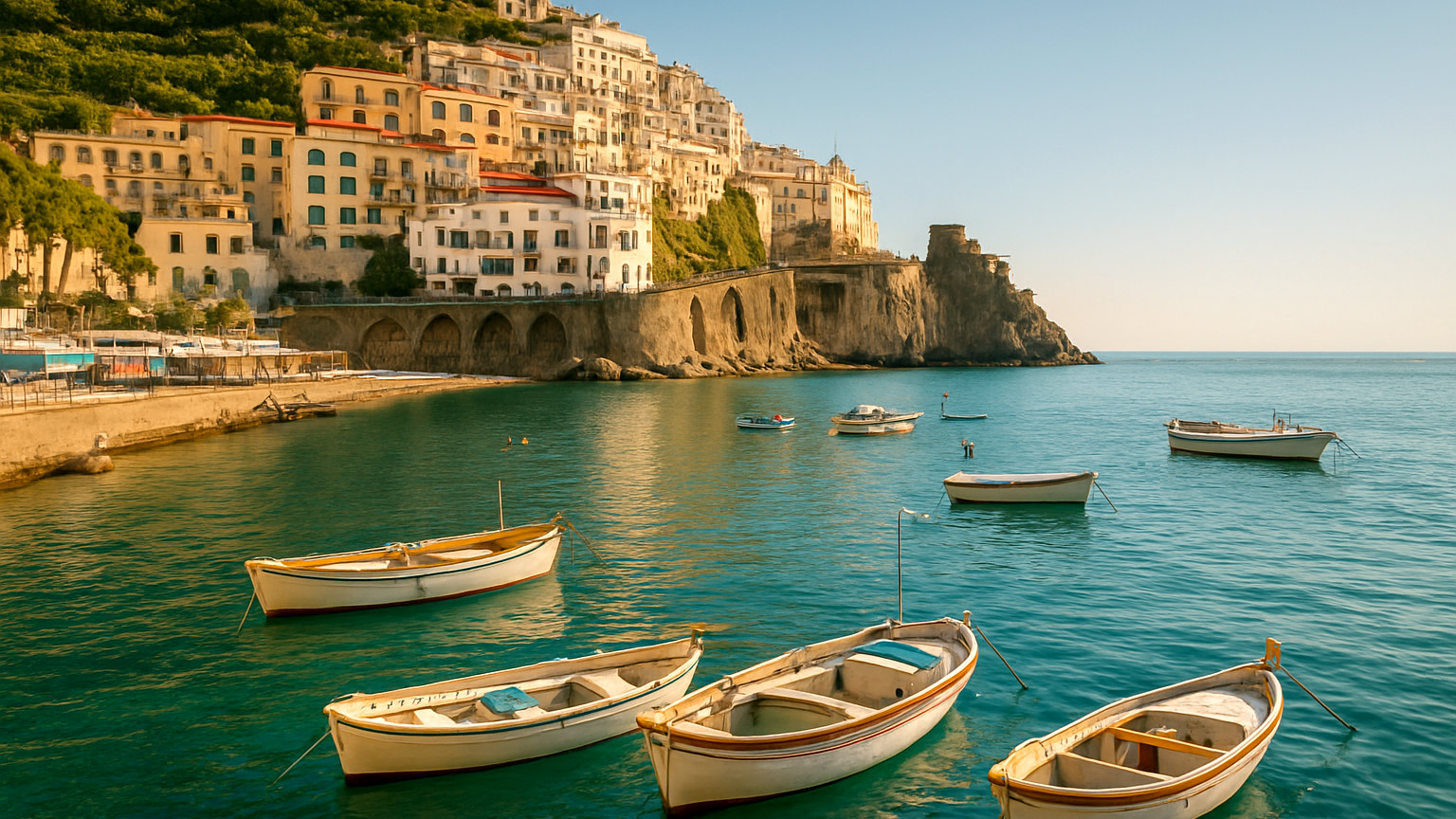
The Amalfi Coast is a forty-kilometre stretch of cliff south of Naples with a handful of towns clinging to it. Positano is the most famous, the most photographed and the most vertical: the town is essentially a staircase, and almost every journey within it involves several hundred steps.
How long do you need?
Four nights minimum. A day trip from Naples or Sorrento spends most of itself in traffic, and the coast is at its best in the early morning and the evening when the coaches have gone. Five or six nights allows the whole stretch without rushing.
Which town should you base in?
Positano for the setting and the beauty, accepting the steps and the prices. Amalfi town for flat ground, a cathedral and the best ferry connections, which makes it the practical choice. Ravello, high above the coast, for gardens, views and calm. Praiano for lower prices between the two. Sorrento, over the headland, is not on the Amalfi Coast but is the easiest base for reaching it.
How bad are the steps?
Worse than photographs suggest and this is the single most useful thing to know. Positano has around seventeen hundred steps from the top of the town to the beach, and accommodation described as central may be four hundred of them above the road. Ask any hotel directly how many steps from the road to the door and how many to the beach before booking.
How should you travel along the coast?
By ferry wherever possible. Services run between Positano, Amalfi and Sorrento from around April to October and are quicker, cheaper and far more pleasant than the road. The SITA buses are the alternative and are crowded and slow. Driving is genuinely difficult, parking costs a great deal, and the road is single file in places with coaches coming the other way.
What are the beaches like?
Dark grey pebble and shingle rather than sand, mostly organised into paid sunbed sections with a smaller free area. Spiaggia Grande in Positano is the main one. Fornillo, a ten-minute walk around the headland, is quieter. Marina di Praia at Praiano is a small cove between cliffs. The water is clear and deep and the swimming is good.
What else is worth doing?
The Path of the Gods, a high ridge walk between Bomerano and Nocelle above Positano, which is the best thing on the coast and takes around three hours downhill. Ravello for the Villa Cimbrone and Villa Rufolo gardens. Pompeii and Herculaneum are both within reach for a day.
When is the best time to visit?
May, June, September and early October. July and August are hot, the road is at its worst and prices peak. Much of the coast closes between November and March, including many hotels and the ferry services, so an out-of-season visit means a very quiet and partly shut coastline.
How much should you budget?
Positano is among the most expensive places in Italy, with accommodation, sunbeds and restaurants all priced for the view. Praiano, Minori and Maiori cost substantially less for the same coast. Eating away from the seafront in any town roughly halves the bill.
What do people get wrong?
Hiring a car, and booking accommodation without checking the steps. The third is attempting the coast as a day trip, which delivers two hours in a town and five in traffic.
Where should you actually swim?
The best swimming on this coast is not from the main town beaches but from the small coves between them, several of which are reachable only by boat. Hiring a small boat for a day without a licence is possible from Positano and Amalfi and is the single best thing you can do here, since it turns an overcrowded shoreline into an empty one and removes the road from the day entirely.
Sorrento: What to See and Why to Stay There is the natural next read, alongside the wider Destinations section.
The short answer
Four or five nights, based in Amalfi for practicality or Positano for the view, travelling by ferry. Check the step count before booking, walk the Path of the Gods, and go in May, June or September.


