
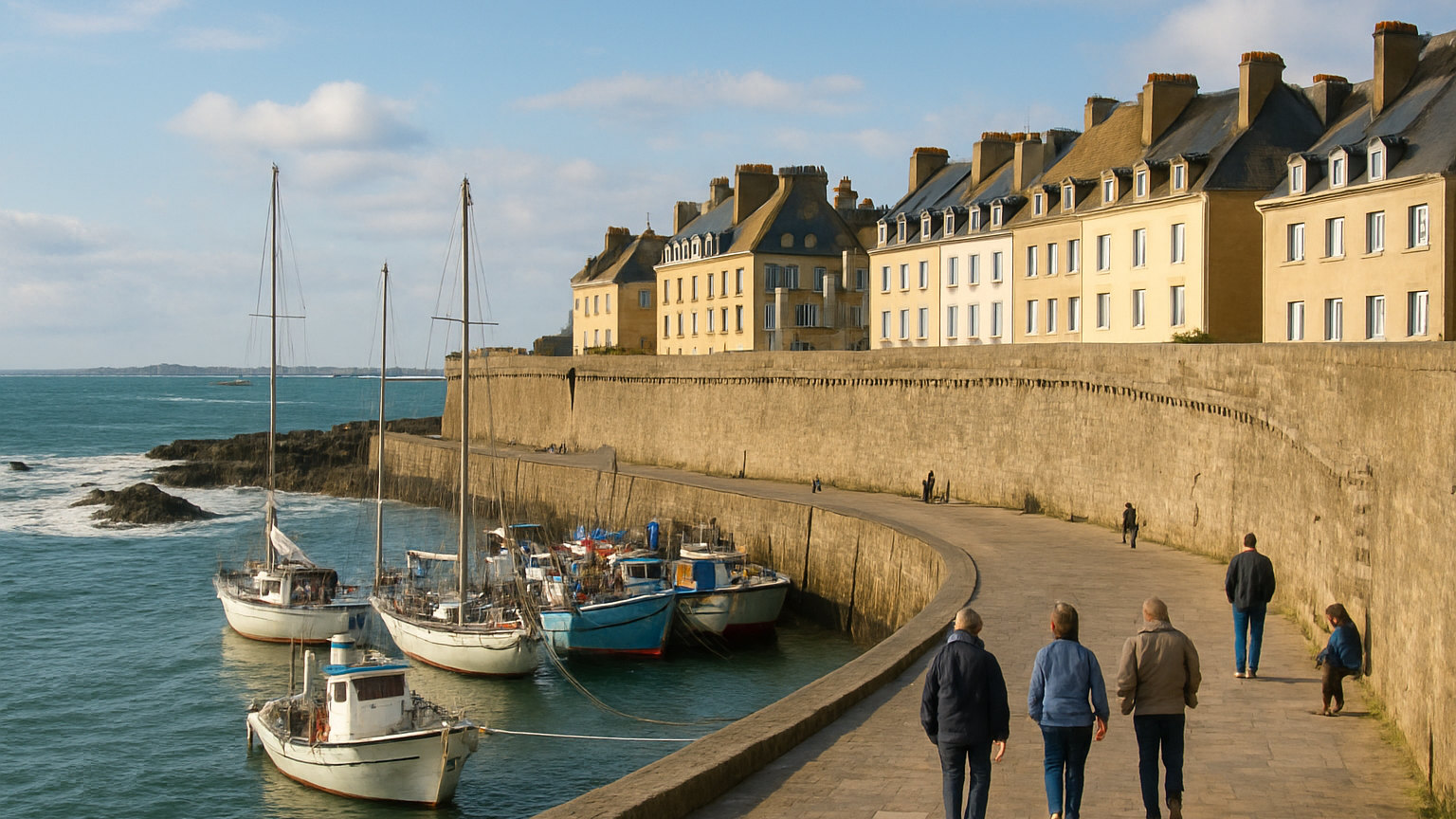
Saint-Malo is a walled granite town on the north coast of Brittany, rebuilt after heavy wartime damage so faithfully that most visitors assume it is entirely original. It sits on one of the largest tidal ranges in Europe, which reshapes the coastline twice a day and is a genuine part of the experience rather than a footnote.
How long do you need?
Two or three nights for the town and the immediate coast, or a week using it as a base for Brittany and Normandy. The walled town itself is small and takes half a day.
What is there to see?
The ramparts, which can be walked all the way round in about forty-five minutes and are free, giving views over the town on one side and the sea on the other. The cathedral within the walls. The chateau and the town museum. Beyond that the pleasure is the lanes, the granite and the restaurants rather than any single attraction.
What are the tides like?
The range here can exceed twelve metres, among the largest in the world. At low tide you can walk out to the island forts of Grand Be and Petit Be and to the Fort National, and at high tide all three are cut off. Tide tables are posted everywhere and should be checked before walking out, since people are caught out every year.
What are the beaches like?
Extensive and sandy, with Plage du Sillon running for over two kilometres beside the town and Plage de Bon Secours beside the walls with a seawater tidal pool. The water is cold, around eighteen degrees at best in August, and the tide goes out a very long way, which makes for enormous expanses of firm sand.
Is Mont Saint-Michel a day trip?
Yes, around an hour away by road or coach, and it is the reason many people base here. The abbey on its tidal island is one of the most striking sights in France and is extremely busy between ten and five. Going early or late transforms it. Check tide times if you want to see it surrounded by water.
What else is nearby?
Dinard across the estuary, a belle epoque resort reachable by a small ferry. Dinan, a medieval walled town upriver. Cancale for oysters, which are farmed in the bay and eaten straight from stalls on the shore. Cap Frehel for cliffs and a lighthouse.
How do you get there?
Ferries run directly from Portsmouth, taking around eleven hours overnight, which is the most convenient route from Britain and allows you to bring a car. By rail it is around three hours from Paris with a change at Rennes. A car is useful for Brittany and unnecessary within the town.
Where should you stay?
Intra-Muros, inside the walls, for atmosphere and evening access once the day visitors leave. The Sillon seafront for beaches and larger hotels. Saint-Servan, just south, for lower prices and a quieter harbour.
When is the best time to visit?
May, June and September. July and August are busy with French holidaymakers. The weather is Atlantic and unreliable in any month, and the equinox tides in March and September are the largest and the most spectacular to watch.
How much should you budget?
Saint-Malo is mid-priced for France, with accommodation inside the walls carrying a premium over Saint-Servan or the Sillon. Brittany generally is cheaper than Normandy or the south, and the set lunch menu remains excellent value. Oysters at Cancale, bought from the stalls on the shore, are among the cheapest good things to eat in France. The ferry crossing from Portsmouth is the largest single cost for most British visitors and is cheaper booked well in advance and midweek.
See also Biarritz: Surf, Beaches and the Basque Coast, which covers a related part of the same decision, and our other Destinations guides.
The short answer
Three nights inside the walls, arriving by ferry from Portsmouth if you want the car. Walk the ramparts, check the tide table before crossing to the islands, eat oysters at Cancale, and see Mont Saint-Michel before ten in the morning.


