Car hire is often the largest avoidable cost in a European trip, and in a good number of countries it is genuinely unnecessary. In others it is quietly essential, and the discovery arrives after booking. The dividing line is not wealth or size but whether the rail network reaches the places visitors actually want to go.
Which countries need no car at all?
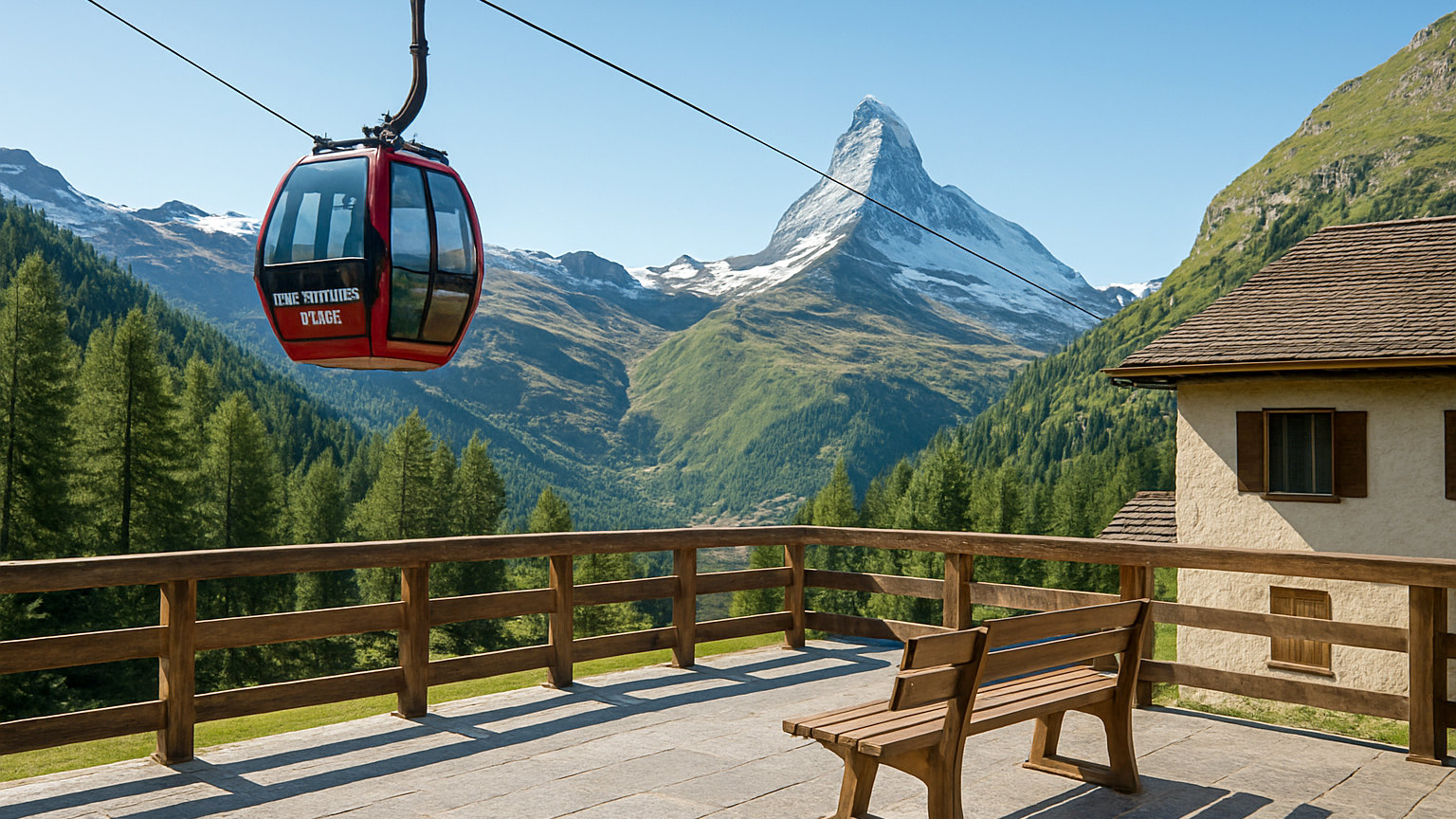
Switzerland is the outstanding example. The rail, postbus, boat and cable car network is integrated to a degree found nowhere else, it reaches villages with a few hundred residents, and a car is a liability in mountain towns where parking is restricted. Travelling by public transport is also the better experience.
The Netherlands, Austria, Belgium and Czechia are all comprehensively covered. So is Japan-style density in the German local networks, though German long-distance punctuality is a caveat. Italy is excellent between cities on the high-speed line and much weaker off it.
Portugal works well without a car if you stay in Lisbon, Porto and the towns on the rail line, and becomes much harder in the Alentejo or the inland north.
Where do you effectively need one?
Ireland outside Dublin, Galway and Cork, where the west coast scenery is the reason to go and the bus service is sparse. Rural France, particularly the Dordogne and Brittany, where self-catering is the norm and the nearest shop is not walkable. Most of Greece once you leave the main island towns, since island buses run to a schedule built around residents rather than beaches. Iceland outside Reykjavik. Sardinia, Puglia and Sicily beyond the main cities.
How do you tell before booking?
Look up the actual journey rather than the country. Take the three places you most want to see, and check whether a train or bus connects them at a time you would use. If the answer involves a two-hour wait, a single daily service, or a taxi at either end, you are looking at a driving destination whatever the guidebook says.
The second test is the accommodation. If the places you like are described as being a short drive from the village, that is the answer.
What about the cost comparison?
A week of car hire, fuel, tolls, parking and the insurance excess commonly totals more than the flights. Rail passes and point-to-point tickets are usually far cheaper for two people, though the calculation shifts with four, where a car often wins on pure cost even in well-connected countries.
Is a partial car the answer?
Frequently, and it is underused. Hiring for two or three days in the middle of a trip, rather than for the whole week, gets you the scenery and avoids paying for a car that sits outside a city hotel. Most European cities have hire desks at the main station as well as the airport, which makes this easy to arrange.
Which countries are best for a rail-only trip?
Switzerland for scenery, Italy for cities, Austria and Czechia for a mixture, and the Netherlands and Belgium for a short trip covering several towns. All four can be planned with confidence that you will not be stranded.
What about night trains and long distances?
Night trains have expanded again across Austria, Germany, Italy and central Europe, and they solve two problems at once by covering a long distance and a hotel night together. They are not cheap in a private compartment and they are excellent value in a couchette. The wider point is that long distances by rail in Europe are usually more comfortable than the equivalent flight once airport time is counted, and anything under about five hours of train time will beat flying door to door.
Anyone weighing this up will also want How Long Do You Need in Norway to See It Properly?, along with the rest of the Destinations section.
The short answer
Switzerland, the Netherlands, Austria, Belgium and Czechia need no car. Ireland, rural France, Iceland, Sardinia and most Greek islands effectively do. Test the specific journeys before booking, and consider hiring for two days rather than seven.