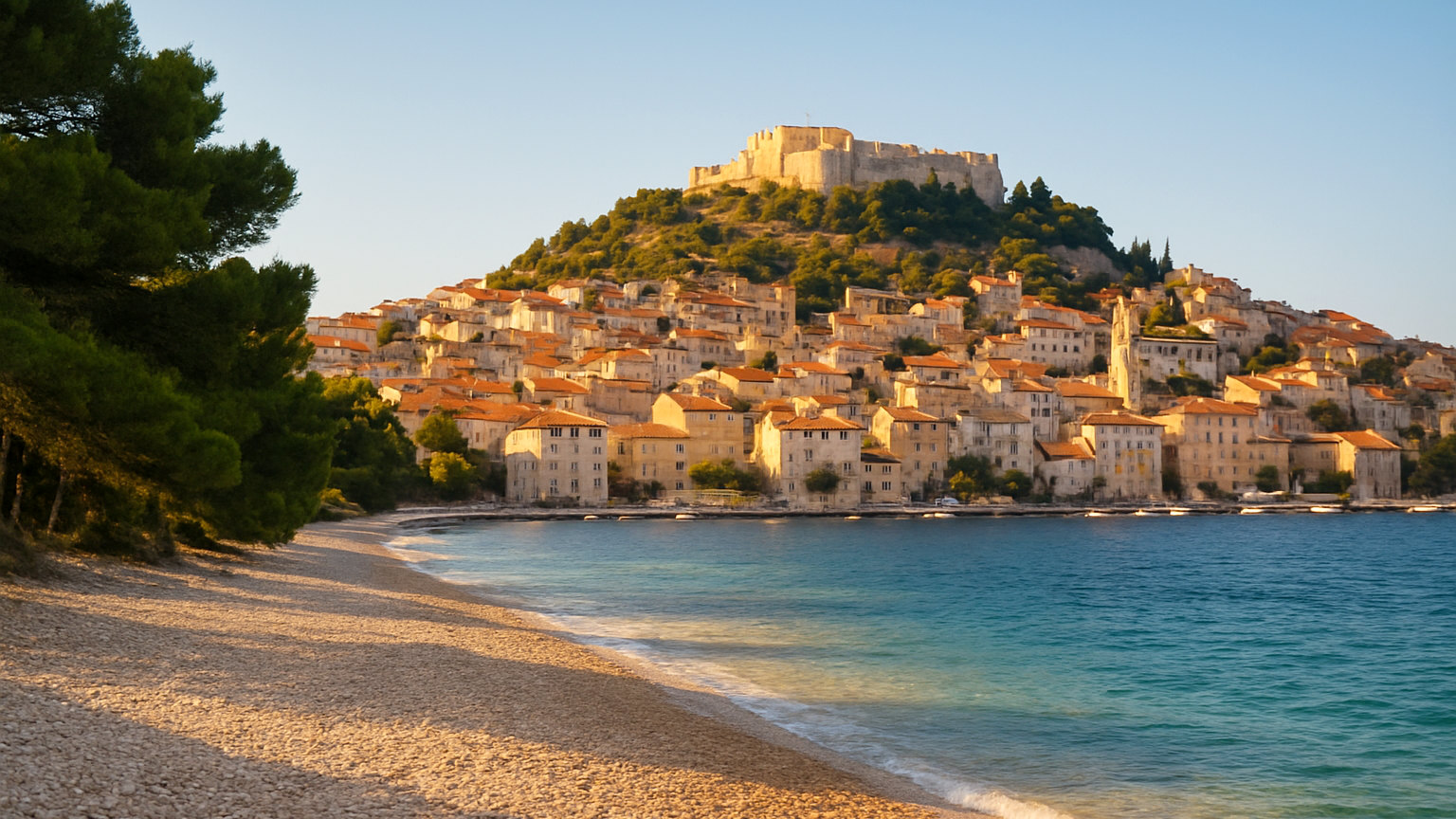
Both countries are built for island hopping and they work in fundamentally different ways. Croatian islands sit close to a mainland coast with short, frequent crossings. Greek islands sit in open sea in groups that are sometimes hours apart. That single geographic fact decides most of the comparison.
How many islands fit into a week?
In Croatia, three or four comfortably. Split to Hvar is around an hour by catamaran, Hvar to Korcula not much more, and the mainland is always in reach. You can move every two nights without the days feeling like travel days.
In Greece, two or three, and only within one island group. Moving between the Cyclades is straightforward, and moving from the Cyclades to the Dodecanese or the Ionian usually means going back through Athens or taking a very long ferry. A week spanning two Greek island groups is mostly a week of ferries.
Which has better beaches?
Greece, for sand. Croatian beaches are overwhelmingly pebble or rock, the water is exceptionally clear and cold, and swim shoes are close to essential. Greek islands offer both, with genuine sand common in the Ionian and on Crete and Rhodes, and rock and pebble in parts of the Cyclades.
Croatia wins on water clarity and on the sheer number of swimmable coves within walking distance of a town.
Which is cheaper?
Greece, clearly, and the gap has widened. Croatia now uses the euro, has become extremely popular, and Dubrovnik, Hvar and Split in July and August are expensive by any measure. Greek prices vary enormously by island, and choosing a less famous one drops the cost dramatically in a way that has no real Croatian equivalent.
What are the ferries like?
Croatian ferries are punctual, short and reliable, run by a small number of operators, and simple to book. Greek ferries are a bigger operation with more choice and more variation: fast catamarans that are expensive and weather-sensitive, and large slow ferries that are cheap and comfortable. Greek routes are more likely to be cancelled by wind, particularly in the Cyclades during the meltemi season from mid-July to early September.
Which is easier to plan?
Croatia, considerably. The whole coast can be treated as one region, flights land at Split or Dubrovnik, and a mistake is recoverable because the mainland is an hour away. Greece requires you to choose an island group before you choose islands, and to build the trip around ferry schedules that thin out at each end of the season.
Which suits which traveller?
Croatia suits a first island-hopping trip, anyone nervous about logistics, sailing holidays, and travellers who want old walled towns as much as beaches. Greece suits repeat visitors, anyone wanting sand, anyone on a tighter budget, and anyone who wants the sense of being properly out at sea rather than along a coast.
When should you go?
Both peak in July and August and both are better either side. Croatia is at its best in June and early September, and its season is shorter, with much closing by late October. Greece runs later, and September into early October is the finest island hopping weather either country offers.
How do you actually book the ferries?
In Croatia, book the fast catamarans in advance for July and August, as foot passenger seats sell out, and buy the larger car ferries at the port without concern. In Greece, book anything in the peak weeks and be relaxed outside them. The rule that saves trips in both countries is never to schedule a ferry on the day you fly home. Cancellations from wind are normal rather than exceptional, and a missed flight costs more than the extra night on the mainland that avoids it.
What Should You Know Before Visiting Germany? answers a related question in more depth, and there is more of the same across our Destinations guides.
The short answer
Croatia if you want short hops, easy logistics and historic towns, and you do not mind pebbles or the price. Greece if you want sand, lower costs and a wider choice, and you are willing to commit to one island group rather than trying to see the whole country.