
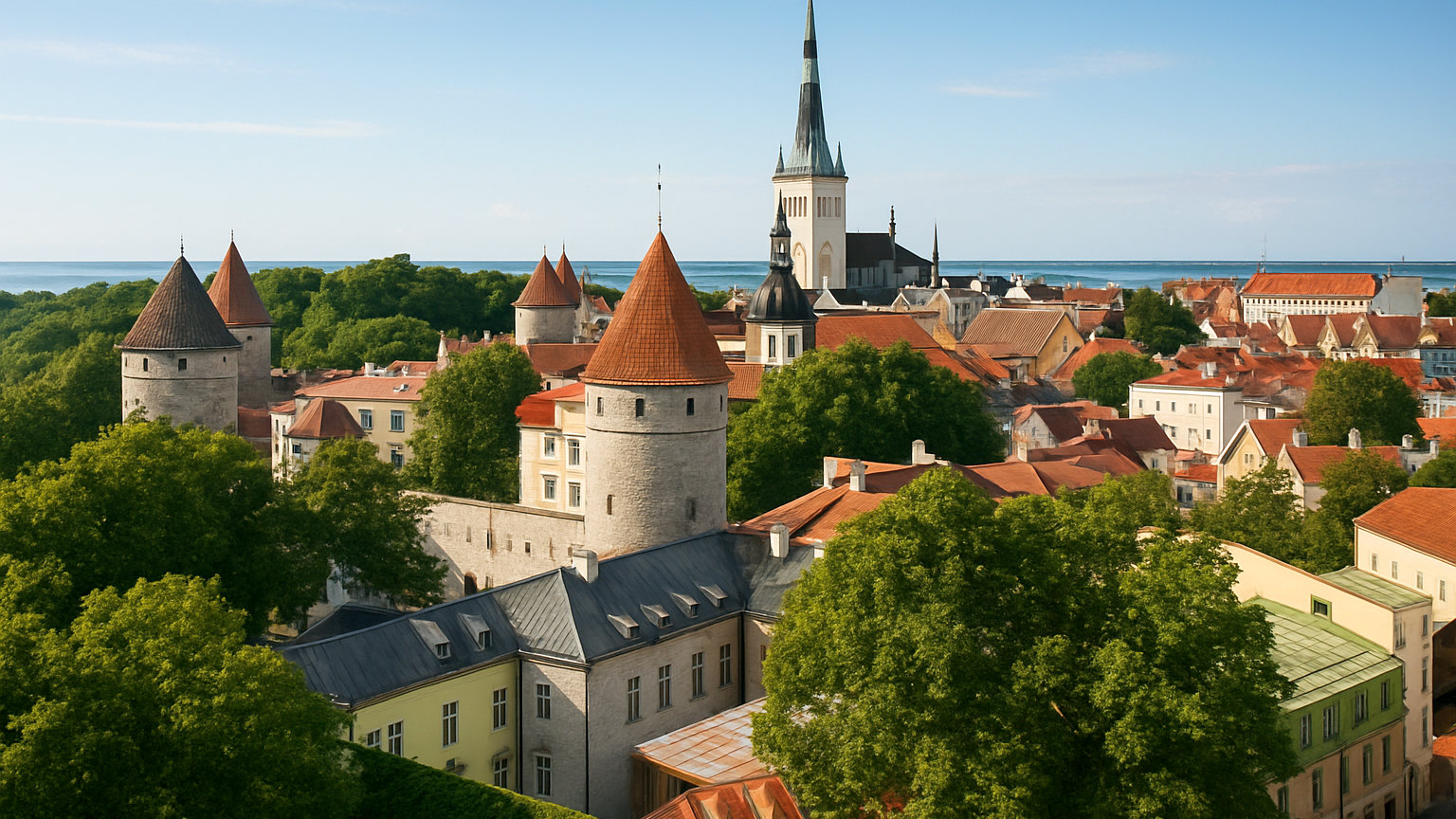
Estonia is small, cheap, and holds one of the genuinely great medieval cities of Europe. Tallinn is the reason most people come and it can be seen in two days, which leaves the interesting question of what else the country offers. The answer is forest, bog, a long shallow coast and two large islands that feel a century removed from the capital.
How long does Tallinn need?
Two nights. The old town is a walled, cobbled, largely intact medieval trading city, with Toompea Hill above it and the Alexander Nevsky Cathedral at the top. It is compact enough to cross in twenty minutes, which means the crowds concentrate and an early start pays. The Seaplane Harbour maritime museum and the Kumu art museum are the two things worth leaving the walls for.
Is Tartu worth the trip?
Two hours inland, and yes if you have four nights or more. It is the university city, younger and less visited than Tallinn, with a handsome classical centre and the Estonian National Museum built on a former Soviet airbase runway.
What are the islands like?
Saaremaa is the largest, reached by ferry, and has a moated castle at Kuressaare, a meteorite crater, juniper heath and windmills. Hiiumaa is quieter still and known for its lighthouses. Both are flat, thinly populated and best explored by bicycle or car, and both feel markedly more rural than anywhere on the mainland.
What about the national parks?
Lahemaa on the northern coast is the best known, an hour from Tallinn, with bog boardwalks, manor houses, forest and a coastline of erratic boulders. Soomaa is the one for the spring flood, when the rivers rise and the accepted way to travel is by canoe. Estonia is roughly half forest, and the walking is free, well marked and almost empty.
Where do Estonians go on holiday?
Parnu, on the southwest coast, which has a long shallow sandy beach, spa hotels and a short but genuine summer season in July and August. The water is cold by Mediterranean standards and warm by Baltic ones.
Is Estonia cheap?
Noticeably cheaper than the Nordic countries across the water, and mid-priced by central European standards. Tallinn old town restaurants charge accordingly and walking five minutes outside the walls halves the bill. The country uses the euro and is close to cashless, with card payment accepted almost everywhere including rural buses.
When is the best time to visit?
June to August for long days, the islands and the coast, with the midsummer festival in late June the biggest date of the year. December for the Tallinn Christmas market, which is set in the main square and is among the most atmospheric in Europe. January to March are cold and dark, and the shoulder months of April and November have little to recommend them.
How does it combine with its neighbours?
Very easily. Tallinn to Helsinki is a two-hour ferry, and the coach south to Riga takes around four hours and costs very little. A week covering Tallinn, Riga and Vilnius is a straightforward and popular trip, and adding Helsinki to the top of it changes nothing structurally.
What do people get wrong?
Doing Tallinn as a day trip from Helsinki and concluding the country is a single square. The ferry crowd arrives mid-morning and leaves mid-afternoon, which is precisely the window in which the old town is at its worst. Staying a night, walking the walls before nine and eating outside the medieval theme restaurants gives a completely different impression of the place.
Is it easy to get around?
Yes. Coaches are cheap, frequent and comfortable, public transport in Tallinn is free to residents and inexpensive to visitors, and the country has some of the best mobile coverage in Europe.
What to See in Latvia: Riga, Coast and Countryside answers a related question in more depth, and there is more of the same across our Destinations guides.
The short answer
Two nights in Tallinn starting early to beat the crowds, then Lahemaa for a day, Saaremaa for two if you want the rural version, and Parnu if you are there in July. Combine it with Riga or Helsinki rather than treating it as a standalone week.


