
Serbia gets a fraction of the visitors its neighbours do, largely because it has no coast and a reputation that has not caught up with the country. It is among the cheapest destinations in Europe, the hospitality is genuine to the point of being overwhelming, and Belgrade has the most energetic nightlife on the continent.
How long does Belgrade need?
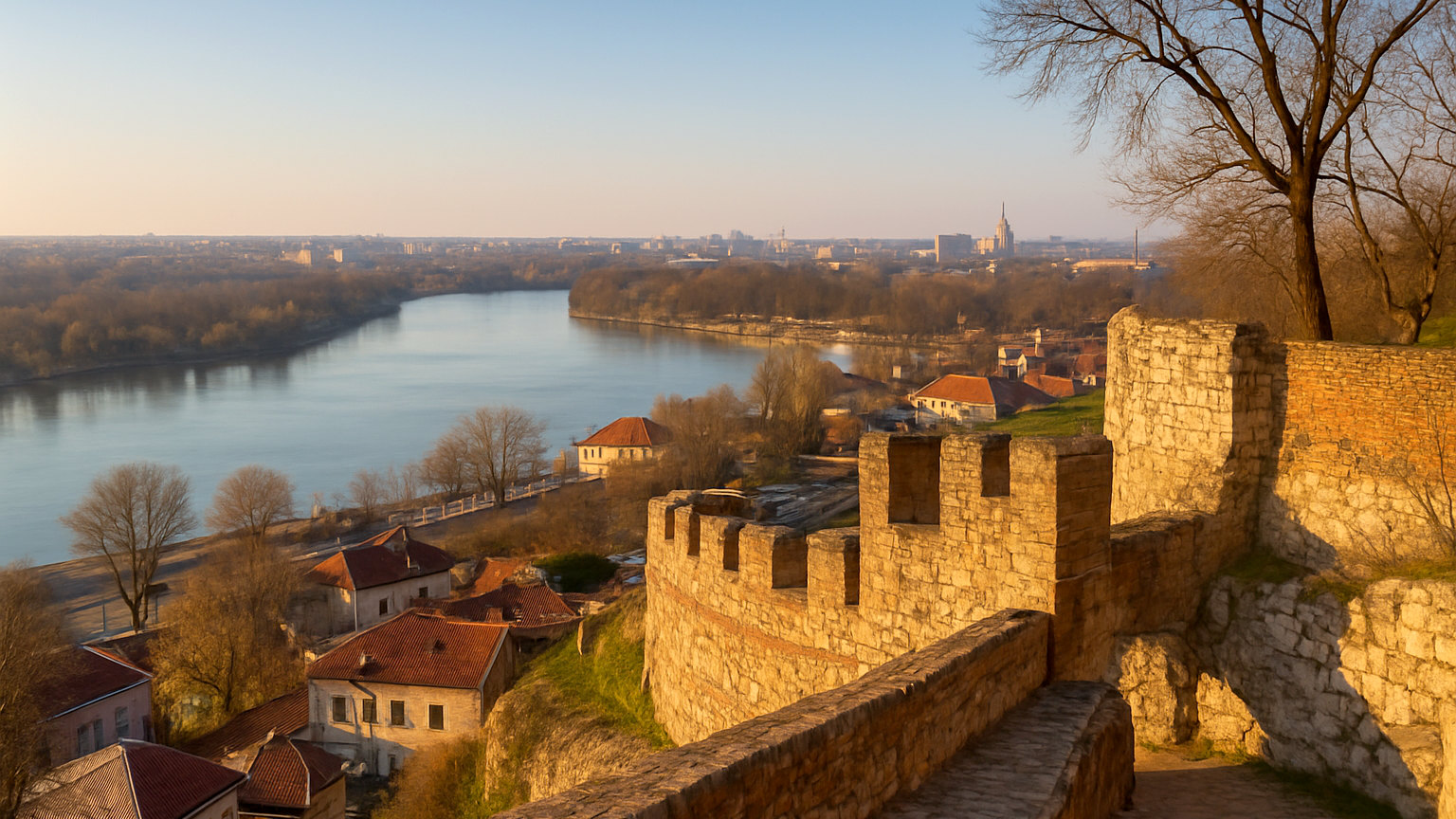
Three nights. It sits where the Sava meets the Danube, with the Kalemegdan fortress on the point between them and a view over both rivers. The bohemian Skadarlija quarter, the Nikola Tesla Museum and the vast Saint Sava temple are the fixed points. Belgrade is not a pretty city in the way Prague is; it is a lively one, and the reason to stay is the river barges and bars rather than the architecture.
Is Novi Sad worth the trip?
Two nights, an hour north. It is calmer and more Austro-Hungarian in feel, with a pastel main square and the Petrovaradin fortress across the Danube, which hosts the Exit festival each July. The surrounding Fruska Gora hills hold sixteen Orthodox monasteries and the country main wine region.
What are the monasteries?
The medieval Serbian monasteries are the country most significant heritage, several of them UNESCO listed, with frescoes from the twelfth to fourteenth centuries. Studenica and Sopocani in the southwest are the finest. They sit in remote valleys and effectively require a car or an organised trip.
Where should you go for landscape?
The Drina valley in the west, where the river runs through a gorge on the Bosnian border and the Tara national park rises above it. Zlatibor is the main mountain resort, busy with Serbian holidaymakers in both summer and winter. The Uvac canyon, with its looping meanders and griffon vultures, is the most photographed natural site in the country.
What about the Sargan Eight railway?
A narrow-gauge line near the Bosnian border that climbs a mountain in a figure-of-eight of tunnels and switchbacks, rebuilt as a heritage route. It runs from Mokra Gora, next to the timber village of Drvengrad built for a film set and kept as a resort. Both are half a day and both are worth it if you are driving in the west.
Is Serbia cheap?
Among the cheapest countries in Europe. It uses the dinar rather than the euro, cards are widely accepted in cities and less so in villages, and a substantial restaurant meal with a drink costs less than a sandwich in western Europe. Long-distance coaches are inexpensive and are the main way to get around.
When is the best time to visit?
May, June and September. July and August are hot in Belgrade and on the plains, though the mountains stay comfortable. Winter is cold and grey in the north and is the season for Zlatibor and Kopaonik, where skiing costs a fraction of the alpine equivalent.
Do you need a car?
Not for Belgrade and Novi Sad, which are linked by a fast train and frequent coaches. A car is close to essential for the monasteries, the Drina valley and the Uvac canyon, all of which sit well away from the main routes on roads that are slower than the distances suggest.
What should you eat?
Grilled meat, in quantity. Cevapi, pljeskavica and the mixed grill are the staples, usually served with kajmak, a clotted dairy spread that is the thing worth remembering. Portions are large and prices are low enough that ordering too much is the usual mistake.
How does it combine with neighbours?
Belgrade is a natural hub for a wider Balkan trip. Sarajevo is around seven hours by coach, Sofia six, Budapest seven and Skopje eight, and the overnight services are cheap. Novi Sad also sits on the Danube cycle route, which runs from Germany to the Black Sea and passes through the city.
For the next step, see What to See in Bosnia: Mostar, Sarajevo and Rivers, or browse the full Destinations section.
The short answer
Three nights in Belgrade for the rivers and the nightlife, two in Novi Sad with the Fruska Gora monasteries, and the Drina valley or Uvac if you are driving. Expect the lowest prices in Europe and the warmest reception.


