
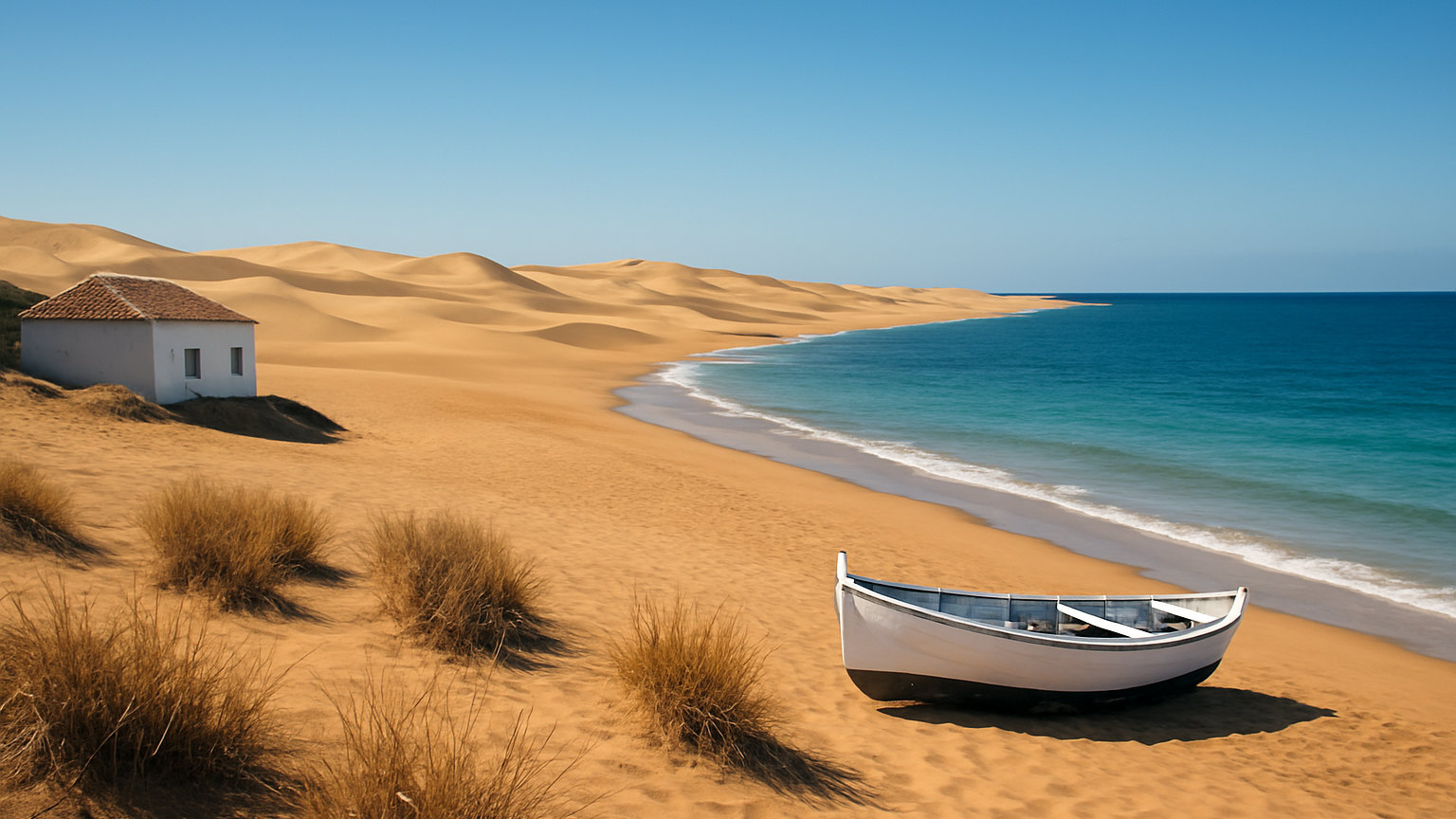
Gran Canaria is the third largest of the Canary Islands and the most varied in a small space. The south is arid with sand dunes and resorts, the centre rises to nearly two thousand metres of pine forest and volcanic rock, and the north is green and agricultural. You can cross between all three inside an hour.
Where should you stay?
Maspalomas and Playa del Ingles in the south for guaranteed sun and the largest choice of hotels, with Meloneras the smarter end. Puerto de Mogan, known as the little Venice, for the prettiest resort on the island. Puerto Rico for families. Las Palmas in the north if you want a city with a beach rather than a resort.
What are the Maspalomas dunes?
A protected area of shifting sand covering several square kilometres behind the beach, which looks convincingly like the Sahara and is crossed on foot in about forty minutes. It is a nature reserve rather than a beach extension, so stick to the marked routes. Sunrise and late afternoon are when it looks its best.
Is Las Palmas worth time?
Two or three days. It is a genuine city of four hundred thousand people with the Vegueta old quarter, the Columbus house museum and Las Canteras, a three-kilometre city beach protected by a natural reef that makes it calm enough for swimming all year. It is the most underrated part of the island.
What is in the interior?
Roque Nublo, an eighty-metre rock monolith on a plateau, reached by a straightforward half-hour walk with views to Teide on Tenerife. Tejeda is the mountain village to base in or stop at. The Caldera de Bandama is a crater you can walk into. The roads through the centre are spectacular and slow.
Where are the best beaches?
Maspalomas for the dunes and the long sweep of sand. Las Canteras in the capital for calm water and a local crowd. Amadores, a sheltered artificial bay, for families. Guegue and the northern beaches are wilder with stronger currents.
What else is worth seeing?
Teror, the prettiest town on the island, with wooden balconied houses and a Sunday market. Aguimes and Teror together make a good day in the north. The Cenobio de Valeron, a pre-Hispanic grain store carved into a cliff in hundreds of chambers.
When is the best time to visit?
Any month, with the south between twenty and twenty-eight degrees year round and the sea swimmable throughout. The north is cooler and cloudier, and the mountains can be genuinely cold in winter, so take a layer if you are driving inland even in July.
Do you need a car?
For two or three days. The resorts function without one and the interior and the north effectively require one. The mountain roads are steep and winding with frequent stopping points, and the drive from the south coast to Roque Nublo is one of the better drives in the Canaries.
What should you eat?
Papas arrugadas with mojo, ropa vieja, and the almond-based desserts of the mountain villages. The Sunday roast chicken and potatoes at a mountain restaurant is a local institution worth planning a drive around.
How long do you need?
A week for a beach base with two days of driving, or ten days to add Las Palmas properly. The island is large enough that the south and the north work almost as separate destinations.
Who should choose Gran Canaria?
Anyone wanting both a reliable beach week and mountain scenery within reach, and anyone who would rather have a real city than a resort, which Las Palmas provides better than anywhere else in the Canaries. It is also the most established of the islands for LGBT travellers, centred on Maspalomas.
Where to Visit in Fuerteventura: Beaches and Dunes answers a related question in more depth, and there is more of the same across our Destinations guides.
The short answer
A week in the south for sun and the dunes, with a car for two days to reach Roque Nublo, Tejeda and Teror. Stay in Las Palmas instead if you would rather have a city, a calm beach and lower prices.


