
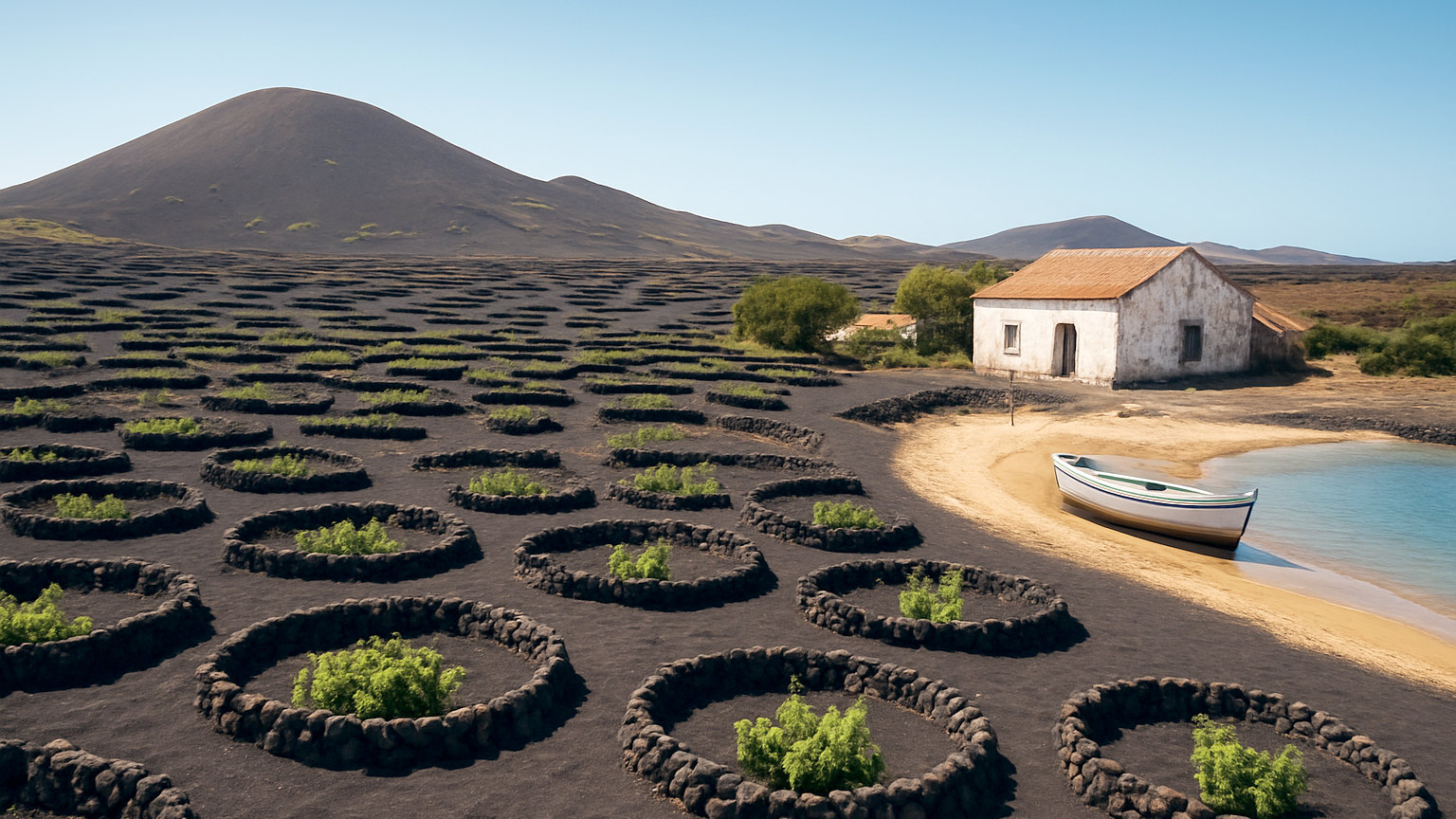
Lanzarote is the most visually distinctive of the Canary Islands, a landscape of black lava fields and white cube houses with green or blue paintwork. That look is not accidental: the artist Cesar Manrique spent decades campaigning against high-rise development and shaping building rules, and the result is an island that looks unlike anywhere else in Europe.
What is Timanfaya?
A national park covering the lava fields of the eighteenth-century eruptions, where the ground a few metres down is still hot enough to set brushwood alight and to power a geothermal grill at the visitor centre. Access is by coach tour along a road closed to private cars, which sounds restrictive and is the only way to protect the surface. It takes half a day and is the thing everyone remembers.
What are the Manrique sites?
Five or six works built into the volcanic landscape rather than on it. Jameos del Agua is a collapsed lava tube turned into a concert hall and pool with blind albino crabs in the water. Mirador del Rio is a viewpoint carved into a cliff looking across to La Graciosa. Jardin de Cactus occupies a former quarry. His own house, built inside five volcanic bubbles, is now a foundation and museum and is the best of them.
Where should you stay?
Puerto del Carmen for the widest choice and a long beach strip. Costa Teguise for families and calmer water. Playa Blanca in the south for the smartest hotels and access to the Papagayo beaches. Arrecife, the capital, is where people actually live and is much cheaper.
Where are the best beaches?
The Papagayo coves in the southeast, a series of sheltered golden bays down a dirt track with a small entry fee, which are the best on the island. Famara in the northwest is a vast wild beach backed by cliffs, excellent for surfing and dangerous for swimming. Playa Dorada at Playa Blanca is the easiest family option.
What is La Geria?
The wine region, and one of the strangest agricultural landscapes anywhere. Vines are planted in individual pits dug into black volcanic gravel, each ringed by a low stone wall to shelter it from the wind, across a whole valley. The malvasia wines are good and the bodegas offer tastings.
Is La Graciosa worth a day?
Yes. It is a small island off the north coast, reached by a twenty-five minute ferry from Orzola, with sand roads, no tarmac and a handful of beaches. Most visitors hire a bicycle or take a four-wheel-drive taxi to the far beaches. It is the quietest place in the Canaries.
When is the best time to visit?
Any month, with temperatures between nineteen and twenty-seven degrees year round. Lanzarote is the windiest of the main Canaries, which keeps the summer bearable and means a windbreak is useful on the beach in any season. Rain is rare.
Do you need a car?
Yes, more than on Tenerife or Gran Canaria. The Manrique sites, La Geria, Papagayo and the northern viewpoints are spread across the island and buses reach few of them. The roads are good, quiet and easy to drive.
How long do you need?
A week. The island is small enough that everything is within an hour of everywhere, and there is enough to fill five or six days of sightseeing alongside the beaches. Ten days starts to feel long unless the beaches are the main purpose.
Who should choose Lanzarote?
Anyone who wants a beach holiday with something genuinely interesting attached, and anyone put off by high-rise resorts, since the building rules mean there are almost none. Anyone wanting green landscape, forest walks or nightlife should look at Tenerife or Gran Canaria instead.
For the next step, see Where to Visit in Gran Canaria: Dunes, Peaks and Towns, or browse the full Destinations section.
The short answer
A week with a car, based at Playa Blanca or Puerto del Carmen. Timanfaya and two or three Manrique sites, the Papagayo beaches, a tasting in La Geria and a day on La Graciosa covers the island properly.


