
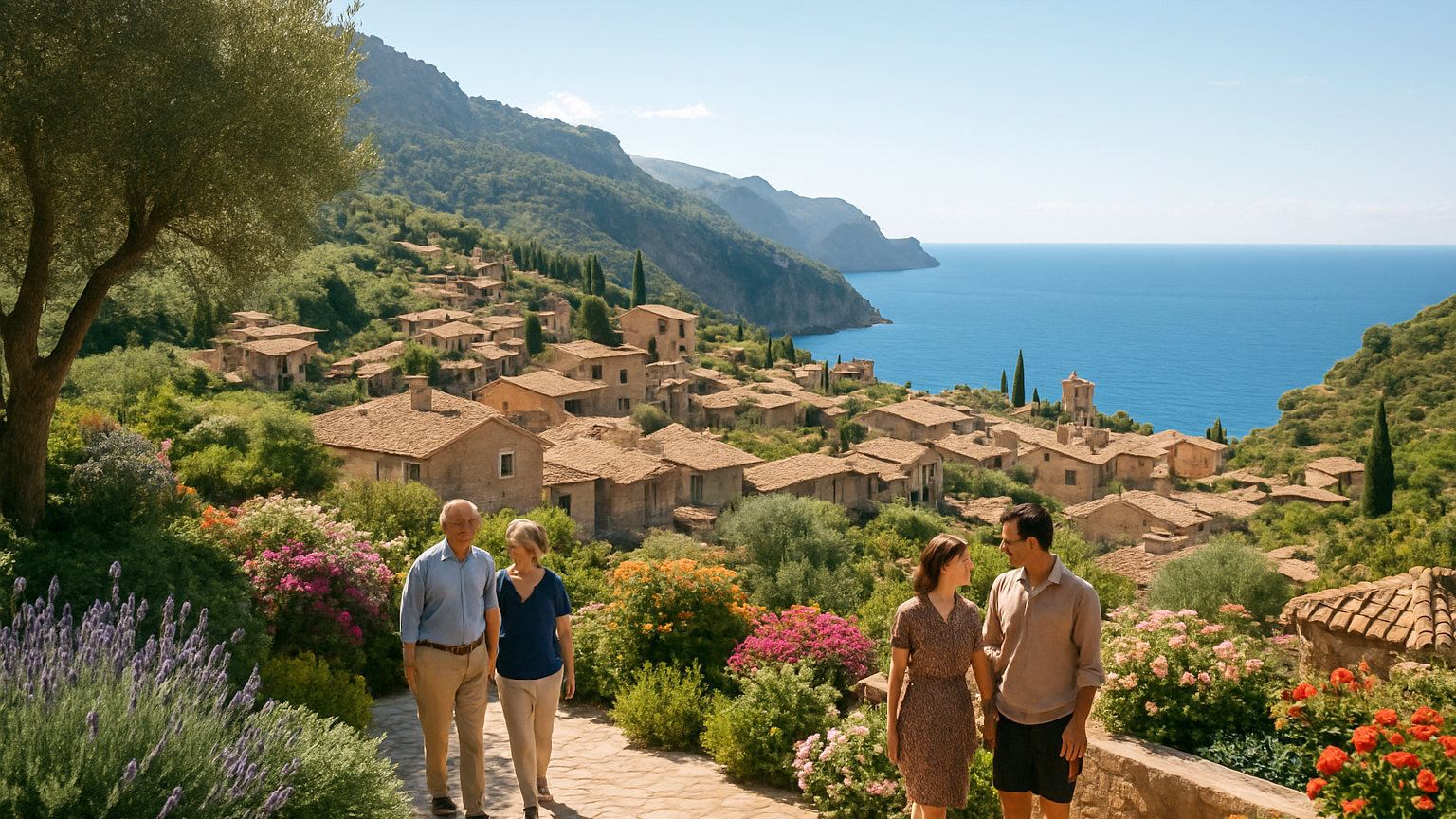
Majorca carries a reputation built on a handful of resorts that occupy a small fraction of it. The island has a UNESCO-listed mountain range along its entire northwest coast, a cathedral city that is among the best in Spain, and stone hill villages that look nothing like the package brochures. The resorts are real; so is everything else.
How long does Palma need?
Two or three days. The cathedral sits on the waterfront and is one of the great Gothic buildings of the Mediterranean, with a Gaudi interior intervention. The old town behind it is a maze of courtyards and Arab baths, and the Es Baluard modern art museum occupies the city walls. Palma is a genuine city and works as a short break on its own.
What is the Serra de Tramuntana?
A limestone range running ninety kilometres along the northwest coast, UNESCO listed as a cultural landscape for its terracing and water systems. Valldemossa, Deia and Fornalutx are the villages, the Ma-10 road along the ridge is one of the best drives in Europe, and the walking is excellent from October to May.
Is Soller worth a stay?
It is the best base in the mountains. A town of grand merchant houses in an orange-growing valley, connected to Palma by a wooden vintage train through the hills and to its port by an equally old tram. Both journeys are worth taking for their own sake rather than as transport.
Where are the best beaches?
Es Trenc in the south, a long undeveloped stretch of white sand and shallow water. Cala Agulla and Cala Mesquida in the northeast. The calas of the east coast around Cala d Or, small sheltered inlets between cliffs. Formentor in the north for the setting. The Tramuntana coast has dramatic pebble coves such as Sa Calobra, reached by a famously serpentine road.
Which resorts should you avoid or choose?
Magaluf and El Arenal are the two with the reputation and both have been substantially upgraded, though the character remains. Puerto Pollensa and Alcudia in the north are the family standards with long sandy beaches. Port de Soller and Cala Sant Vicenc are the quieter options with real scenery attached.
When is the best time to visit?
May, June, September and October. The sea is swimmable from June to late October and warmest in September. July and August are hot and extremely busy. Winter is mild at around fifteen degrees, quiet, and the best season for cycling and walking, which is why professional cycling teams train here in February.
Do you need a car?
For the mountains and the smaller coves, yes. Palma, Soller, Alcudia and the main resorts are linked by bus and train, and the island is large enough that a car transforms what you can reach. The Tramuntana roads are narrow and shared with large numbers of cyclists.
What should you eat?
Sobrasada, the soft cured sausage spread on bread, ensaimada pastry for breakfast, and tumbet, a layered vegetable dish. The inland towns of Santa Maria and Binissalem sit in the island wine region, which is small and improving.
How long do you need?
A week for a beach base or a week for the mountains. Ten days to do both properly, which is the version that shows you the island rather than one corner of it.
How does Majorca compare with the other Balearics?
It is by far the largest and the most varied, with the only real mountain range and the only proper city. Menorca is quieter with better beaches per square mile and far less to do. Ibiza has the nightlife and the clearest water. Majorca is the one that works for a fortnight without repeating itself.
Anyone weighing this up will also want Where to Visit in Menorca: Beaches, Coves and Coast, along with the rest of the Destinations section.
The short answer
Three nights in Palma and four in Soller or Pollensa with a car. Drive the Ma-10, take the vintage train, swim at Es Trenc, and treat the resort strip as one small corner of a much larger island.


