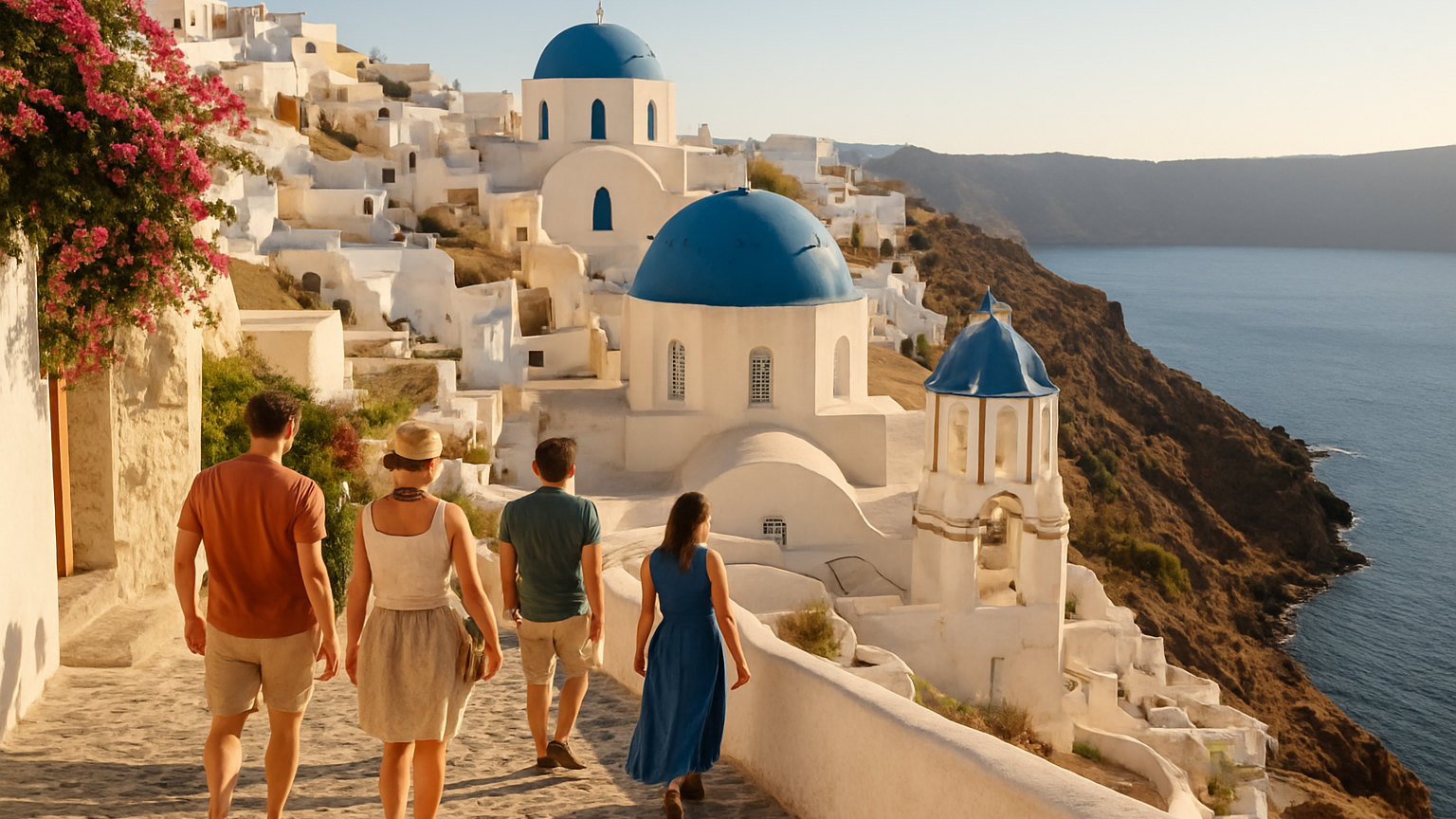
Santorini is the remains of a volcanic caldera, with villages strung along a cliff edge three hundred metres above a flooded crater. It is the most visited and most crowded island in Greece, and the view is still worth it. The whole question is how to see it without spending the day among several thousand other people doing the same.
Oia or Fira?
Fira is the capital, larger, better connected by bus and considerably cheaper, with the same caldera view. Oia at the northern tip is the more beautiful and the one in every photograph, and it is correspondingly expensive and packed. Imerovigli between them is the quietest of the three caldera villages and has the best view of all.
How do you handle the Oia sunset?
The crowd at the castle ruins in Oia is genuinely extreme, with people arriving two hours ahead. The alternatives are better: watch from Imerovigli, from a boat, or from the far end of Oia away from the castle. The sunset is the same from anywhere on the west-facing cliff, which is the fact the crowd has not absorbed.
When should you visit the villages?
Early. Cruise ships dock in the morning and tender passengers up to Fira, so between roughly ten and five the caldera path is busy. Before nine and after six the same villages are quiet. If you are staying on the island, this single adjustment changes the trip more than anything else.
What are the beaches like?
Volcanic and unusual rather than beautiful. Perissa and Perivolos in the southeast are long stretches of black sand with organised beach bars and the best swimming. Kamari is the other main black sand resort. Red Beach near Akrotiri is dramatic, small and subject to rockfall. Nobody should choose Santorini primarily for its beaches.
Is Akrotiri worth visiting?
Yes, and it is the most underrated thing on the island. A Bronze Age town buried by the eruption around 1600 BC and preserved beneath ash, with multi-storey buildings, drainage and streets, now under a modern roof. It is often compared to Pompeii and is around fifteen hundred years older.
What else should you do?
Walk the caldera path from Fira to Oia, around ten kilometres along the cliff edge, which is the best thing on the island and takes three to four hours. Take a boat to the volcanic islets in the caldera and the hot springs. Visit a winery, since the island produces assyrtiko from vines trained into low baskets against the wind.
When is the best time to visit?
May, early June and October. September is warm and still busy. July and August are hot, extremely crowded and the most expensive weeks in Greece. Winter is quiet with many businesses closed and the caldera often in cloud.
Do you need a car?
Not really. The island is small, buses run from Fira to most places, and parking in Oia and Fira is difficult to the point of being a deterrent. An ATV or scooter is the common local choice. A car helps only if you are staying somewhere remote.
How long do you need?
Three nights, four at most. Santorini is small and the list of things to do is short, and most people who stay a week end up taking day trips to Ios, Naxos or Crete. It combines well with a second, quieter island rather than standing alone.
Is it worth the crowds and the price?
For two or three nights, yes. The caldera is a genuinely extraordinary piece of geology and there is nothing else like the view in Europe. As a week-long beach holiday it is poor value, since the beaches are ordinary, the prices are the highest in Greece and the crowding is constant through the middle of the day.
Anyone weighing this up will also want What to See in Sicily: Coast, Etna and Ancient Ruins, along with the rest of the Destinations section.
The short answer
Three nights, staying in Imerovigli or Fira rather than Oia, walking the caldera path early, watching sunset away from the Oia castle, and visiting Akrotiri. Go in May or October, and go elsewhere if beaches are the priority.