
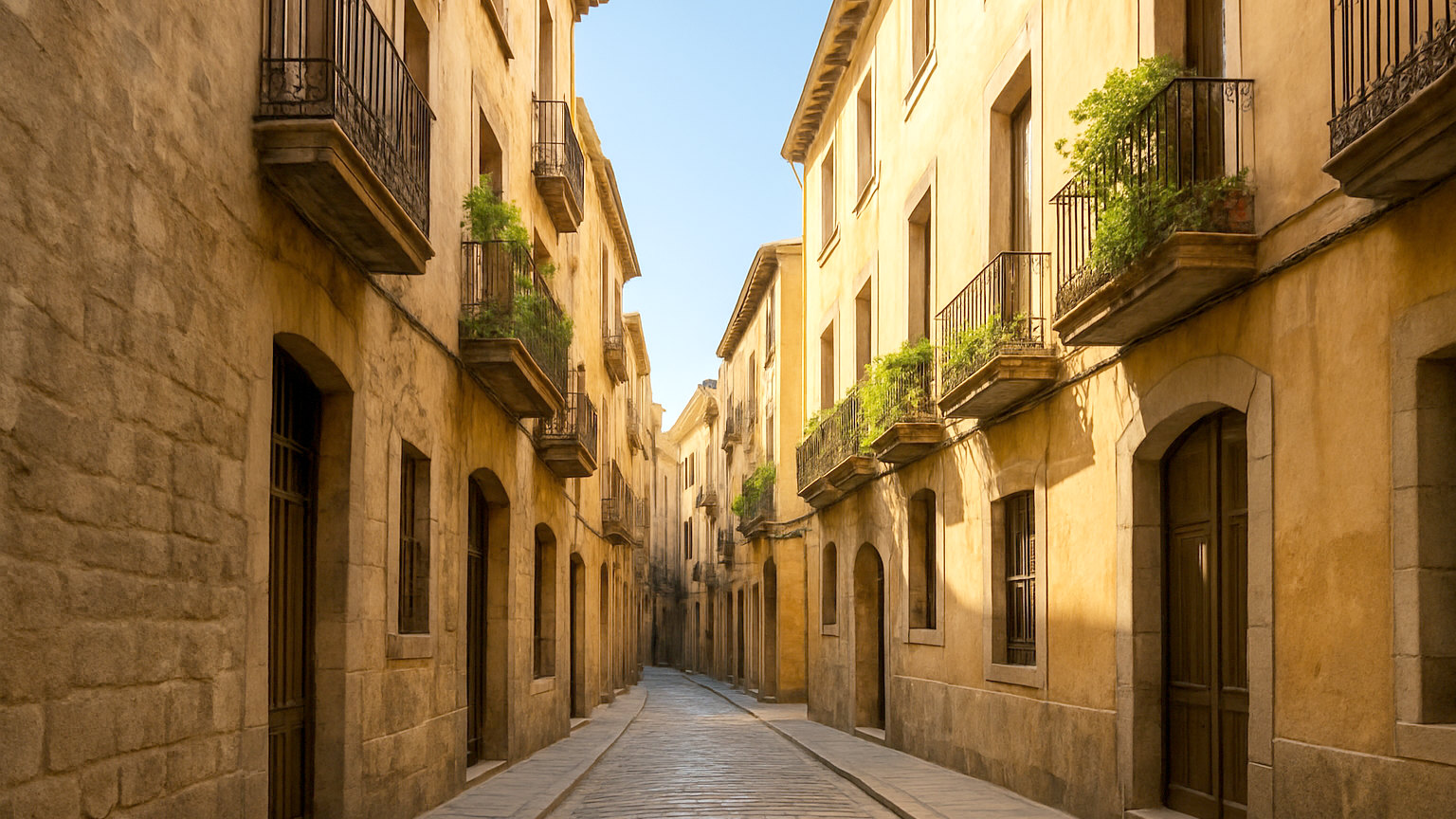
Girona sits thirty-eight minutes north of Barcelona by high-speed train, which makes it one of the easiest day trips in Spain and a considerably cheaper place to stay. It has Roman and medieval walls that can be walked around the city, a cathedral with the widest Gothic nave in the world, and a row of painted houses hanging over the Onyar river.
What makes it different?
The Call, its medieval Jewish quarter, is among the best preserved in Europe: a dense warren of stepped stone lanes and covered passages that has survived largely intact since the fifteenth century. Very few European cities retain anything comparable, and it takes about an hour to walk without hurrying.
How long do you need?
A day trip covers the highlights. Two nights lets you see it in the evening, which is when the old town is at its best, and gives access to the Costa Brava and the Dali sites.
What should you see?
The Passeig de la Muralla, the walkway along the old walls, which is free and gives views over the rooftops to the Pyrenees. The cathedral, reached by a flight of ninety steps that will be familiar to anyone who has seen certain television dramas filmed here. The Arab Baths, which are twelfth-century and Christian despite the name. The Sant Pere de Galligants monastery. The Onyar houses, best seen from the Pont de Pedra.
What is worth a day trip?
The Costa Brava, forty minutes east, with Calella de Palafrugell, Tamariu and Cadaques among the best coastal villages in Spain. Figueres for the Dali Theatre-Museum, which is the artist own creation and is unlike any other museum. Besalu, a medieval village with a fortified bridge. The Garrotxa volcanic park for walking.
Where should you eat?
Catalan cooking of a high standard, and the city punches well above its size, having produced one of the most celebrated restaurants in the world. Below that level, the streets around Plaça de la Independencia and the old town have plenty of good mid-priced places. Botifarra sausage, escalivada and calçots in season are the things to look for.
Where should you stay?
The Barri Vell, the old town, for the setting and the evenings. The Eixample across the river for cheaper and more modern accommodation five minutes away. Girona is small enough that the distinction barely matters.
How do you get there?
High-speed trains from Barcelona Sants take thirty-eight minutes and regional trains around eighty for a lower fare. Girona has its own airport used by budget carriers, though it is some way from the city. It is also on the line to Figueres and the French border.
When is the best time to visit?
April to June and September to October. Temps de Flors in May fills the old town courtyards and staircases with flower installations and is the busiest week of the year. July and August are hot, and winter is cool and very quiet.
How much should you budget?
Cheaper than Barcelona across the board, with accommodation the clearest saving. Staying here and commuting into Barcelona is a viable strategy if city hotel prices look steep, though the train fare adds up over a week.
What do people get wrong?
Coming only as a day trip and arriving at midday, when the coach parties and the Barcelona day trippers overlap. The old town in the early evening, with the walls almost empty and the light on the Onyar houses, is the version worth seeing.
How long is the walk around the walls?
About forty minutes at a steady pace, with several towers to climb and a number of steep stair sections. It is free, open late and is the single best thing to do in the city.
Ronda: The Cliff Town in Inland Andalusia is the natural next read, alongside the wider Destinations section.
The short answer
Two nights in the Barri Vell rather than a day trip. Walk the city walls, get lost in the Call, see the Onyar houses at dusk, and take a day on the Costa Brava or at the Dali museum in Figueres.


