
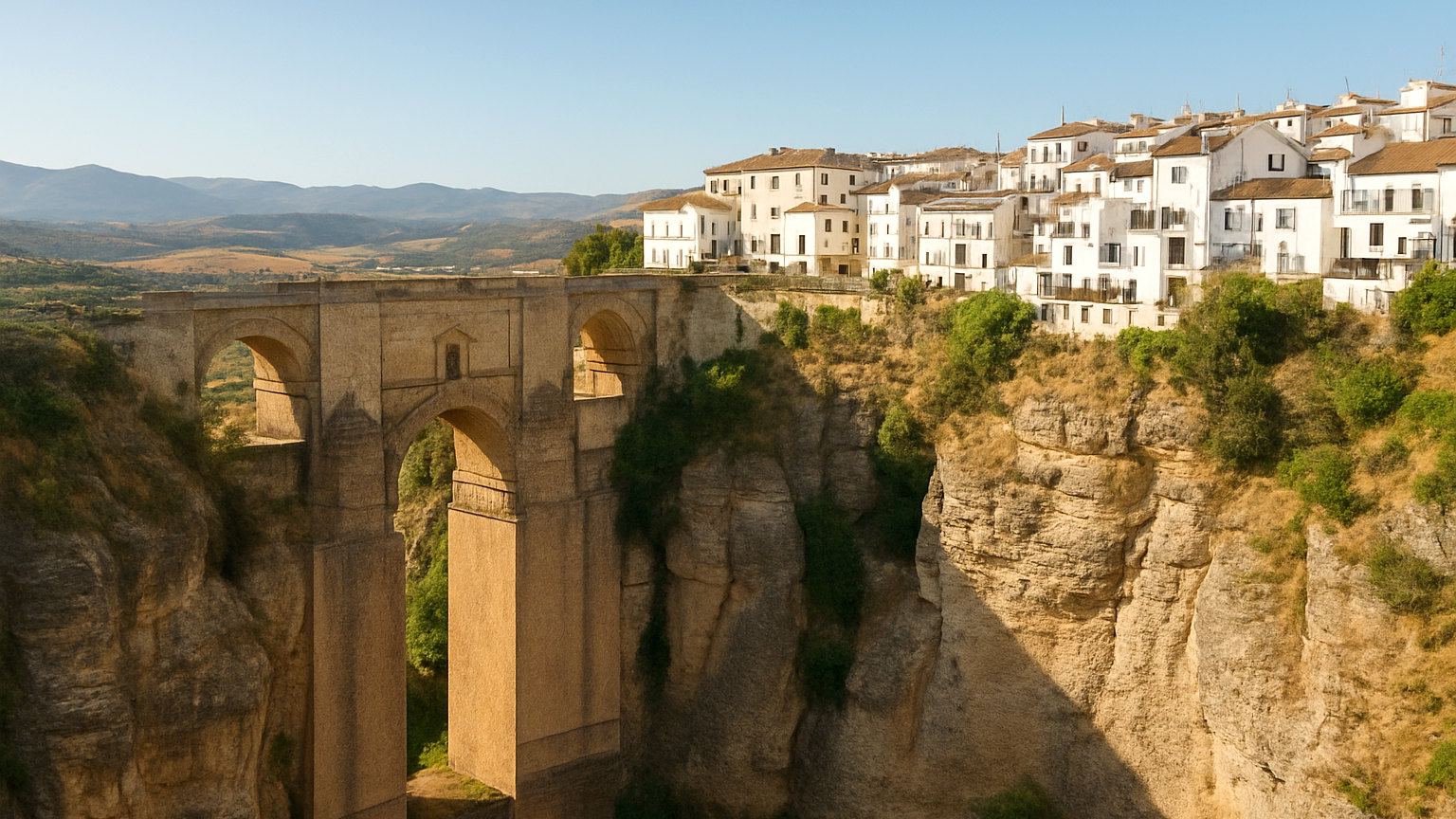
Ronda sits on a plateau in the mountains inland from Malaga, split in two by the Tajo, a gorge around a hundred metres deep with a river at the bottom and an eighteenth-century bridge spanning it. It is the most dramatic townscape in Andalusia and it receives a very large number of coach visitors between about eleven and four.
What makes it different?
The gorge. Few European towns are built on the edge of anything comparable, and the view from the Puente Nuevo down into the chasm, or up at it from the path below, is the reason people come. The town also has one of the oldest bullrings in Spain, which is significant architecturally whatever your view of the sport.
How long do you need?
One night, two if you want the surrounding villages. The town is small and takes half a day, and the whole argument for staying is being there in the evening and the early morning when the coaches have gone.
What should you see?
The Puente Nuevo and the viewpoints either side of it. The path down into the gorge from the Jardines de Cuenca, which gives the view upward and is where the best photographs are taken. The Plaza de Toros and its museum. The Arab baths, among the best preserved in Spain. The Casa del Rey Moro gardens with a water mine cut down through the rock to the river.
What is worth a day trip?
The pueblos blancos, the white villages scattered through the surrounding mountains, of which Setenil de las Bodegas is the most unusual, with houses built under overhanging rock. Zahara de la Sierra sits below a castle above a reservoir. Grazalema is the walking base. The Caminito del Rey, a walkway pinned to a gorge wall, is around an hour away and needs booking well ahead.
Where should you stay?
The old town south of the bridge for quiet and character. The newer Mercadillo side for most of the hotels and restaurants. A room with a gorge view costs a premium and is worth it for one night. Several rural hotels sit in the countryside outside town for anyone with a car.
Where should you eat?
Mountain Andalusian cooking rather than coastal: oxtail stew, game, mountain ham from the Serrania de Ronda, and strong local red wine, since this is a small but serious wine region. Eat away from the bridge, where prices follow the view.
How do you get there?
Malaga is around ninety minutes by road and the drive up through the mountains is spectacular. There is a railway line from Algeciras and Granada that is slow and scenic. Seville is around two hours. A car is close to essential for the white villages.
When is the best time to visit?
April, May, September and October. Ronda sits at around seven hundred and fifty metres so it is cooler than the coast, which makes it a genuine escape from Seville or Malaga in high summer, though July and August are still hot. Winter can be cold and wet at this altitude.
What do people get wrong?
Visiting between eleven and four, which is when every coach from the Costa del Sol arrives. Staying a night inverts the experience entirely.
How much should you budget?
Cheaper than Seville or Malaga for accommodation outside the peak, though gorge-view rooms carry a real premium. Eating is inexpensive away from the bridge, and the local wine is very good value. Most of the viewpoints and the gorge path cost nothing.
Should you visit the bullring?
The building dates from 1785 and is one of the oldest in Spain, and the museum covers the history of the sport and the Romero family who shaped it. Bullfights are rare here now, held only a couple of times a year, so a visit is to an empty historic arena rather than an event.
Wroclaw: Poland Prettiest Square and Its Dwarfs goes into more detail on a closely related question, and the rest of our Destinations section covers the wider subject.
The short answer
One or two nights with a car. Walk down into the gorge in the late afternoon once the coaches leave, see the bridge at sunrise, and spend the second day in Setenil and Zahara de la Sierra.


