Plovdiv in southern Bulgaria has a reasonable claim to being the oldest continuously inhabited city in Europe, with settlement going back around eight thousand years. It has a Roman theatre that still hosts concerts, an old town of painted merchant houses on three hills, and prices among the lowest in the European Union.
What makes it different?
The layers are visible rather than buried. A Roman stadium runs underneath the main pedestrian street with one end exposed in a sunken plaza, the theatre sits on a hill above it, Ottoman mosques stand among nineteenth-century Bulgarian revival houses, and communist-era blocks surround the lot. Very few cities let you see so much history from one spot.
How long do you need?
Two or three nights. The old town and the Roman remains take a day, Kapana an evening, and a third day allows the Bachkovo monastery or the Rhodope mountains.
What should you see?
The Roman theatre, second century and remarkably complete, seating around five thousand and still in use. The Roman stadium beneath the main street. The old town, a steep quarter of timber-framed houses with overhanging upper floors, several open as museums. The Dzhumaya Mosque. Nebet Tepe, the hilltop with the earliest settlement remains and the best view at sunset.
What is Kapana?
A grid of small streets below the old town, once the craftsmen quarter and now the creative district, full of bars, galleries and small restaurants. It is where the city actually goes out and it is the main reason Plovdiv was European Capital of Culture in 2019. It is compact, pedestrianised and cheap.
What is worth a day trip?
The Bachkovo monastery, around forty minutes south, the second largest in Bulgaria, in a wooded valley. The Rhodope mountains beyond it for villages, gorges and the Wonderful Bridges rock formations. Koprivshtitsa, a preserved revival-era town, around two hours away. Sofia is around two hours by train or bus.
Where should you stay?
The old town for the setting, accepting cobbles and steep lanes. Kapana or the streets around the main pedestrian axis for convenience and nightlife. Guesthouses in restored revival houses are the distinctive option and are inexpensive.
Where should you eat?
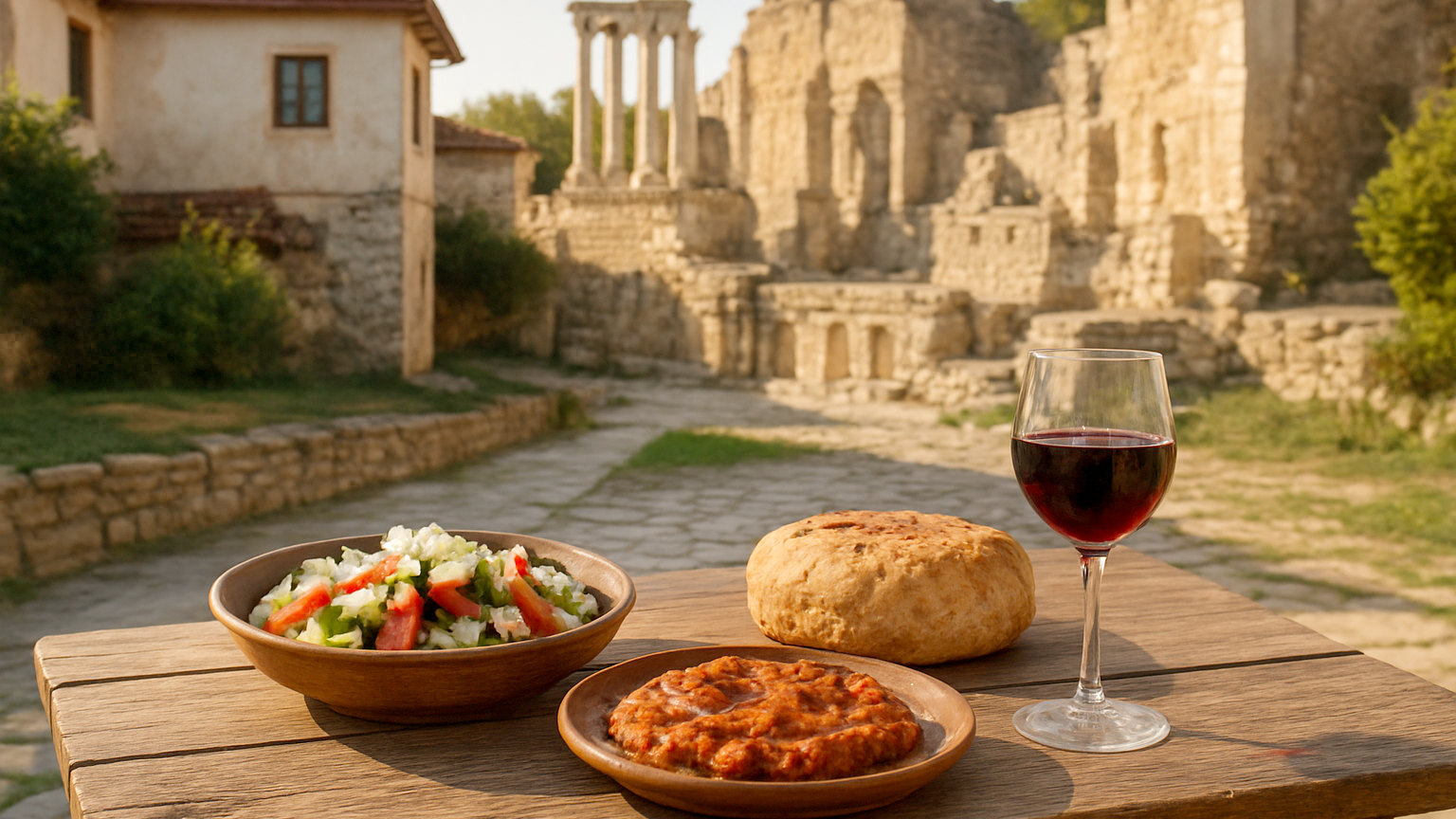
Bulgarian cooking is grilled meat, salads and white cheese. Shopska salad, banitsa pastry, kavarma and the yoghurt, which is a genuine point of national pride. Rakia, the fruit brandy, accompanies the salad rather than the meal. Prices are very low even in the tourist streets.
How do you get there?
Sofia airport is around two hours away by bus or train with frequent services, and Plovdiv has a small airport with limited flights. Trains within Bulgaria are slow and cheap; coaches are faster. The city centre is walkable and a car is only useful for the mountains.
When is the best time to visit?
May, June and September. July and August are hot on the Thracian plain. Winter is cold and quiet, and the Rhodope ski resorts are within reach. The theatre concert season runs through the summer and is the best way to see the building.
How much should you budget?
Among the cheapest places in the European Union. Bulgaria uses the lev, pegged to the euro, and cards are accepted in the centre though cash is useful in the villages. A full restaurant meal with wine costs a fraction of a western European equivalent, and museum entry is nominal.
What do people get wrong?
The head gesture, which is inverted here: a nod can mean no and a shake can mean yes, and it causes genuine confusion in shops and restaurants. The second is walking the old town in poor shoes, since the lanes are steep and cobbled.
For the next step, see Matera: The Cave City in Southern Italy, or browse the full Destinations section.
The short answer
Three nights, staying in the old town or Kapana. See the Roman theatre early, climb Nebet Tepe for sunset, spend the evenings in Kapana, and take a day at Bachkovo monastery and the Rhodope villages.