
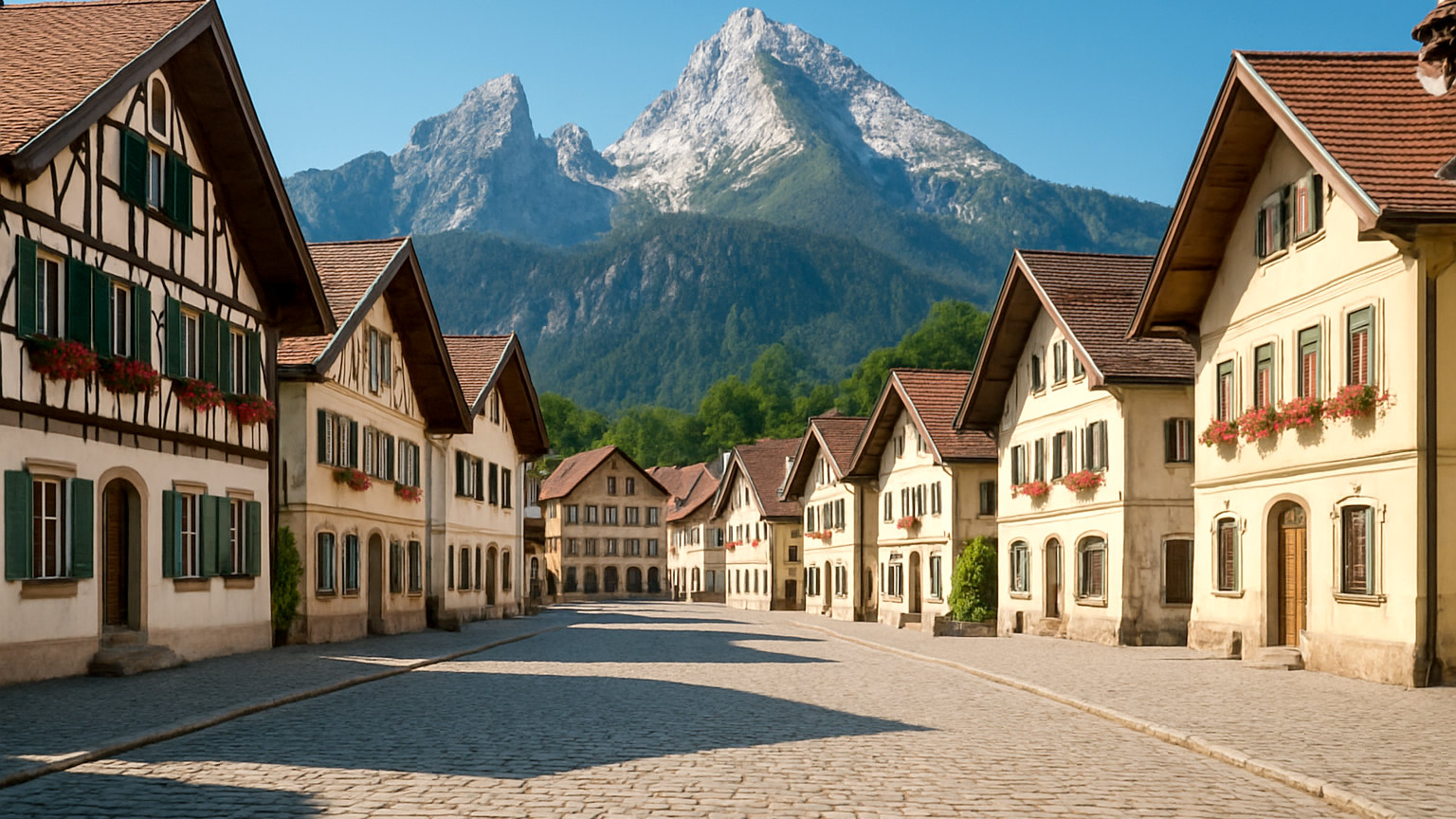
Berchtesgaden occupies a wedge of Bavaria pushing into Austria, surrounded on three sides by the border and dominated by the Watzmann, the third highest mountain in Germany. At its centre is the Konigssee, a long narrow lake enclosed by cliffs, which is among the cleanest in the country and is crossed only by electric boats.
What is the Konigssee?
A glacial lake around eight kilometres long, hemmed in by rock walls that drop straight into water of an intense green. Petrol engines have been banned since 1909 and the passenger boats have been electric since then, which keeps it silent. Partway along, the boatman stops and plays a flugelhorn against the cliff to demonstrate the echo, which sounds like a gimmick and is genuinely striking.
What should you do there?
Take the boat to St Bartholoma, a red-domed pilgrimage chapel on a peninsula below the east face of the Watzmann, which is the classic image. Continue to Salet at the far end and walk twenty minutes to the Obersee, a smaller upper lake with a waterfall at the head, which is quieter and arguably better. Allow half a day for the full trip.
What is the Eagles Nest?
A stone building on a summit above the town, built as a gift to Hitler and now a restaurant and viewpoint, reached by a special bus up a private road and then a tunnel and brass lift through the rock. It is presented as a historical site rather than a shrine, and the Dokumentation Obersalzberg centre below it covers the Nazi use of the area properly and unflinchingly. Both are worth visiting together rather than separately.
What else is in the area?
The Berchtesgaden salt mine, entered on a small train with the wooden slides between levels, which is the best wet-weather option. The Jenner cable car for a view over the Konigssee. The Ramsau church with the Watzmann behind it, which is the most photographed church in Germany. The Wimbachklamm gorge. Salzburg is twenty-five minutes away across the border.
What is the walking like?
Excellent and often steep, within Germany only alpine national park. Routes run from flat valley paths to the Watzmann crossing, which is a serious mountaineering route with a significant accident record and should not be attempted casually. The Hirschau and Malerwinkel paths along the Konigssee shore are easy and beautiful.
When is the best time to visit?
June to September for walking and the boats, with the Obersee path closed by snow outside roughly May to October. The Eagles Nest is only open from mid-May to late October because the road is impassable in winter. Winter brings skiing at Jenner and a well-regarded Christmas market.
How do you get there?
Salzburg is the nearest airport at around forty minutes and Munich around two hours. There is a railway line to Berchtesgaden and a good local bus network covering the lake, the salt mine and Ramsau, so a car is helpful rather than essential.
How much should you budget?
Mid-priced for Germany and cheaper than the Austrian resorts across the border. The boat, the Eagles Nest bus and the salt mine each carry a separate charge and add up, so a regional card is worth checking. Guest cards from accommodation often include local buses.
How long do you need?
Three or four nights. The Konigssee is half a day, the Eagles Nest and documentation centre most of another, and the salt mine or a walk fills a third. It also combines naturally with Salzburg, which is twenty-five minutes away.
What should you eat?
Bavarian mountain cooking: Kaiserschmarrn, pork knuckle, and dumplings in most forms. The mountain huts serve substantial food at reasonable prices and are usually the better lunch.
The Picos de Europa: Spain Overlooked Mountains answers a related question in more depth, and there is more of the same across our Destinations guides.
The short answer
Four nights in Berchtesgaden or Ramsau. The Konigssee boat to Salet and the walk to the Obersee on the clearest day, the Eagles Nest with the documentation centre, the salt mine if it rains, and Salzburg for an afternoon.


