
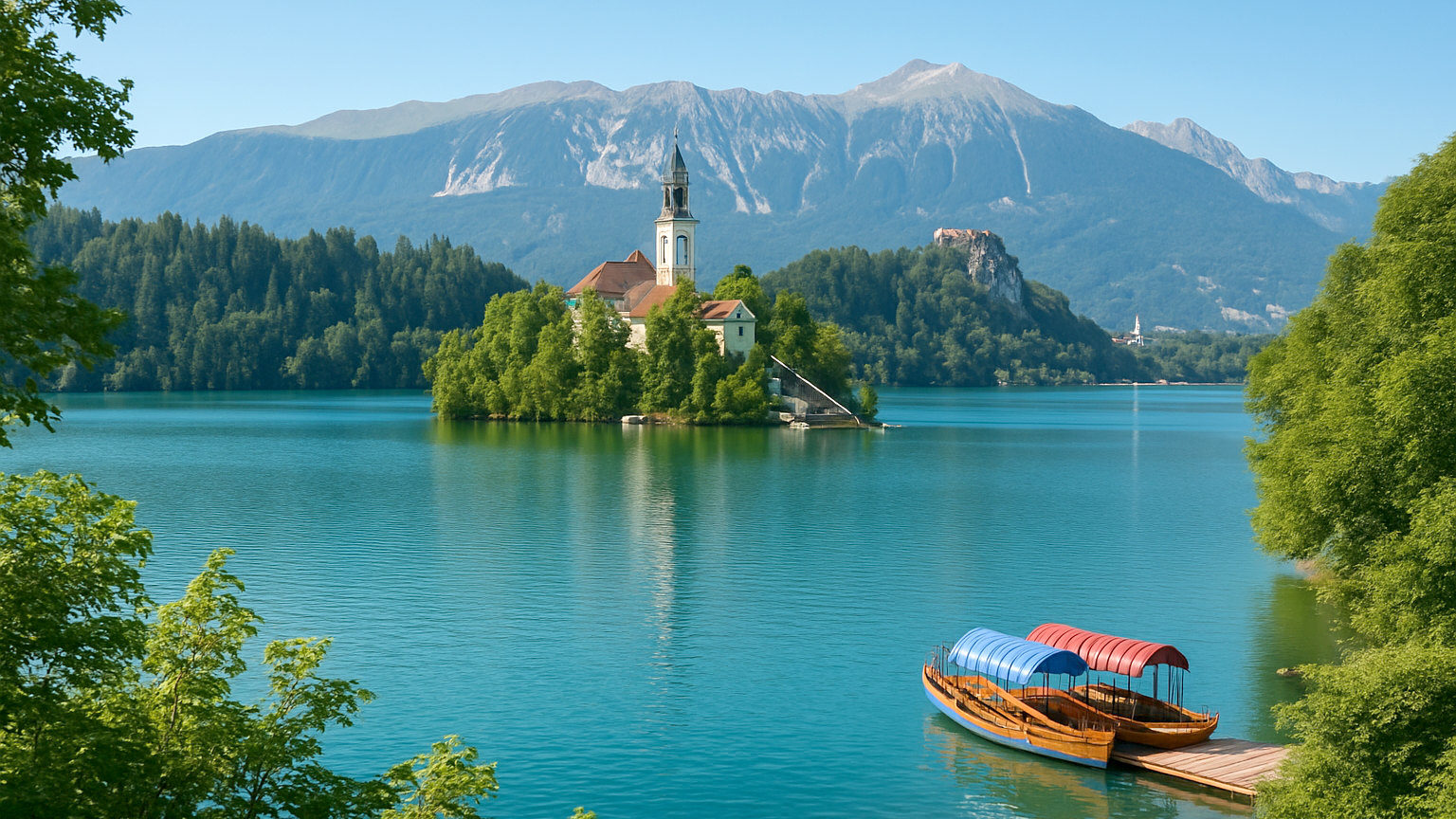
Slovenia has two famous lakes twenty minutes apart at the foot of the Julian Alps. Bled has an island with a church on it, a castle on a cliff and an enormous number of visitors. Bohinj is three times the size, sits inside the national park, and has a fraction of the crowds. Most people go to the first and stay there.
What is Bled like?
Small, beautiful and busy. The lake can be walked around in about ninety minutes on a flat path. The island is reached by a traditional pletna boat rowed standing, and there are ninety-nine steps up to the church. The castle above gives the classic view. In July and August the lakeside path is continuously occupied and the town feels like an attraction rather than a place.
What is Bohinj like?
Larger, wilder and quieter, ringed by mountains rather than hotels. It sits within Triglav National Park, which limits development. The water is colder and cleaner, swimming is normal rather than restricted, and the village of Ribcev Laz at the eastern end is the main base. The Savica waterfall and the Vogel cable car are both close.
Which should you stay at?
Bohinj, for most people, with a day trip to Bled. Bled has better restaurants, more hotels and easier transport, and Bohinj has the better lake and the better access to the mountains. Staying at Bohinj and visiting Bled early in the morning gives you both without the crowds.
What should you do?
Walk around both lakes. Take the Vogel cable car above Bohinj for a view across to Triglav, with walking at the top in summer and skiing in winter. Visit the Vintgar gorge near Bled, a boardwalk through a narrow limestone canyon, which requires a timed ticket booked ahead. Row a boat on Bled or swim in Bohinj.
Can you swim?
In both. Bled reaches around twenty-four degrees in August, which is warm for an alpine lake, and has a designated swimming area. Bohinj is colder, usually around twenty-one, and you can swim almost anywhere along its shore. Both are clean enough that swimming is genuinely pleasant rather than an endurance test.
What is nearby?
The Vrsic pass, a road of fifty hairpin bends over the Julian Alps into the Soca valley, which is one of the great alpine drives and is open roughly May to October. Kranjska Gora for skiing. Ljubljana is an hour away. Radovljica, a small walled town between the two lakes, has a beekeeping museum and is worth an hour.
When is the best time to visit?
June and September. July and August are very busy at Bled and warm enough for lake swimming. May is green with high water in the gorge and some mountain roads still closed. Winter brings skiing at Vogel and Kranjska Gora, and Bled occasionally freezes.
How much should you budget?
Bled is the most expensive place in Slovenia and prices there are close to Austrian levels in season. Bohinj is cheaper, and the villages between the two cheaper again. Slovenia uses the euro.
How long do you need?
Three or four nights covers both lakes, the gorge and a cable car comfortably. A week if you are walking in the Julian Alps or combining with the Soca valley over the Vrsic pass.
What do people get wrong?
Booking a week at Bled. It is one small lake that can be walked round in ninety minutes, and three nights there is usually one too many. The second is arriving at Vintgar gorge without a booked ticket, which in summer means being turned away. Slots for the gorge are released some weeks ahead and the early morning ones go first.
For the next step, see Plitvice Lakes: How to Visit Without the Queues, or browse the full Destinations section.
The short answer
Stay at Bohinj, visit Bled before nine in the morning for the island and the castle, take the Vogel cable car, and book Vintgar gorge in advance. Add the Vrsic pass if you are driving and it is open.


