
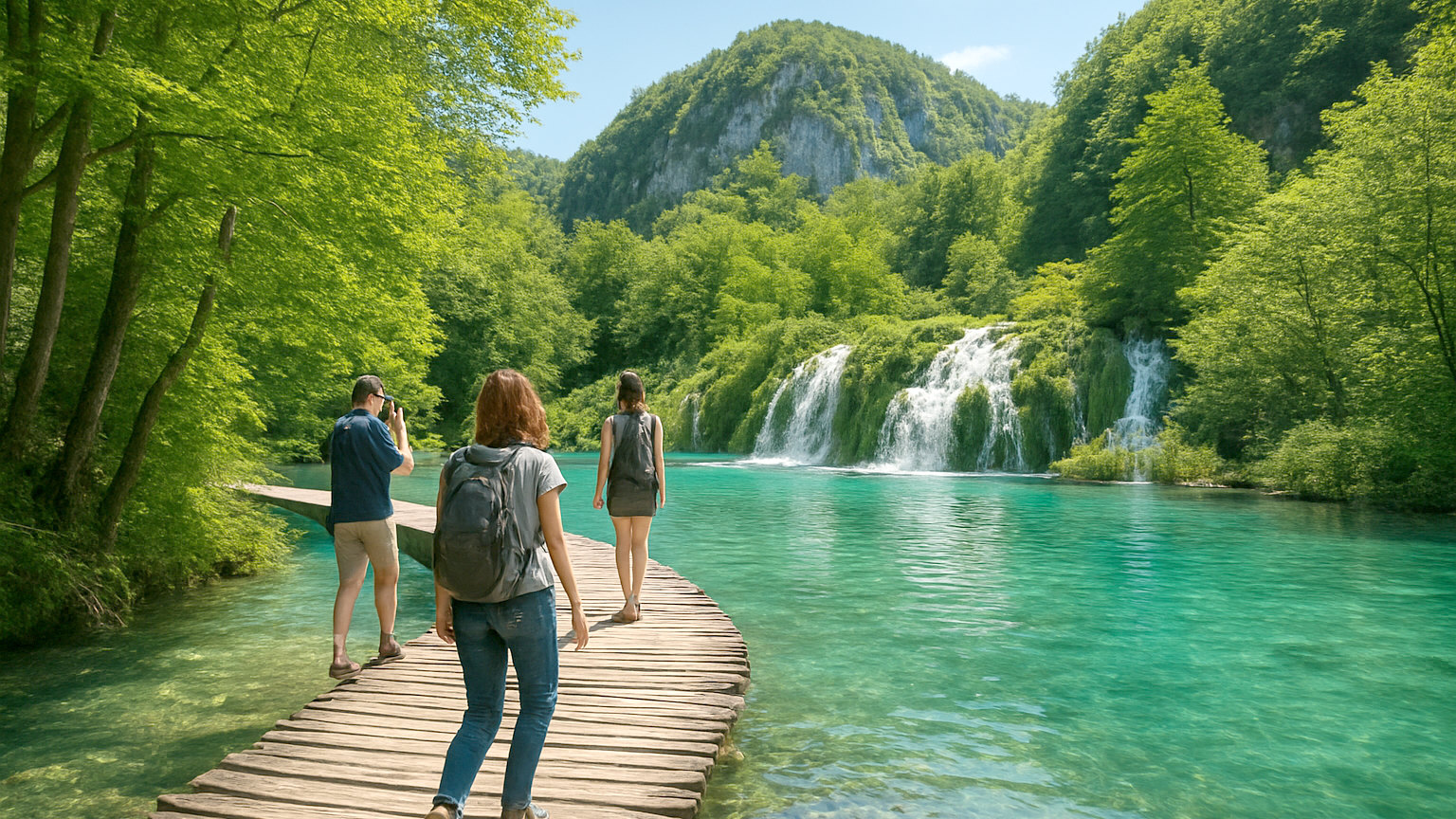
Plitvice is a chain of sixteen terraced lakes in central Croatia, linked by waterfalls and separated by natural travertine dams that are still growing. Wooden boardwalks run across and beside the water, often just above it. It is the most visited attraction in Croatia and the experience varies enormously depending on when you arrive and which entrance you use.
How does the ticketing work?
Entry is by timed ticket with a daily cap, and in summer tickets must be booked online well in advance. Turning up without one in July or August frequently means being turned away. Prices vary by season and are highest from June to September. The ticket includes the shuttle buses and the boat across the largest lake.
Which entrance should you use?
There are two main ones. Entrance 1 is at the lower lakes and starts with the big waterfall, which means the best view comes first and the crowd is densest at the start. Entrance 2 is at the upper lakes and is generally the calmer beginning. Most people who have been more than once recommend entrance 2 for a first visit, walking down through the upper lakes and finishing at the falls.
Which route should you take?
Lettered routes from A to K cover different combinations, from a two-hour loop to a full day of around eight hours. Route C, taking four to six hours, is the usual recommendation and covers both the upper and lower lakes with the boat and shuttle included. Route K is the full circuit for anyone with a whole day and reasonable fitness.
How do you avoid the crowds?
Arrive at opening, which in summer is early, or take the last entry slot in the afternoon when the coach groups have left. The boardwalks are narrow and one way in places, so a crowd cannot be overtaken. Staying nearby the night before is the practical way to be first in, since most visitors arrive from Zagreb or Zadar mid-morning.
Can you swim?
No. Swimming has been prohibited throughout the park for years to protect the travertine formations, which are fragile and biologically active. Krka national park, further south, permitted swimming for longer and has also restricted it, so check the current position before planning around it.
Where should you stay?
The park hotels at the entrances, which are functional rather than charming and allow the earliest start. The villages of Rastovaca, Jezerce and Mukinje just outside, which have guesthouses at lower prices. Slunj, half an hour north, is a pretty town on a river with its own small waterfalls.
When is the best time to visit?
May, June and October. Spring has the highest water and the strongest falls. October brings autumn colour and far fewer people. July and August are hot, crowded and the water level drops. Winter is genuinely beautiful with frozen falls, and parts of the boardwalk close for safety.
How do you get there?
Around two hours from Zagreb and around ninety minutes from Zadar by road, with buses on both routes. A car gives you the flexibility to arrive early, which matters more here than almost anywhere. Note the park is inland and cool, so a beach base on the coast means a long day.
Is Krka a better alternative?
It depends what you want. Plitvice is larger, more dramatic and has the better lake system. Krka, near Sibenik, is smaller, closer to the Dalmatian coast and considerably less crowded, which makes it the easier day out if you are already on the coast. If you are travelling between Zagreb and the sea, Plitvice is on the way and worth the effort. Doing both on the same trip is reasonable, since they are around two hours apart and the landscapes are genuinely different.
If you are planning further, Chamonix and Mont Blanc: What to Do in Summer covers the next part of the decision, and there is more in our Destinations guides.
The short answer
Book a timed ticket well ahead, stay in a village outside the park the night before, enter at opening through entrance 2, and take route C. Go in May, June or October, and expect not to swim.


