Chamonix sits in a deep valley directly beneath Mont Blanc, the highest mountain in western Europe, and is best known as a ski resort and a mountaineering centre. For most visitors summer is the better season: the lifts open onto high viewpoints, the walking is among the finest in the Alps, and the prices are lower than in February.
What is the Aiguille du Midi?
A cable car that climbs from the valley floor at just over a thousand metres to a rock spire at three thousand eight hundred, in two stages, making it one of the highest lifts in the world. At the top there are terraces looking directly across at Mont Blanc, a glass-floored box projecting over the drop, and a tunnel through the rock. The altitude gain is abrupt and people do feel it, so move slowly at the top.
What else should you do?
The Montenvers rack railway to the Mer de Glace, the largest glacier in France, which has retreated dramatically and where the descent to the ice caves now takes several hundred additional steps compared with a few decades ago. The Brevent and Flegere lifts on the opposite side of the valley, which give the best views back at Mont Blanc. Paragliding, which lands in the middle of town.
What is the walking like?
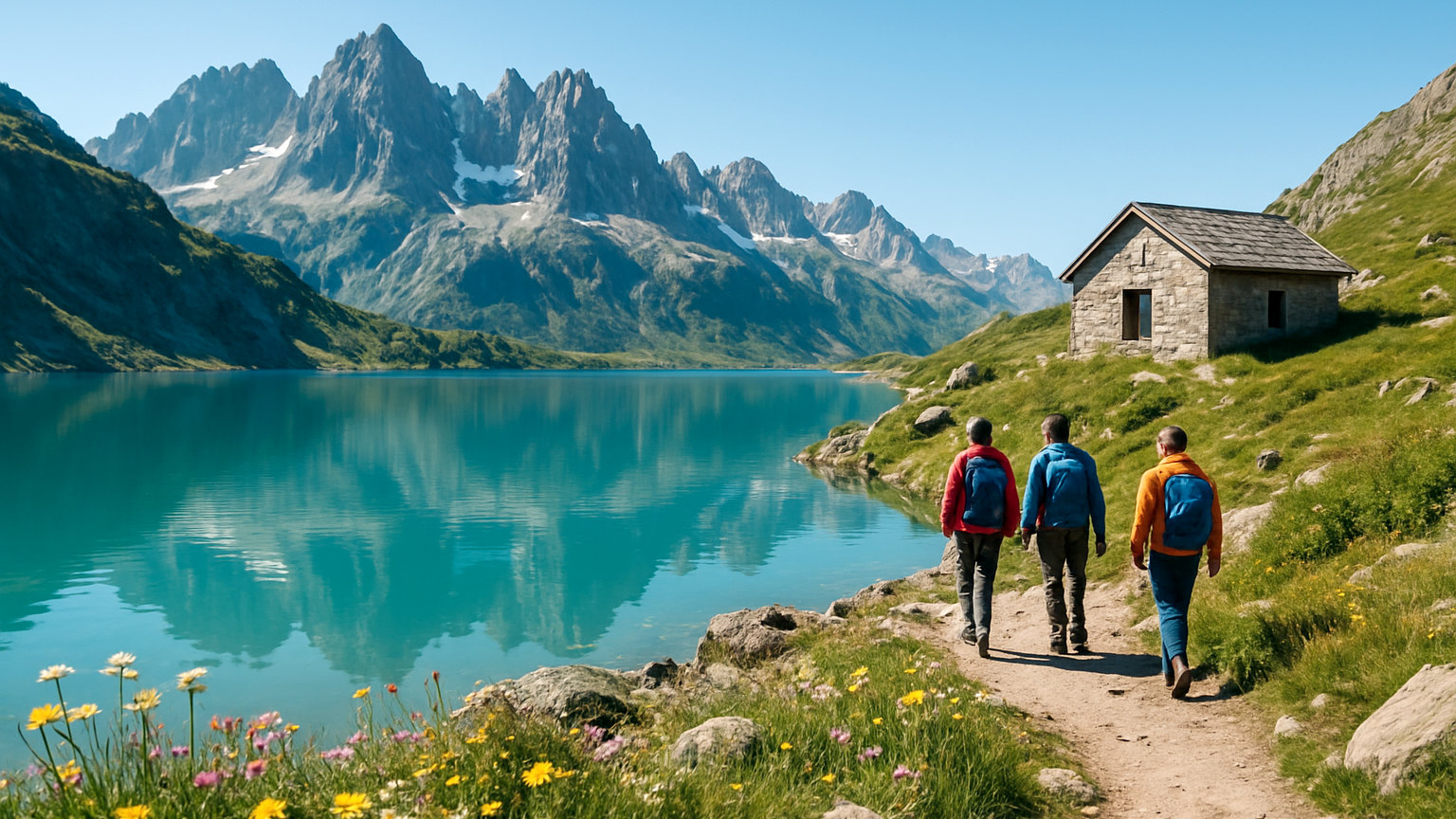
Exceptional and lift-assisted. The Grand Balcon Sud runs along the western side of the valley between Flegere and Planpraz with a continuous view of the Mont Blanc massif, and is the classic day. Lac Blanc, a turquoise lake reflecting the peaks, is the most photographed walk. The Tour du Mont Blanc, a circuit of around one hundred and seventy kilometres through France, Italy and Switzerland, takes ten to eleven days and is one of the great long-distance routes.
Should you cross to Italy?
The Skyway Monte Bianco from Courmayeur on the Italian side is a rotating cable car that is newer and often less crowded than the Aiguille du Midi. The Panoramic Mont-Blanc gondola links the two across the glacier in summer, which makes a France to Italy crossing by cable car possible. The Mont Blanc road tunnel takes about twenty minutes.
Where should you stay?
Chamonix town for restaurants, lift access and atmosphere. Argentiere, a few kilometres up the valley, for a quieter village with its own lift. Les Houches at the lower end for families and lower prices. A guest card issued with accommodation usually includes the valley buses and trains, which is worth asking for at check-in.
When is the best time to visit?
Mid-June to mid-September for walking, with July and August the most reliable and the busiest. The high lifts and paths open late and close early because of snow. Late September is quiet and beautiful with several lifts already shut. December to April for skiing, which is serious and better suited to confident skiers than beginners.
How much should you budget?
Expensive by French standards, close to Swiss levels for lifts. A multi-lift pass is far better value than individual tickets if you intend more than two. Accommodation is cheaper in summer than in the ski season.
What do people get wrong?
Going up the Aiguille du Midi on a cloudy day, which costs a great deal and shows you nothing. Check the webcams in the morning and keep the day flexible. The second is underestimating the altitude and the cold at the top, which can be below freezing in August.
How long do you need?
Four or five nights. The valley is compact and everything is reachable by the free shuttle buses, but the weather dictates the schedule, so allow spare days rather than booking the big lifts for fixed dates.
For the next step, see Lake Lucerne: Mountains, Boats and Day Trips, or browse the full Destinations section.
The short answer
Five nights in Chamonix or Argentiere in late June or September. Take the Aiguille du Midi on the clearest morning, walk the Grand Balcon Sud, visit the Mer de Glace, and buy a multi-lift pass rather than single tickets.