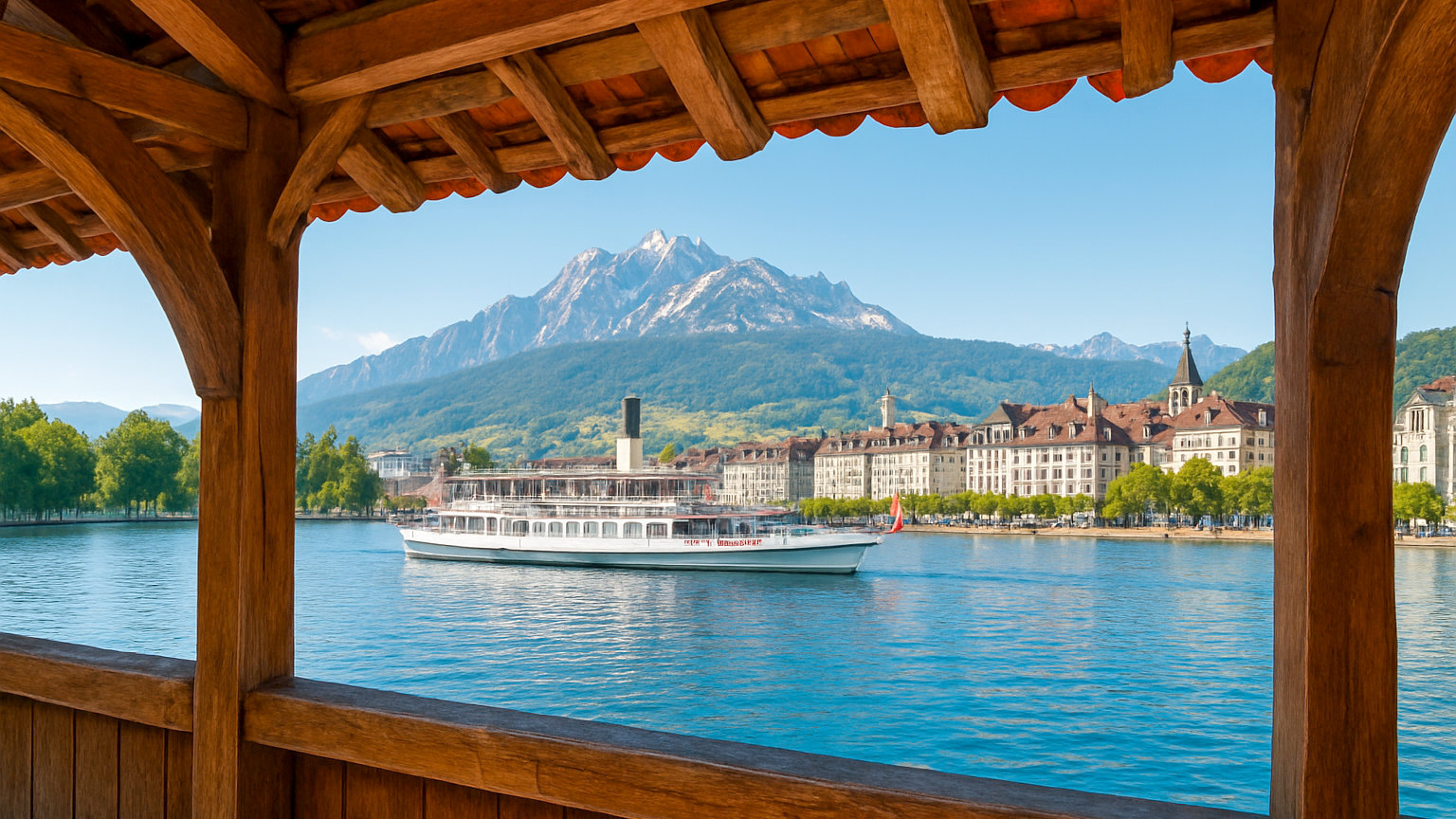
Lucerne sits at the northern end of a lake with an unusually complicated shape, ringed by mountains that rise directly from the water. It has a medieval old town with a covered wooden bridge, a fleet of paddle steamers still running scheduled services, and three separate mountain railways within easy reach, which makes it the best-placed base in Switzerland for a short trip.
What is there in the city?
The Chapel Bridge, a fourteenth-century covered footbridge with painted panels under the roof, which is the most photographed structure in Switzerland. The Musegg wall with its towers, several of which can be climbed for free. The Lion Monument, a dying lion carved into a rock face. The Swiss Museum of Transport, which is the most visited museum in the country and much better than the name suggests.
Which mountain should you choose?
Rigi for the gentlest and most rewarding, reached by two cogwheel railways and a cable car, with a broad summit giving a view across the lake and out to the high Alps. Pilatus for the more dramatic, using the steepest cogwheel railway in the world on one side and a cable car on the other, which together make a round trip. Titlis, further away at Engelberg, for a glacier and a rotating cable car.
If you have one day, take Rigi. If you want the set-piece journey, do the Pilatus golden round trip with the boat included.
How does the boat network work?
Scheduled services, including five restored paddle steamers, run the length of the lake and call at villages and the foot of the mountain railways. They are part of the public transport system rather than a tourist excursion, so passes cover them. Taking the boat out and the train back is the standard way to do any of the mountains.
How do you keep the cost down?
The Swiss Travel Pass covers the boats and gives discounts on the mountain railways, and the Tell Pass covers the region including full mountain access, which is usually better value if you are staying put. Ask for the guest card at your hotel. Eat from supermarkets and bakeries at lunch, which is normal here and saves more than anything else.
Where should you stay?
Lucerne itself for convenience and evening life. Weggis or Vitznau on the northern shore for a quieter lakeside base with direct access to Rigi. Engelberg if Titlis and walking are the priority. Lucerne is around an hour from Zurich airport by direct train.
When is the best time to visit?
May to October, with June and September the best balance. The mountain railways run year round on Rigi and Pilatus, though Pilatus cogwheel closes in winter. Snow on the summits is possible in any month. The Lucerne Festival in August and September is a major classical music event.
How long do you need?
Three or four nights. One day in the city, one mountain, one boat trip, and a fourth for a second mountain or Engelberg.
What do people get wrong?
Going up a mountain in cloud. Swiss webcams are excellent and updated constantly, so check before buying the ticket and swap the day if necessary. The second is paying full fare for everything rather than working out which regional pass fits the trip.
What should you eat?
Central Swiss cooking is hearty: rosti, cheese fondue, and lake fish such as perch fillets. Lucerne has a good covered market by the river on Tuesday and Saturday mornings, which is the cheapest way to assemble a lunch.
Is it a good base for the rest of Switzerland?
The best, arguably. Interlaken and the Bernese Oberland are under two hours, Zurich is fifty minutes, and Bern is an hour. For a first trip to Switzerland with a single base, Lucerne reaches more of the country comfortably than anywhere else.
The Salzkammergut: Austria Lake District goes into more detail on a closely related question, and the rest of our Destinations section covers the wider subject.
The short answer
Four nights in Lucerne or Weggis. City and Chapel Bridge on the first day, Rigi by boat and cogwheel on the clearest morning, Pilatus if you have time, and a regional pass rather than individual tickets.