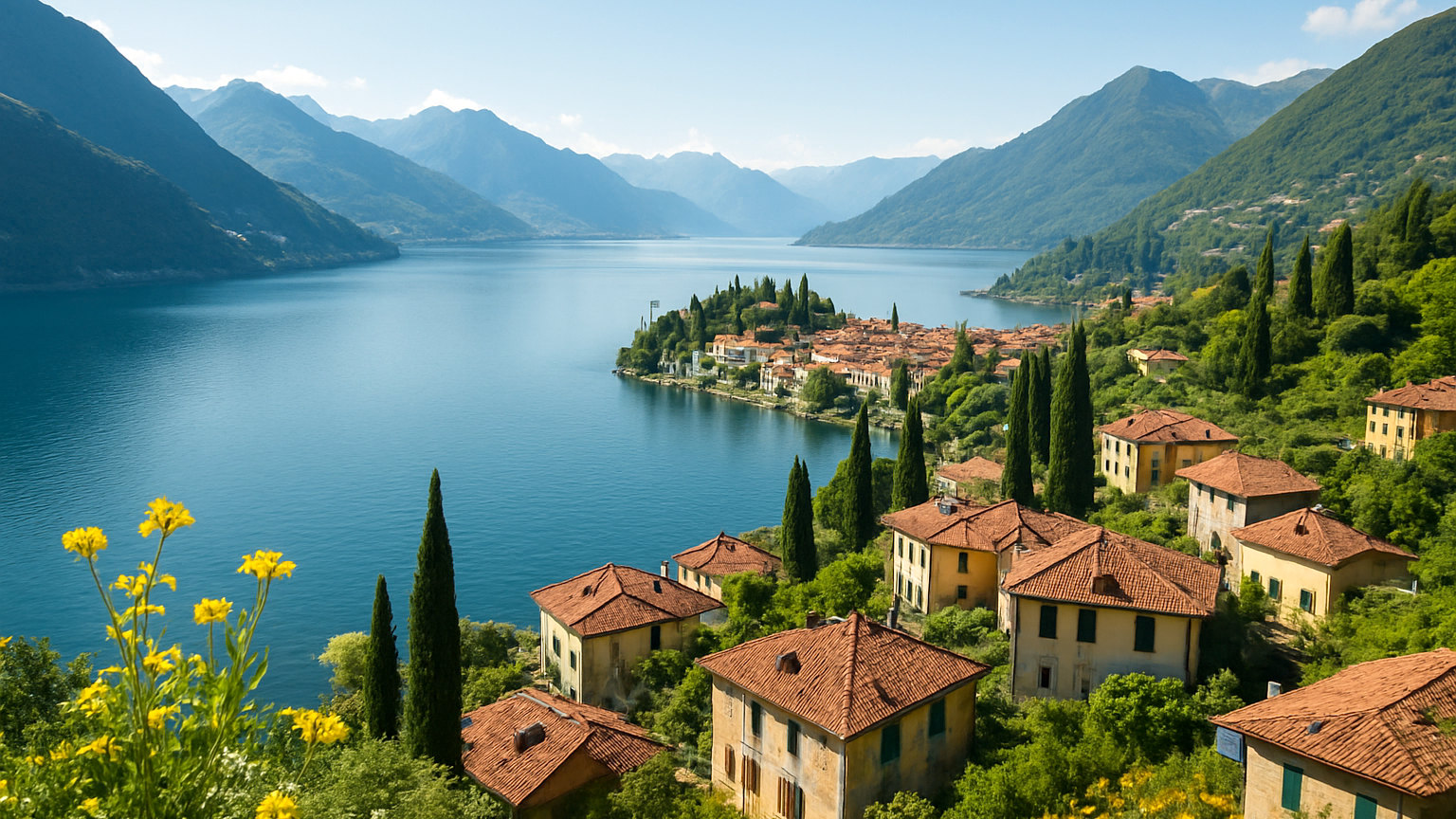
Lake Como is shaped like an inverted Y, with three arms meeting at a central point, and it is enclosed by steep mountains that fall straight into the water. That geography decides everything about a visit: the lakeside roads are narrow and slow, there is no way to circle the lake quickly, and the ferries are usually faster than driving.
Which town should you choose?
Varenna, on the eastern shore, is the best base for most people: small, pretty, on the railway line from Milan, and on the central ferry route. Bellagio, at the point where the arms meet, is the famous one and is correspondingly busy and expensive. Menaggio on the western shore is larger, has a good bus network and is cheaper. Como town at the southern tip is a proper town with shops and a station, and is the least scenic.
How do the ferries work?
The central triangle of Varenna, Bellagio and Menaggio is served by frequent passenger ferries taking ten to twenty minutes, plus a car ferry. This is the heart of the lake and staying anywhere on that triangle means you can reach the other two easily. Slower ferries run the length of the lake and a hydrofoil connects the main towns. Buy a day pass if you intend more than two crossings.
What should you see?
Villa del Balbianello, on a wooded promontory near Lenno, which is the finest of the villas and reachable by boat or a woodland walk. Villa Carlotta at Tremezzo for the gardens, at their best in spring when the azaleas flower. Villa Monastero at Varenna. The funicular from Como up to Brunate for the view down the lake.
Can you swim?
Yes, and more people should. The water is clean and reaches around twenty-four degrees in August, though it is deep and cold below the surface. There are lidos at Como, Menaggio and Domaso, and the northern end around Gravedona and Domaso is where Italians actually swim and windsurf, since the wind funnels down the lake there.
Do you need a car?
No, and it is usually a disadvantage. The lakeside roads are single carriageway, tunnelled, congested in summer and have almost no parking in the villages. Trains from Milan reach Varenna and Como directly, ferries link the towns, and buses cover the western shore. Arriving without a car is the more relaxing choice.
When is the best time to visit?
May, June and September. April and early May are excellent for the villa gardens. July and August are hot, busy and the ferries are crowded. The season is short: many hotels and several villas close from November to March, and the lake in winter is quiet and often grey.
How much should you budget?
Expensive, particularly Bellagio and Tremezzo. Varenna and Menaggio are noticeably cheaper, and the northern end around Domaso and Colico is a fraction of the price with the same lake. Eating away from the waterfront saves a great deal in any town.
How long do you need?
Three or four nights. The lake is compact once you use the ferries, and two full days covers the villas and the main towns. Longer stays are about slowing down rather than seeing more.
What do people get wrong?
Basing at the southern end near Como town and then finding that the scenic middle of the lake is an hour and a half away by road. The second is hiring a car and spending the week looking for parking.
What should you eat?
Lake fish, principally perch and shad, often served with risotto, and polenta as the standard accompaniment. This is Lombardy rather than the south, so butter replaces olive oil in much of the cooking. The northern end of the lake is noticeably cheaper for a meal than the central triangle.
Anyone weighing this up will also want Lake Garda: North or South Shore?, along with the rest of the Destinations section.
The short answer
Four nights in Varenna, arriving by train from Milan. Use the ferry triangle, visit Balbianello and Carlotta, swim at the northern end, and leave the car at home.