
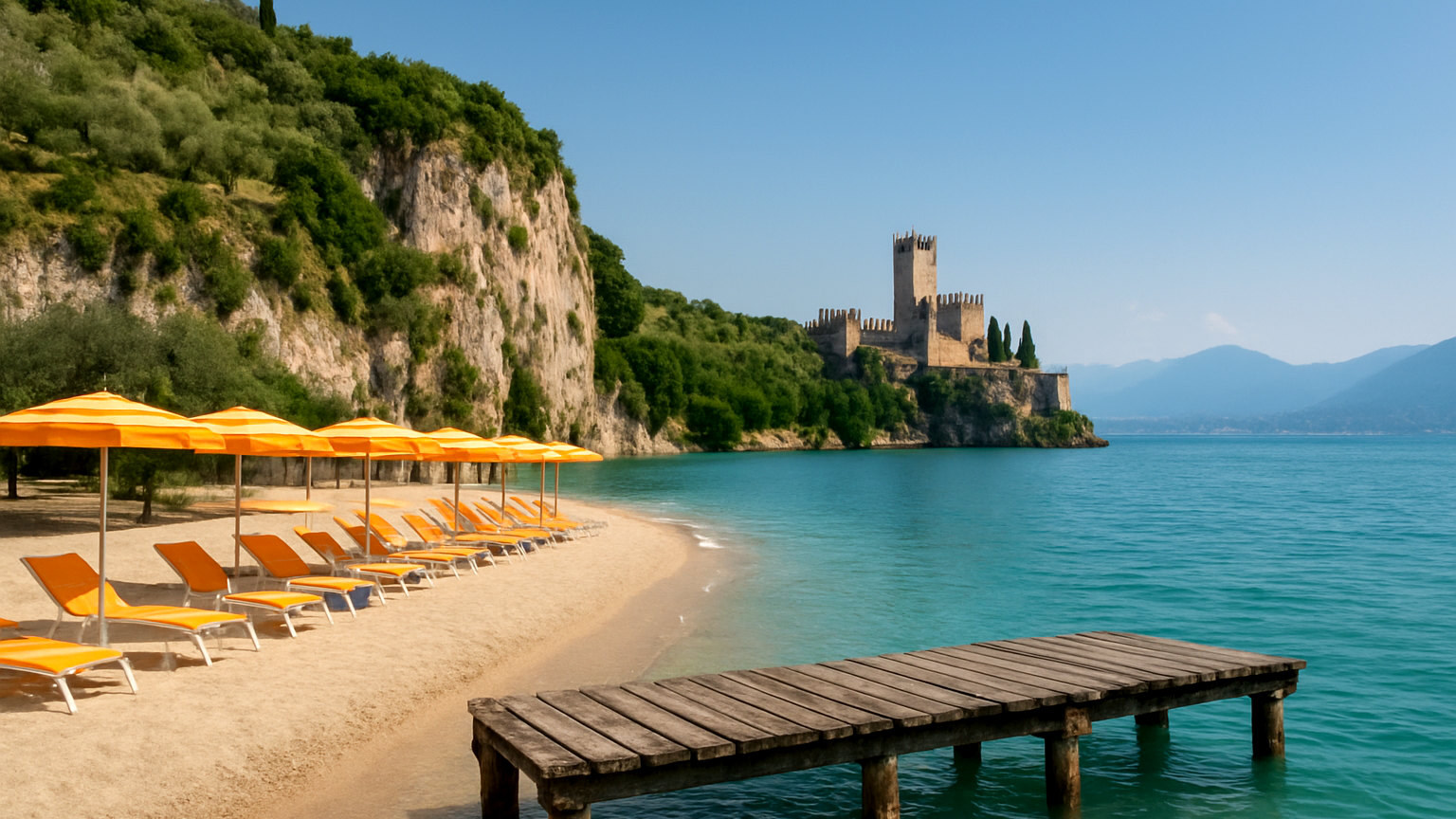
Garda is the largest of the Italian lakes and the one with the widest range of holidays on it. The northern end is a narrow fjord between cliffs with reliable wind and serious mountains; the southern end is broad, flat, warmer and lined with beaches and family attractions. Choosing the wrong end is the main planning error here.
What is the north like?
Dramatic. The lake narrows between limestone walls and the towns of Riva del Garda, Torbole and Malcesine sit beneath them. The wind blows reliably, the pelèr from the north in the morning and the ora from the south in the afternoon, which makes this one of the best windsurfing and sailing locations in Europe. It is also the base for climbing, via ferrata and mountain biking.
What is the south like?
Softer and warmer, with olive groves, vineyards and proper beaches. Sirmione sits on a long peninsula with a moated castle and Roman ruins at the tip, and is extremely busy. Desenzano and Peschiera are larger towns with railway stations. Gardaland, Italy largest theme park, and several water parks are here, which makes the south the family end.
Which towns are best?
Riva del Garda for the north, with a real town centre and access to the mountains. Malcesine for the prettiest northern option, with a castle and a rotating cable car up Monte Baldo. Limone sul Garda for lemon terraces and a cliff-edge cycle path. Bardolino and Lazise on the eastern shore for wine and a middle option. Sirmione for the south, if you accept the crowds.
What should you do?
Take the Monte Baldo cable car from Malcesine, which rotates as it climbs and reaches almost two thousand metres, with walking and paragliding at the top. Cycle the Ciclopista del Garda, a path partly cantilevered out over the water near Limone. Visit the Roman villa at Sirmione. Swim, which is pleasant from June to September as Garda is the warmest of the big lakes.
Do you need a car?
Helpful but not essential. Ferries connect the main towns along the whole lake, buses run the shore roads, and Desenzano and Peschiera have direct trains from Milan and Verona. Parking in the popular towns is difficult in summer.
When is the best time to visit?
May, June and September. July and August are hot and very busy, particularly with German and Austrian visitors who drive down in large numbers. The season runs roughly April to October, and the north closes down more thoroughly in winter than the south.
How much should you budget?
Cheaper than Como by a clear margin, and Garda has a much larger supply of mid-range hotels, campsites and apartments. The eastern shore around Bardolino is the best value. Sirmione and the smartest northern hotels are the exceptions.
How long do you need?
A week works well here, unlike Como, because there is enough to do. Four nights if you are focused on one end.
What should you eat and drink?
Garda produces its own olive oil, which is among the most northerly in the world and is lighter than southern Italian oil. Bardolino and Valpolicella reds come from the eastern shore and Lugana whites from the south. Lake fish, particularly coregone and sardines from Garda, appear on most menus.
What do people get wrong?
Booking the south expecting mountains, or the north expecting a beach holiday. The two ends are around fifty kilometres apart on a slow road and cannot be treated as one destination in a short stay. The ferry between them takes over three hours, which is a day rather than a transfer. If you want both ends, base in the middle at Salo or Gardone Riviera and accept a compromise on both.
If you are planning further, Lake Maggiore: The Quietest of the Italian Lakes covers the next part of the decision, and there is more in our Destinations guides.
The short answer
North for mountains, wind and activity, based at Riva or Malcesine. South for beaches, families and theme parks, based at Bardolino or Peschiera. Take the Monte Baldo cable car whichever end you choose, and travel in June or September.


