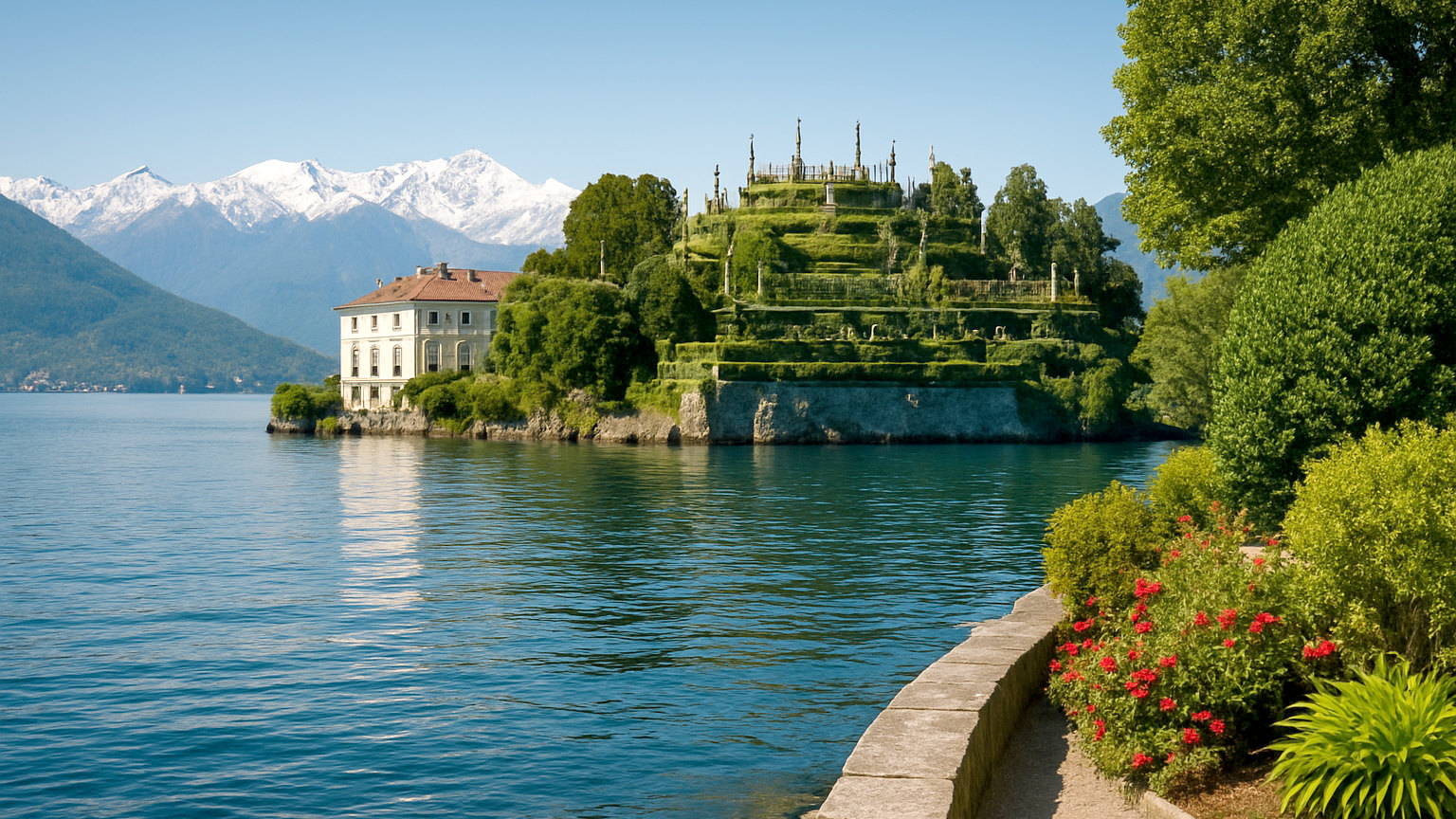
Maggiore is the second largest Italian lake and the least visited of the big three, which is difficult to explain given that it has the most remarkable collection of islands in the region. The northern fifth is in Switzerland, which gives it a split personality, and the sheltered climate supports gardens that would not survive elsewhere at this latitude.
What are the Borromean Islands?
Three small islands in the bay off Stresa, owned by the same family since the sixteenth century. Isola Bella is almost entirely occupied by a baroque palace and a terraced garden of stone arches and white peacocks, which is one of the most extravagant things in northern Italy. Isola Madre has a quieter botanical garden. Isola dei Pescatori is a working fishing village with restaurants and no palace. All three are reached by frequent boats from Stresa.
Where should you base?
Stresa, which is the main town, has the best hotel choice and sits opposite the islands. Baveno next door is quieter and cheaper. Verbania across the bay has the Villa Taranto gardens. Cannobio, near the Swiss border, is the prettiest small town on the lake and has a Sunday market that draws people from three countries. Ascona and Locarno on the Swiss side are smarter and more expensive.
What are the gardens?
The reason many people come. Villa Taranto at Verbania has around twenty thousand plant species across twenty hectares and is at its best in spring. The Isola Madre garden is older and more informal. The Rocca di Angera has a castle with a doll museum and a medieval garden. April and May are the peak for all of them.
What else should you do?
Take the cable car from Stresa up Mottarone for a view over seven lakes and, on a clear day, Monte Rosa. Ride the Centovalli railway from Locarno to Domodossola, a narrow-gauge line through gorges and chestnut woods that is among the best short rail journeys in the Alps. Visit the Santa Caterina del Sasso monastery, built into a cliff above the water.
Do you need a car?
No. Stresa is on the main line from Milan, taking about an hour, and boats connect the lakeside towns and islands. The Swiss end is reachable by train via Domodossola. A car helps for the valleys inland and is not needed for the lake itself.
When is the best time to visit?
April to June for the gardens and September for warmth without crowds. July and August are busy but never at Como levels. The season is short and a good deal closes between November and March, including several of the island palaces.
How much should you budget?
Cheaper than Como and Garda on the Italian side. The Swiss end is considerably more expensive and uses francs. Island entry tickets add up if you visit all three, and a combined ticket is available.
How long do you need?
Three nights. One day for the islands, one for the gardens and the cable car, and a third for Cannobio or the Swiss end.
What do people get wrong?
Visiting only Isola Bella and concluding they have seen the lake. The three islands are quite different and Isola Madre in particular is quieter and, for many people, the better of the two gardens. The second is underestimating the Swiss side, which is a short train ride and feels like a different country because it is.
What should you eat?
Piedmontese cooking on the western shore and Lombard on the eastern, with lake fish common on both. The area is also close to the Ossola valleys, which produce good mountain cheese and cured meats. Stresa itself is known for margheritine biscuits, made originally for the Italian royal family.
It is worth reading alongside The Dolomites: Where to Go and When, which takes a different angle, and the wider Destinations guides.
The short answer
Three nights in Stresa or Baveno, arriving by train from Milan. Isola Bella and Isola Madre in one day, Villa Taranto and the Mottarone cable car in another, and the Centovalli railway if you have a third.