
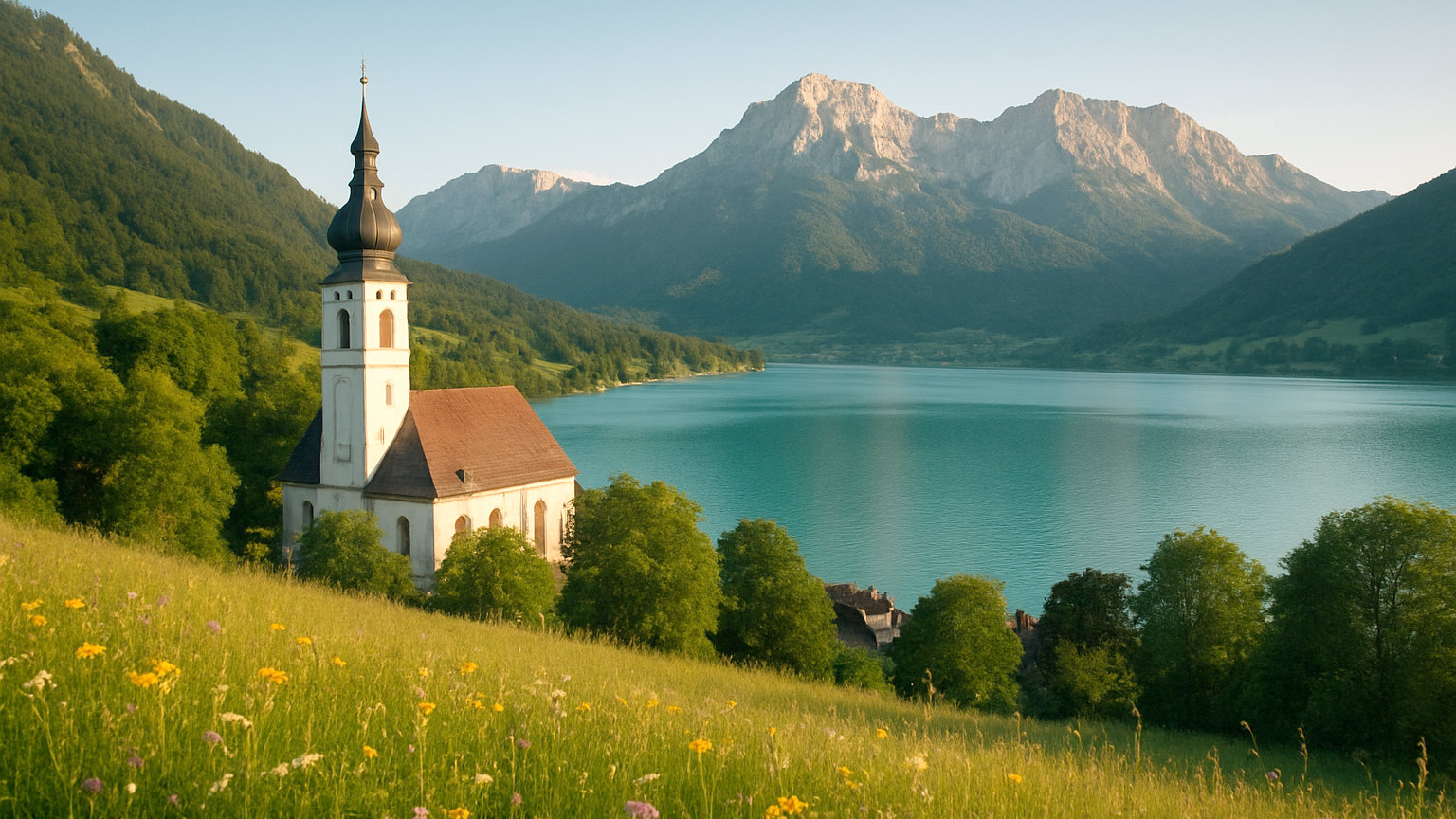
The Salzkammergut is a region of around seventy lakes east of Salzburg, set below limestone mountains, which was the imperial summer retreat and is still where Austrians go in August. The water is clean enough to drink in places and warm enough to swim in properly, which is unusual for an alpine lake district.
Where should you base?
St Wolfgang or St Gilgen on the Wolfgangsee, which are central, pretty and have the best combination of swimming, boats and mountain access. Bad Ischl, the old imperial spa town, for a larger base with a railway station. Weissenbach or Steinbach on the Attersee, the largest lake, for the quietest option. Hallstatt only if you specifically want to be there in the evening.
What about Hallstatt?
It is a village of around seven hundred people squeezed between a lake and a cliff, and it receives a very large number of day visitors, many arriving by coach for an hour. It is genuinely beautiful and it is tiny. Arriving before nine or staying overnight gives you a completely different place. The salt mine above it, reached by funicular, is the oldest known in the world and is worth more of your time than the village square.
Can you swim in the lakes?
Yes, and this is the main thing visitors do not expect. The Wolfgangsee, Mondsee and Attersee all reach around twenty-three or twenty-four degrees in July and August, and every village has a public lido with a diving platform and a lawn. The Attersee is the largest and is the sailing and diving lake. Water quality is exceptional throughout.
What are the mountains?
The Schafberg above St Wolfgang, climbed by a cogwheel railway from 1893, with a view over several lakes at once and a hotel at the top. The Dachstein massif above Hallstatt, with an ice cave, a glacier and the Five Fingers viewing platform projecting over a cliff. The Zwolferhorn at St Gilgen for easier walking.
What are the salt mines?
Salt made this region wealthy for three thousand years and gave it its name. The mines at Hallstatt, Altaussee and Bad Ischl are all open, involve wooden slides between levels and a small underground train, and are the standard wet-weather answer. Altaussee also hid looted artworks during the Second World War.
When is the best time to visit?
July and August for swimming, which is the point of the region, though these are the busiest months. June and September are quieter with cooler water. Winter brings modest skiing and the lakes are grey and atmospheric. Spring is green with high water and unreliable weather.
How do you get around?
A car helps, though the region is better served by public transport than most alpine areas, with buses linking the lakes and a rail line through Bad Ischl and Hallstatt. Boats cross the larger lakes. Salzburg is under an hour away and makes a natural start or end.
How much should you budget?
Mid-priced and cheaper than Switzerland by a clear margin. Guesthouse half board is common and good value. Hallstatt accommodation is the exception and is priced for the demand.
What should you eat?
Freshwater fish from the lakes, particularly Reinanke and Saibling, usually grilled whole and served at lakeside restaurants. Salzburger Nockerl, a very large baked souffle dessert, and the Bad Ischl cafe tradition inherited from the imperial court.
How long do you need?
Five to seven nights if swimming and walking are the point, or three if you are adding it to a Salzburg trip. The lakes are close together and one base covers the region, which is not true of most alpine areas and is a large part of why Austrians return here year after year.
Berchtesgaden and Konigssee: Germany Alpine Corner is the natural next read, alongside the wider Destinations section.
The short answer
A week based at St Wolfgang or on the Attersee in July or August. Swim daily, take the Schafberg cogwheel railway, do one salt mine, and visit Hallstatt before nine in the morning rather than staying there.


