
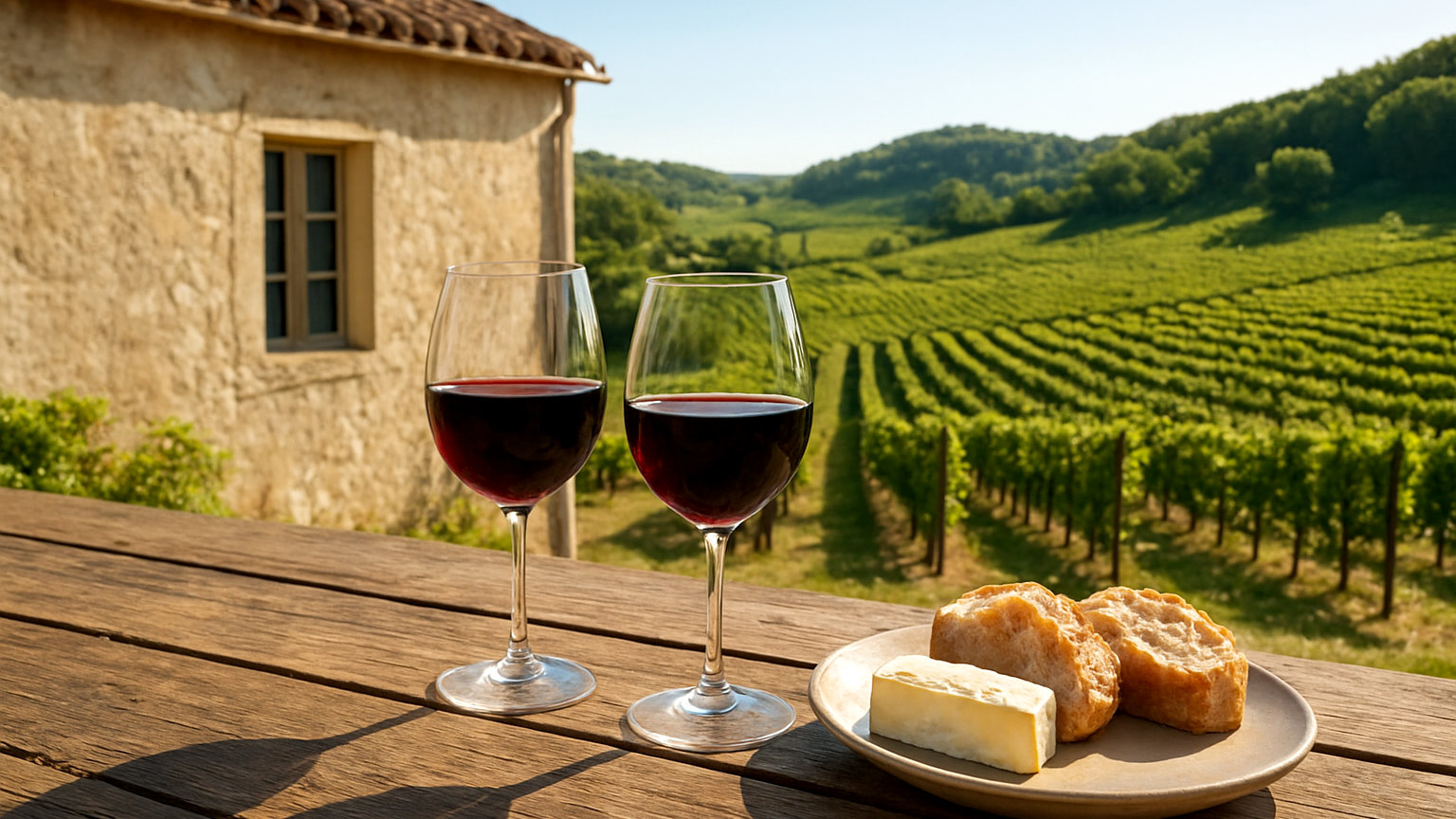
Bordeaux is the largest fine wine region in the world and the only one with a major city at its centre. That matters practically: you can base in a handsome eighteenth-century city with restaurants and trams, and reach the vineyards on organised trips or by train, which is not true of Burgundy or Piedmont.
What do they make here?
Blended reds, principally from cabernet sauvignon and merlot. The Left Bank, meaning the Medoc and Graves, is cabernet-led and produces the famous classified growths of Pauillac, Margaux and Saint-Julien. The Right Bank, around Saint-Emilion and Pomerol, is merlot-led, softer and generally more approachable young. Sauternes makes sweet white from botrytised grapes, and Entre-Deux-Mers makes dry white.
Is the city worth time?
Two or three days on its own. It has the largest UNESCO-listed urban area in France, a long river frontage, the Place de la Bourse with its mirror pool, and a food scene that has improved enormously. La Cite du Vin, a modern wine museum on the waterfront, is the best introduction to the region and includes a tasting with the ticket.
How do you visit the chateaux?
By appointment, and the famous classified growths often require booking weeks ahead and may charge substantially. Smaller producers are far more accessible and frequently more interesting. The practical route for most visitors is a half-day or full-day minibus tour from Bordeaux, which handles the driving and usually covers two or three estates.
Where should you go for a day?
Saint-Emilion, a medieval hill village surrounded by vineyards with an enormous church carved out of the rock beneath it, reachable by train in thirty-five minutes. It is the single best day out in the region and works without a car. The Medoc is flatter, less picturesque and holds the grandest names. Arcachon and the Dune du Pilat, the largest sand dune in Europe, are an hour west.
Do you need a car?
Less than in any other major wine region. Saint-Emilion has a train, the city has trams, and tours cover the rest. If you do drive, note that French drink-drive limits are lower than the UK and that tastings in the Medoc are generous.
When is the best time to visit?
May, June, September and October. The harvest is usually late September into October, when chateaux are busy and some close to visitors. Summer is warm and busy. Winter is quiet, and the city itself is perfectly good in any season.
How much should you budget?
The city is mid-priced for France and cheaper than Paris. Chateau visits vary enormously, from free at small producers to a substantial fee at first growths. Buying at the property is rarely cheaper than a good merchant, so buy for access rather than price.
What do people get wrong?
Turning up in the Medoc expecting to drop in at a famous name, which does not work. The second is treating Bordeaux as only a wine trip; the city deserves several days on its own merits and many visitors are surprised by how much they prefer it to the vineyards.
How long do you need?
Four nights. Two days in the city, one guided vineyard day and one at Saint-Emilion covers the region well. A week lets you add Arcachon and the coast, or Sauternes and the Graves.
What should you eat?
Entrecote a la bordelaise, grilled over vine cuttings, oysters from Arcachon with small sausages, and lamprey cooked in red wine, which is the local speciality most visitors avoid. Canneles, small caramelised cakes with a dark crust and soft centre, are the thing to take home and are sold from dedicated shops across the city.
Burgundy: How to Visit the Cote d Or goes into more detail on a closely related question, and the rest of our Destinations section covers the wider subject.
The short answer
Four nights in the city. Cite du Vin on the first day, a guided minibus day in the Medoc, the train to Saint-Emilion for another, and an afternoon at the Dune du Pilat. Book anything famous weeks ahead.


