
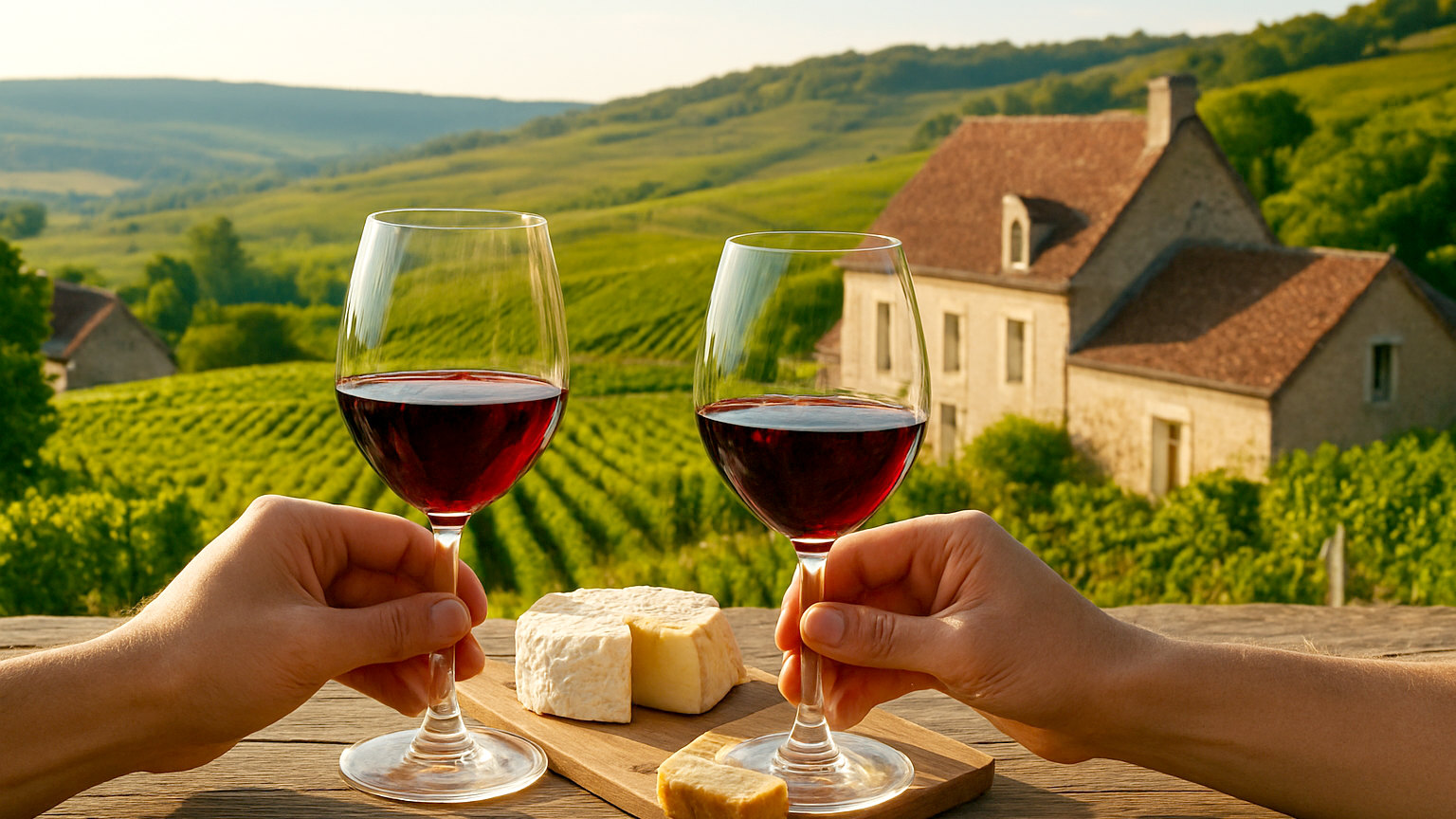
Burgundy produces the most sought-after pinot noir and chardonnay in the world from a narrow strip of east-facing slope south of Dijon called the Cote d Or. It is also the most complicated wine region in Europe to understand and the hardest to visit, because ownership is divided between thousands of tiny holdings and most producers have no visitor facilities at all.
What do they make here?
Red from pinot noir and white from chardonnay, almost exclusively. The Cote de Nuits in the north makes the great reds, at Gevrey-Chambertin, Vosne-Romanee and Nuits-Saint-Georges. The Cote de Beaune in the south makes the great whites, at Puligny-Montrachet and Meursault, alongside reds from Pommard and Volnay. Chablis to the northwest is a separate area making steely chardonnay.
Where should you base?
Beaune, without much debate. It is a walled town in the middle of the Cote d Or with wine shops, restaurants, the Hospices de Beaune with its patterned tile roof, and a working centre. Dijon is a larger and handsome city half an hour north and works if you want more to do in the evening. Village accommodation in Meursault or Gevrey is quieter and needs a car.
How do you arrange tastings?
With more effort than elsewhere. Most domaines are small family operations with no tasting room, and visits are by personal introduction or advance appointment, often declined. The practical alternatives are excellent: the cellar tastings in Beaune, such as Patriarche and the Marche aux Vins, let you taste across many appellations, and the wine shops will open bottles. Negociant houses are more welcoming than growers.
Is the cycle route worth doing?
It is the best way to see the region. The Voie des Vignes is a signed path running from Beaune through the grand cru slopes to Santenay, largely flat and on quiet lanes, taking a day at an easy pace. Bicycle hire is widely available in Beaune. It also neatly solves the drinking and driving problem.
What else is worth doing?
The Hospices de Beaune, a fifteenth-century charitable hospital with a Flemish tiled roof, which is the single most photographed building in Burgundy. Dijon for the ducal palace and the mustard. The Abbey of Fontenay. Cluny, once the largest church in Christendom. The Saturday market in Beaune.
When is the best time to visit?
May, June and September. The Hospices charity wine auction on the third Sunday of November is the biggest event of the year and fills the town. Harvest is usually September. Winter is cold and quiet and many producers are working rather than receiving visitors.
How much should you budget?
The wine is expensive and there is no way around it, since production is tiny and demand is global. Accommodation and eating in Beaune are mid-priced for France. Village wines from appellations such as Savigny-les-Beaune or Saint-Aubin offer far better value than the famous names and are what locals actually drink.
What do people get wrong?
Expecting Bordeaux-style chateaux with visitor centres. Burgundy is a region of small farmhouses and cellar doors in village streets, and the grand cru vineyards themselves are often unremarkable plots marked only by a stone gatepost. The appeal is in the detail rather than the spectacle.
How long do you need?
Three or four nights. Beaune and the cellars take a day, the cycle route another, and Dijon a third. Burgundy is a region for slow days rather than a packed itinerary, and the villages are small.
What should you eat?
Boeuf bourguignon, coq au vin, jambon persille and oeufs en meurette, all of which are built on the local wine. Epoisses is the regional cheese and is notoriously pungent. Dijon mustard is genuinely better bought here than at home.
Anyone weighing this up will also want Champagne: Visiting Reims and Epernay, along with the rest of the Destinations section.
The short answer
Three or four nights in Beaune. Cycle the Voie des Vignes, taste at a negociant cellar rather than chasing growers, buy village wines rather than grand cru, and add Dijon for a day.


