
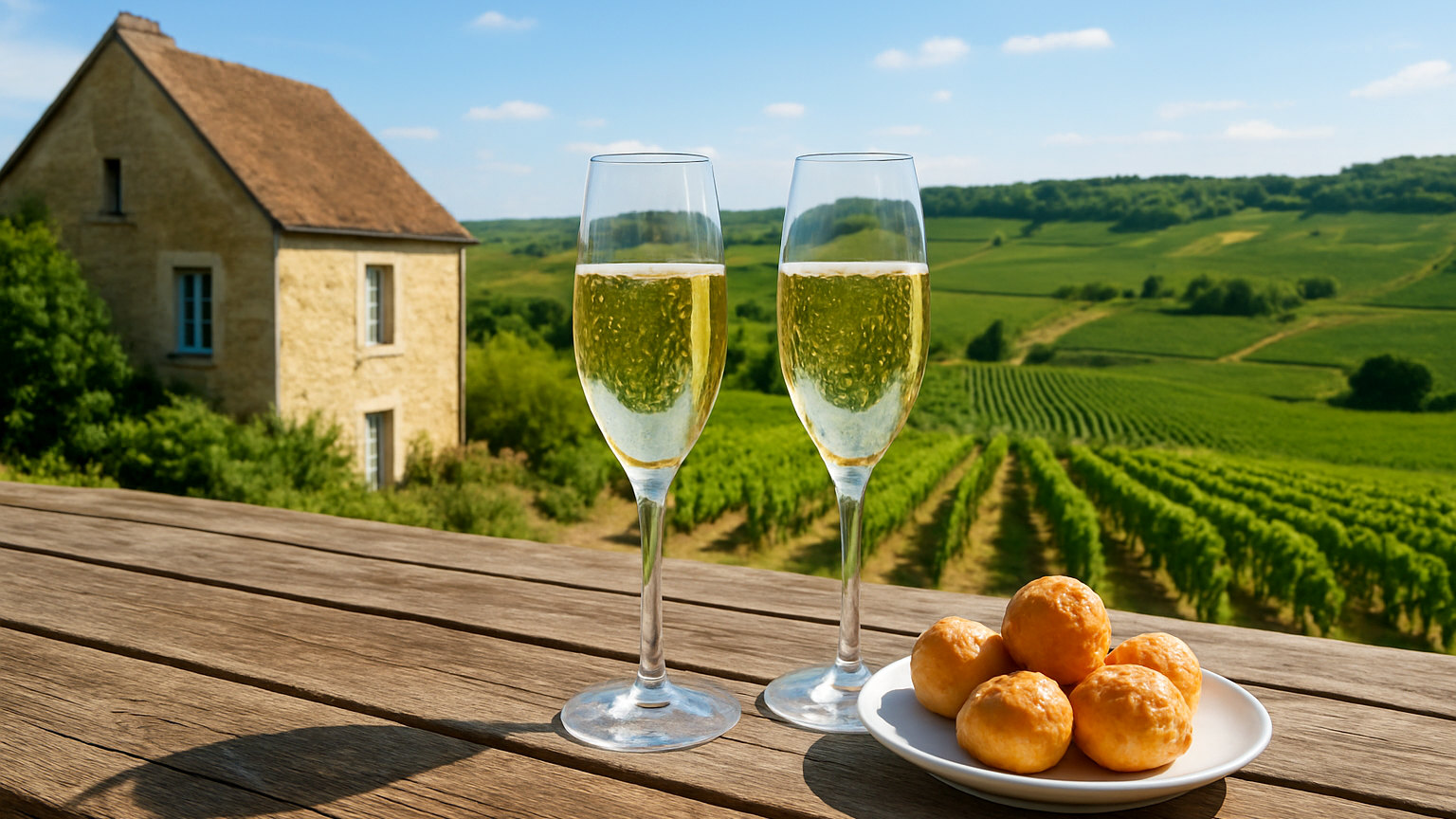
Champagne is the most accessible great wine region in Europe, at forty-five minutes from Paris by high-speed train. The famous houses run polished, well-organised tours through kilometres of chalk cellars, many of them cut originally by the Romans, and the whole region can be visited comfortably without a car.
Reims or Epernay?
Reims is the larger city, with a cathedral where French kings were crowned and the greatest concentration of grande marque houses, including Veuve Clicquot, Taittinger and Pommery. Epernay is a small town twenty minutes south whose Avenue de Champagne is a single street of grand houses including Moet et Chandon and Perrier-Jouet, with the cellars beneath. Reims for a city, Epernay for concentration.
How do the house tours work?
Book online in advance, particularly at weekends. A tour lasts around an hour, covers the production method and a walk through the chalk cellars, and ends with one or two glasses. Prices vary widely by house and by how many glasses are included. The cellars are around ten degrees year round, so take a jacket even in August.
Should you visit growers instead?
If you have a car, yes, and it is the more interesting half of the region. Several thousand small growers make their own champagne, and the villages of the Cote des Blancs south of Epernay, such as Cramant and Le Mesnil-sur-Oger, and the Montagne de Reims villages like Ay and Bouzy, are full of them. Tastings are informal, cheap and often with the winemaker.
What should you understand before tasting?
Three things make sense of almost everything. Blanc de blancs is made only from chardonnay and is lighter; blanc de noirs from pinot noir and pinot meunier and is fuller. Non-vintage is a blend across years and is the house style; vintage is a single good year. And the dosage, the sugar added at the end, runs from brut nature through extra brut to brut and demi-sec, which is what determines sweetness.
What else is worth doing?
Reims cathedral, which is among the finest Gothic buildings in France and has Chagall windows. The Palais du Tau next to it. Hautvillers, the hillside village where Dom Perignon was cellarmaster and is buried. The vineyard viewpoints along the Montagne de Reims, which are genuinely scenic in autumn.
When is the best time to visit?
April to October, with September and early October best for the harvest and the colour. Winter is cold and the vineyards are bare, though the cellars are the same temperature year round and Reims at Christmas is pleasant. Many growers close in August.
How much should you budget?
House tours are moderately priced and rise steeply for tastings of prestige cuvees. Buying at the house is rarely cheaper than a UK supermarket for the big brands, so buy grower champagne instead, which is genuinely hard to find at home and often better value. Accommodation in Reims is mid-priced.
Can you do it as a day trip from Paris?
Yes, and many people do. The train makes Reims a comfortable day with two house tours and the cathedral. Staying a night lets you add Epernay or the grower villages, which is where the region becomes more than a branded experience.
How long do you need?
Two nights is right, and a day trip from Paris works if time is short. A third night allows both Reims and Epernay properly along with a grower village or two, which is the version most people wish they had planned.
What do people get wrong?
Booking several house tours in a day, which becomes repetitive since the production method is the same everywhere and each tour explains it again. Two is plenty, and the time is better spent with a grower.
The Loire Valley: Wine, Chateaux and Cycling answers a related question in more depth, and there is more of the same across our Destinations guides.
The short answer
Two nights in Reims, or a day trip from Paris if time is short. Book one grande marque tour for the cellars and spend the rest of the time with growers in the Cote des Blancs, where the wine is cheaper and the welcome is warmer.


