
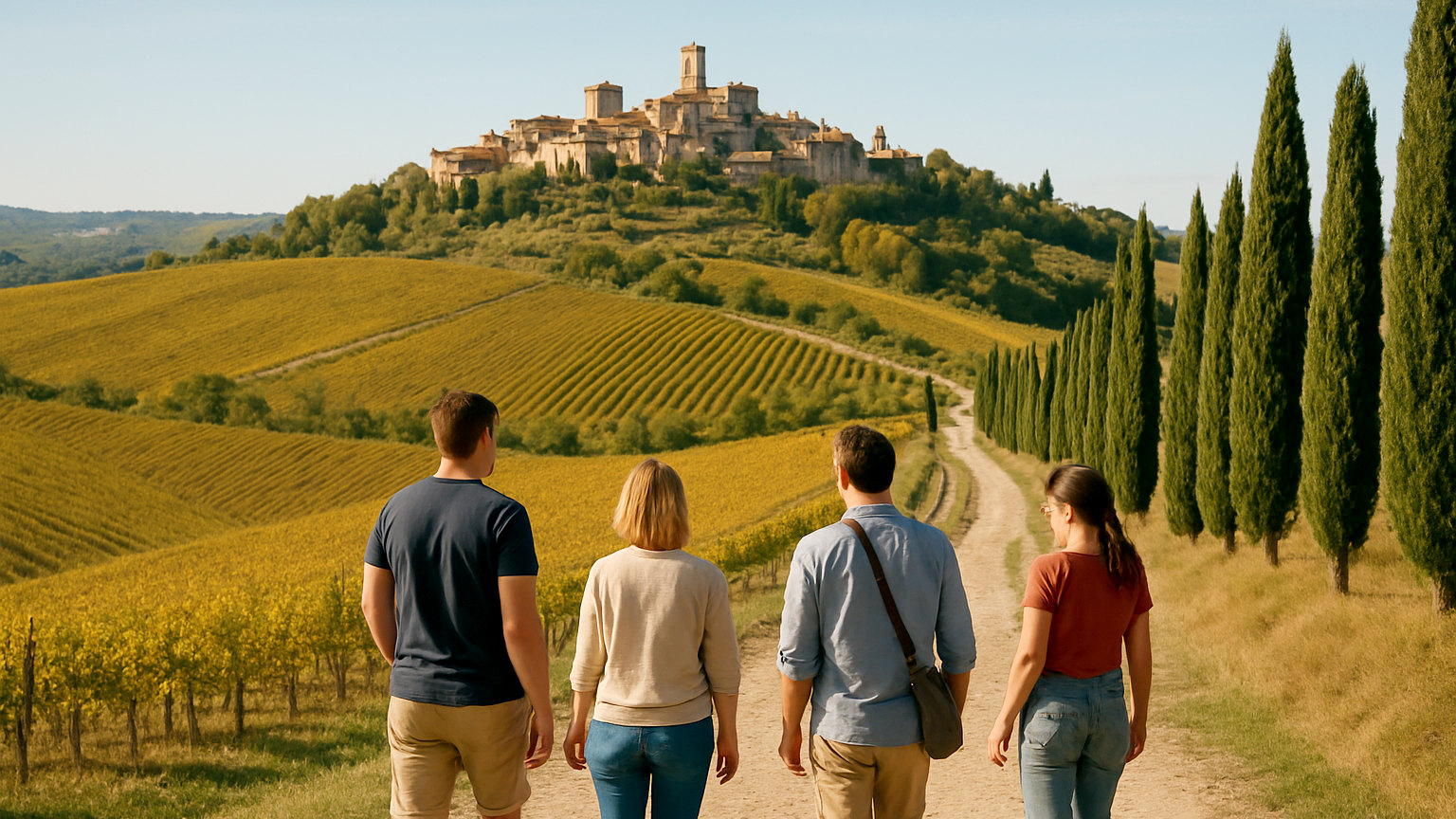
Chianti runs between Florence and Siena, and it is the landscape most people have in mind when they imagine Italian wine country: cypress avenues, stone farmhouses and vines on rolling hills. It is also only one of several Tuscan wine regions, and the ones further south make the more serious wines.
What do they make here?
Chianti Classico, from the historic zone between the two cities, is the sangiovese-based red most visitors come for, marked by a black rooster on the neck of the bottle. South of it, Montalcino produces Brunello, the most prestigious and expensive Tuscan wine, and Montepulciano makes Vino Nobile. On the coast, Bolgheri produces the so-called Super Tuscans using French grape varieties.
Where should you base?
Greve in Chianti or Panzano for the heart of the Classico zone, both small towns with genuine life rather than pure tourism. Radda and Castellina are prettier and quieter. Montalcino if Brunello is the priority. Siena is a good compromise for anyone who wants a city in the evening. Florence is too far north to be a practical wine base despite what the tour operators suggest.
How do you visit the wineries?
By appointment, almost always. Unlike Bordeaux or Napa, most Tuscan estates are working farms rather than visitor centres, and turning up unannounced usually means a closed gate. Email or book online a week or two ahead. A tasting typically includes a vineyard and cellar walk and three or four wines, sometimes with food, and lasts around ninety minutes.
What else is worth doing?
Siena, which has the finest medieval square in Italy and is the best day out in the region. San Gimignano for the towers, busy by day and lovely in the evening. The abbey of Sant Antimo near Montalcino. The thermal pools at Bagno Vignoni in the Val d Orcia, the landscape south of Siena that appears on most Tuscan postcards.
Do you need a car?
Yes, and this creates the obvious problem. The estates are on unsurfaced strade bianche between villages with almost no bus service. Italian drink-drive limits are lower than the UK, so either nominate a driver, use a local driver for the day, or choose a base you can walk out from, which is one of the strongest arguments for staying in Greve or Panzano.
When is the best time to visit?
May, June, September and early October. The harvest runs from late September into October and the estates are busy working, so tastings are harder to book but the atmosphere is at its best. July and August are hot and the roads are busy. Winter is quiet and many smaller estates close to visitors.
How much should you budget?
Tastings are usually modest and often waived if you buy. Accommodation is the main cost, and an agriturismo, a working farm with rooms, is both cheaper and more interesting than a hotel. Buying directly from an estate is usually no cheaper than a good Italian shop, so buy what you cannot find at home rather than for the saving.
What do people get wrong?
Basing in Florence and day-tripping, which loses two hours each way and puts you on a coach. The second is the straw-covered fiasco bottle, which is a tourist survival rather than a quality signal. The third is assuming Chianti and Chianti Classico are the same thing; they are separate denominations and the Classico zone is the one worth visiting.
How long do you need?
Four or five nights. Two days of estate visits is usually enough before the tastings blur, and the rest goes to Siena, the Val d Orcia and simply sitting still. A week works if you are combining Chianti with Montalcino and the coast.
Barolo and Piedmont: Italy Serious Wine Country goes into more detail on a closely related question, and the rest of our Destinations section covers the wider subject.
The short answer
Four or five nights at an agriturismo near Greve or Panzano, with a car and a nominated driver. Book two or three estates a fortnight ahead, add Montalcino for Brunello, and take a day in Siena. Go in May, June or late September.


