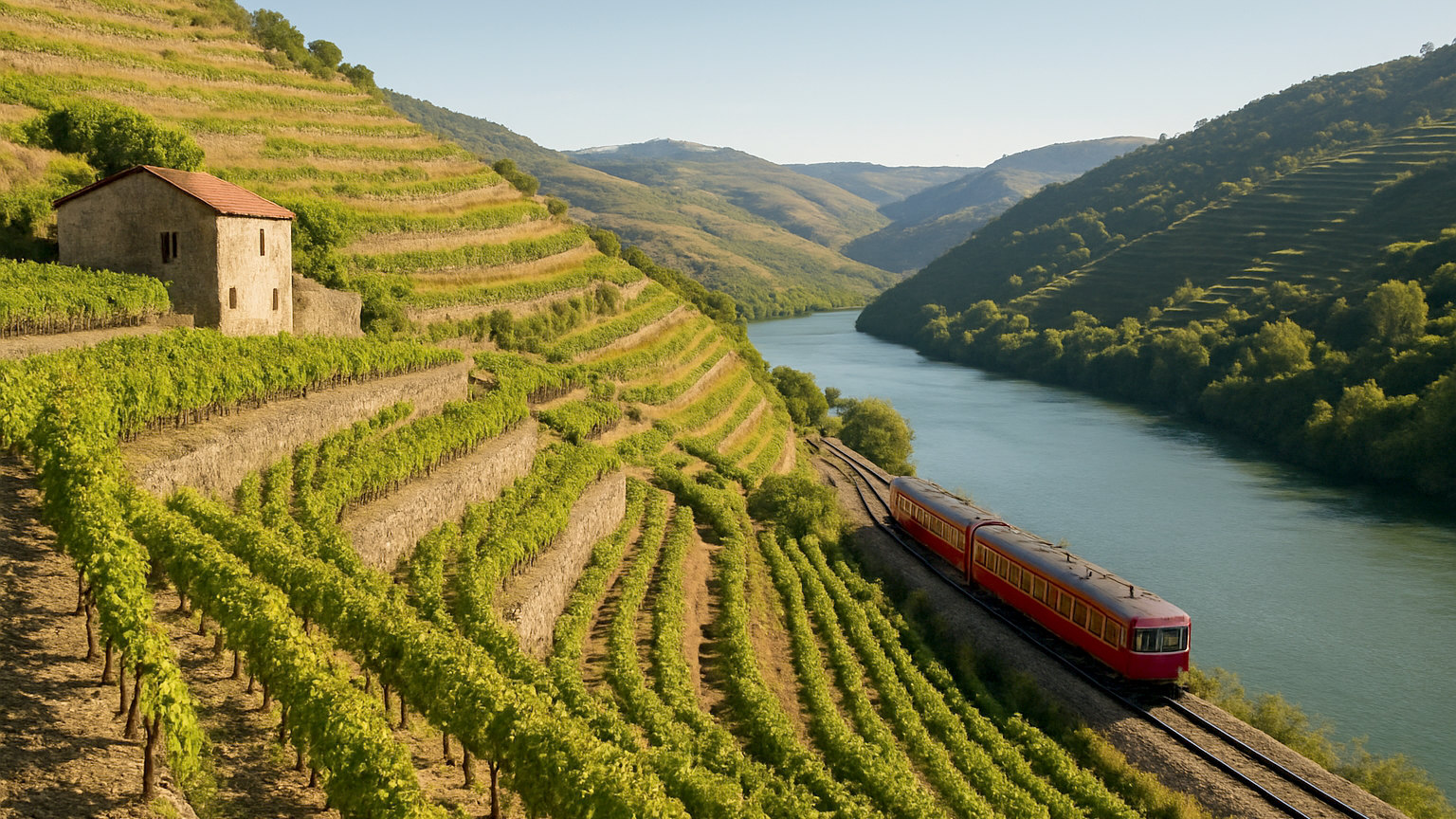
The Douro runs east from Porto through a gorge of schist hillsides terraced for vines, and it was demarcated as a protected wine region in 1756, earlier than anywhere else in the world. The terraces were cut by hand over centuries and the landscape is UNESCO listed. It is among the most dramatic wine regions on earth and one of the easier ones to reach without a car.
What do they make here?
Port, a fortified wine in several styles, and increasingly serious unfortified table wine. Ruby port is young and fruity, tawny is aged in barrel and goes nutty, and vintage port is declared only in exceptional years and is bottled young to age for decades. White and rose port exist and white port with tonic is the standard local aperitif.
Where should you base?
Pinhao, a small village at a bend in the river with a tiled railway station, which is the classic base and is surrounded by quintas. Peso da Regua, larger and with better transport. Lamego, up in the hills, for a town with a baroque staircase and a cathedral. Porto itself if you would rather have a city and take a day trip upriver.
Is the train worth taking?
It is the best way to arrive and one of the finest rail journeys in Europe. The Linha do Douro runs from Porto along the water for the final stretch to Pinhao and Pocinho, hugging the river through the gorge, and costs very little. Sitting on the right-hand side heading east gives the better view. There is also a summer steam service.
How do you visit the quintas?
Book ahead, though the region is less formal than Bordeaux. Many quintas offer tours with tastings, several have restaurants, and a number take guests overnight, which is the best way to experience the valley. Boat trips from Pinhao in a traditional rabelo are short and worthwhile. The port lodges across the river from Porto in Vila Nova de Gaia are where most of the ageing actually happens.
Is the harvest worth timing?
The vindima runs from mid-September into October and is the liveliest time in the valley. Several quintas let visitors take part in foot treading in the granite lagares, which is still used for top wines and is not a gimmick. Accommodation books out, so plan well ahead.
When is the best time to visit?
May, June, September and October, with the harvest and the autumn colour making late September to late October the peak. July and August are very hot in the gorge, which traps heat. Winter is quiet, green and often wet, and many quintas reduce their opening.
How much should you budget?
Cheap by western European standards, though quinta hotels command a premium for the setting. Tastings are inexpensive, the train fare is negligible, and aged tawny bought at the property is considerably better value than at home.
Do you need a car?
Not if you base in Pinhao or Regua and use the train, boats and quinta transfers. A car helps for the higher terraces and the Douro Superior, and the roads are steep, winding and slow, with the N222 above Pinhao regularly called one of the best drives in the world.
What should you eat?
Northern Portuguese cooking is hearty: roast kid, bacalhau in various forms, and the posta mirandesa steak. Many quintas serve lunch with their wines, which is the best way to see how port and table wine work with food rather than after it.
How long do you need?
Two or three nights in the valley itself, added to a Porto trip rather than visited alone. A week if you want the Douro Superior towards the Spanish border, which is wilder and almost unvisited.
For the next step, see The Mosel Valley: Riesling, Castles and Cruises, or browse the full Destinations section.
The short answer
Three nights at a quinta near Pinhao, arriving by train from Porto. Two tastings, a rabelo trip on the river, and the N222 drive if you have a car. Come in late September or October for the harvest and the colour.