
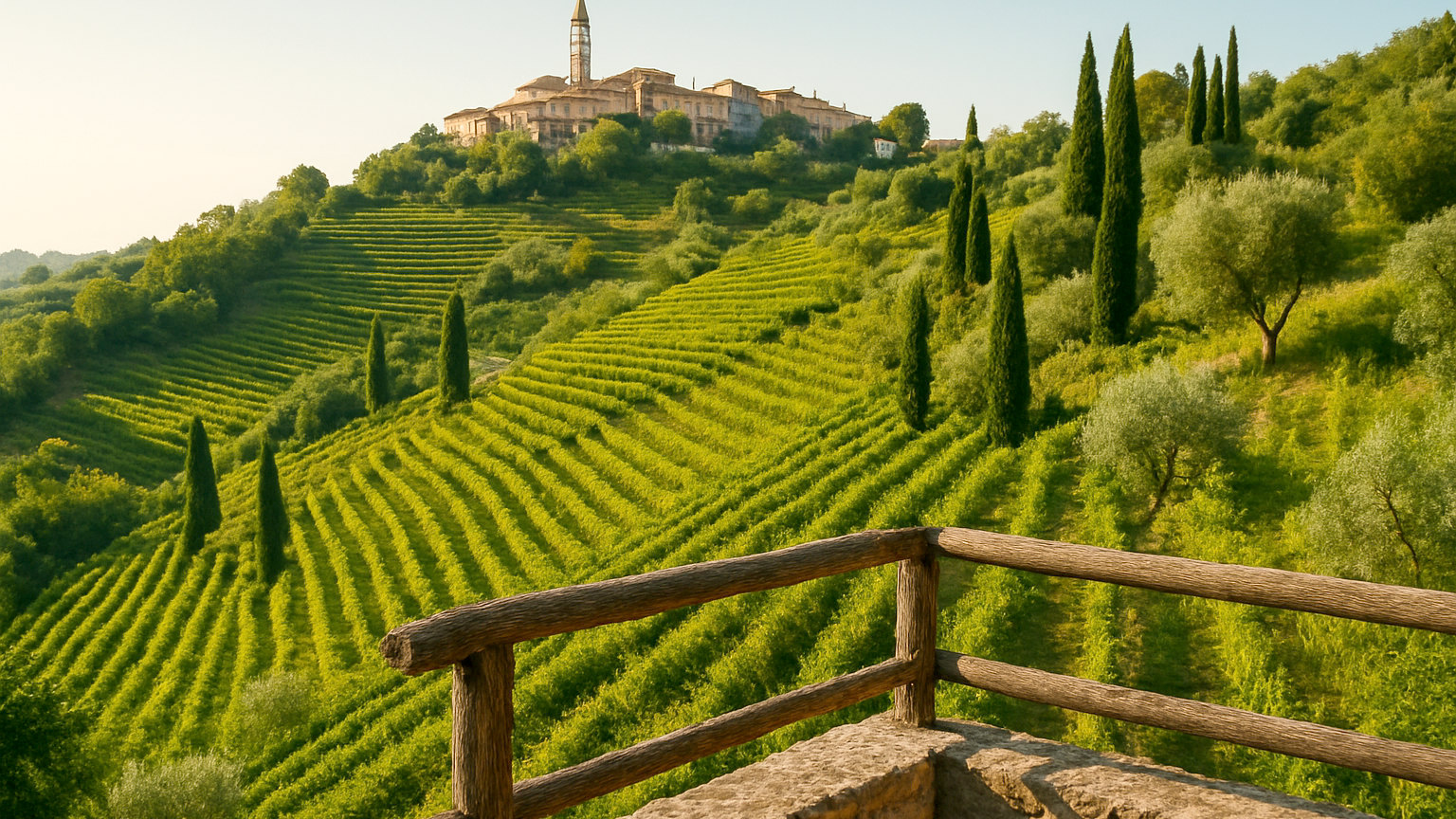
The Prosecco hills run between Conegliano and Valdobbiadene in Veneto, an hour north of Venice. The steepest ridges were added to the UNESCO list in 2019 for a landscape of near-vertical vineyard terraces worked almost entirely by hand. Very few of the enormous number of people who pass through Venice each year make the short journey inland.
What is actually made here?
Prosecco, from the glera grape, made by a tank method rather than the bottle fermentation used for champagne, which is why it is fresher, lighter and much cheaper. The quality tiers matter: basic Prosecco DOC comes from a large flat area, Conegliano Valdobbiadene DOCG from these hills, and Cartizze from a single steep hillside of around a hundred hectares and is the most prized of all.
Where should you base?
Valdobbiadene for the steepest and most scenic vineyards and the Cartizze hill. Conegliano at the other end for a larger town with a castle and a rail station. Follina, between the two, for a quiet base with an abbey. Treviso, half an hour south, is a handsome walled city with canals and works well for anyone wanting a town in the evening.
What is the wine road?
The Strada del Prosecco is a signed route of around fifty kilometres linking the two towns through the ridges, and it is one of the best short drives in Italy. Cantinas along it are open for tasting, many without appointment, which is unusual in Italy and makes this an easier region to visit spontaneously than Piedmont or Tuscany.
How do the tastings work?
Informally and cheaply. Many producers are small and welcome walk-ins during working hours, though a call ahead is still polite and is necessary at harvest. Tastings often cost very little or nothing with a purchase, and a few euros buys a bottle that would cost several times that at home. The osterie in the villages also sell local Prosecco by the glass for around a euro or two.
What else is worth doing?
Treviso, which is genuinely lovely and almost unvisited despite being twenty minutes from a major airport. Asolo, a hill town nearby. Venice in just over an hour by train. The Dolomites are within ninety minutes, which makes a combined wine and mountain trip straightforward.
When is the best time to visit?
April to June and September to October. The harvest here is early, usually September, and the hand-picking on the steep slopes is worth seeing. Summer is hot and hazy. Winter is quiet and many small producers reduce their opening hours.
How much should you budget?
This is among the cheapest wine regions to visit in western Europe. Accommodation in the villages is inexpensive, restaurant prices are moderate, and the wine costs a fraction of champagne. Treviso airport is served by budget carriers, which keeps the flights cheap too.
What do people get wrong?
Assuming all Prosecco is the same. The difference between supermarket DOC and a Cartizze or a good Rive bottling from these hills is substantial, and tasting them side by side is the point of coming. The second is driving the wine road and tasting at several stops, which the local police take seriously.
How long do you need?
Two or three nights. The wine road is a day, the villages another, and a third allows Treviso or a run up to the Dolomites. It also works very well as a two-night addition to a Venice trip rather than a standalone holiday.
What should you eat?
Venetian and alpine cooking meet here: radicchio from Treviso, soppressa salami, baccala mantecato and polenta. The local aperitivo is a spritz made with Prosecco, which is where the drink originates.
See also Bordeaux: Visiting the Chateaux and the City, which covers a related part of the same decision, and our other Destinations guides.
The short answer
Three nights based in Valdobbiadene or Treviso. Drive the wine road with a nominated driver, taste Cartizze against a standard DOCG, and add Venice or the Dolomites, both of which are about an hour away.


