
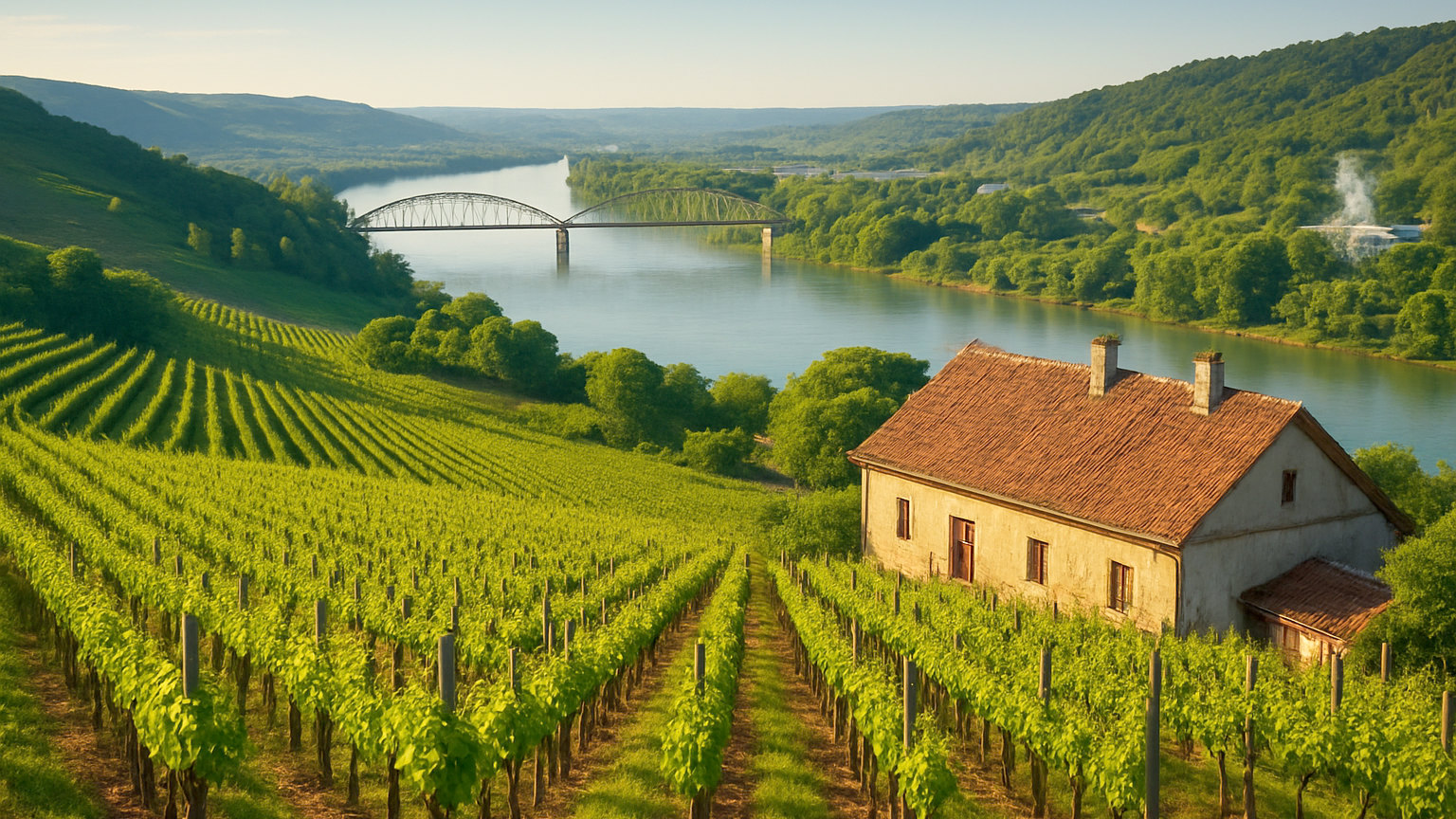
Tokaj sits in northeast Hungary where two rivers meet below volcanic hills. Its vineyards were classified in 1737, decades before Bordeaux, and Tokaji aszu was the wine of European royal courts for two centuries. The region was largely lost under state production during the communist period and has spent thirty years recovering, and it remains almost entirely unvisited by foreign travellers.
What do they make here?
The famous wine is aszu, made from grapes affected by noble rot, hand-picked berry by berry and added to a base wine. Sweetness is measured in puttonyos, historically from three to six, with higher numbers sweeter and more concentrated. Eszencia is the rarest and most concentrated of all. The region also now makes excellent dry white from furmint, which is what most producers are actually excited about.
Where should you base?
Tokaj town itself, at the confluence of the Bodrog and the Tisza, which is small and walkable. Mad, a village a short drive away, which has the highest concentration of serious producers and the best restaurant in the region. Sarospatak for a castle and a larger town. The whole area is compact and nowhere is more than half an hour from anywhere else.
What are the cellars like?
The distinctive feature of the region. Tunnels are cut into volcanic rock, sometimes for kilometres, held at a constant cool temperature and high humidity, with the walls covered in a thick black mould that is actively encouraged because it regulates the air. The Rakoczi cellar at Sarospatak and the Oremus and Disznoko cellars are among the ones open to visitors.
How do you visit the producers?
By appointment, emailed a week or two ahead, and the welcome is usually warm because visitors are rare. Tastings are inexpensive and generous, typically covering a dry furmint, a late harvest and two or three aszu wines at different puttonyos levels. Several producers have accommodation.
What else is worth doing?
Sarospatak castle, one of the best preserved in Hungary. The Zemplen hills for walking. Hollohaza porcelain. Eger, the other Hungarian wine town, is around two hours west and makes red wine, which pairs well as a second stop. Budapest is around two and a half hours by road or train.
When is the best time to visit?
September to November, and specifically late October and November when the aszu picking happens, which is unusually late because the grapes must shrivel on the vine. May and June are green and quiet. Winter is very cold and the cellars are the same temperature regardless.
How much should you budget?
Cheap. Accommodation, food and tastings are all inexpensive by western European standards, and Hungary uses the forint. The aszu wines themselves are not cheap to buy because production is tiny and labour intensive, but they cost far less at the cellar than at home and a six puttonyos bottle from a good producer is one of the great bargains in fine wine.
What do people get wrong?
Treating it purely as a dessert wine region. The dry furmints are excellent, food friendly and are what the producers are betting their futures on. The second is expecting tourist infrastructure: this is a working agricultural area with limited English outside the wineries and few restaurants open late.
How do you get there?
Budapest is around two and a half hours by car or a similar time by train to Szerencs and then a local connection. Debrecen and Kosice in Slovakia both have small airports within about two hours. A car is close to essential once you arrive, since the producers are spread across villages with little public transport.
What should you eat?
Hungarian country cooking, heavy on paprika, with goose liver being the classic pairing for aszu. The restaurant scene is thin outside Mad, so book dinner rather than assuming somewhere will be open.
See also Chianti and Tuscany: A Wine Region Guide, which covers a related part of the same decision, and our other Destinations guides.
The short answer
Three nights based in Mad or Tokaj town with a car and a nominated driver. Book two or three producers ahead, taste dry furmint alongside the aszu, see a volcanic cellar, and come in late October for the picking.


