A beach that works with young children is a specific thing, and very few listings tell you whether a beach is one. The features that matter are shallow entry, sand rather than pebble, some shade, calm water, and facilities within a short walk. Getting three of those five is usually enough; getting one is a difficult week.
What makes a beach child friendly?
A gradual shelf, so that the water stays waist deep a long way out. Sand, because pebbles are painful on bare feet and hard to sit on for hours. Natural or hired shade, since a whole day in direct Mediterranean sun is not realistic with small children. Calm water without a shore break. And toilets, food and a short walk back to the accommodation for the inevitable early exit.
Which coasts are best overall?
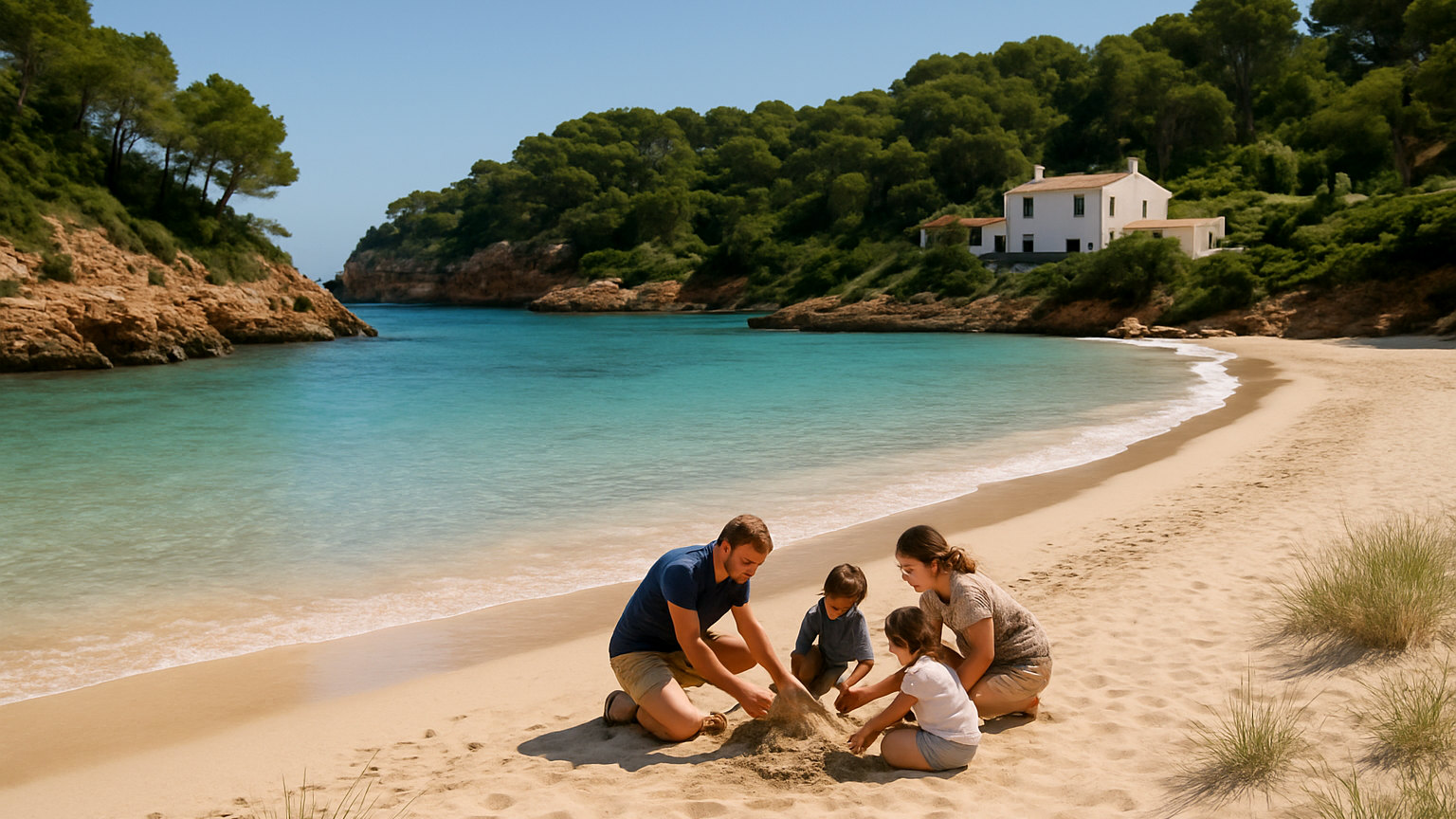
The Costa Blanca in Spain, particularly around Javea, Denia and Alicante, which combines warm shallow water, real sand and a very high density of family-oriented resorts. The eastern Algarve around Tavira, where sandbar islands create warm shallow lagoons. Menorca, whose southern coves are sheltered, sandy and shallow.
In Greece, the Ionian islands beat the Cyclades comfortably because the meltemi wind does not reach them, so August water stays calm. Corfu, Kefalonia and Zakynthos all have long shallow sandy beaches on their northern and eastern coasts.
Which coasts are harder with children?
Croatia, almost everywhere, because the beaches are pebble or rock and the entry is often steep. The water is beautiful and swim shoes become essential. The Cyclades in summer, because of wind and choppy water. The Atlantic coasts of Portugal, France and northern Spain, where the combination of cold water, surf and currents is unsuitable for small children even though the sand is superb.
What should you check before booking?
Three things that rarely appear in the description. The real walking distance from the room to the sand, since a hotel five minutes from the beach may be five minutes downhill and fifteen back. Whether the beach is sand or shingle, which satellite images on a map app will show. And whether there is any shade at all, or whether umbrellas must be hired and how early they run out.
Does a Blue Flag help?
Partly. It certifies water quality, safety provision and facilities, which is useful, and it says nothing about whether the beach is sandy, shallow or sheltered. Treat it as a hygiene check rather than a recommendation.
What about the pool instead?
For families with children under about six, the hotel pool frequently does more work than the beach, and it is worth choosing accommodation on that basis. Check the depth, since many attractive hotel pools are a uniform depth with no shallow end, and check whether there is any shade over the pool area.
Which month should you choose?
Late June or early September if you have any flexibility. The sea is warm, the heat is less extreme than midsummer, and prices drop noticeably outside the peak fortnight. Southern Spain, Italy and Greece in the first half of August are hot enough that the middle of the day is spent indoors.
What about safety?
Check whether the beach is lifeguarded and whether it uses the standard flag system, which is widespread across Spain, Portugal, Italy and Greece. Red means no swimming, yellow means caution and green means safe conditions. Beaches without lifeguards are common on smaller islands and in quieter bays, and are worth knowing about in advance rather than discovering on arrival.
Which resorts suit different ages?
Under-fives are served best by a shallow sandy bay and a hotel pool. Six to eleven want space, a snorkel and something organised. Teenagers want watersports, a town within walking distance and other teenagers, which points towards larger resorts rather than quiet coves.
When Is the Mediterranean Warm Enough to Swim? goes into more detail on a closely related question, and the rest of our Holidays section covers the wider subject.
The short answer
The Costa Blanca, the eastern Algarve, Menorca and the Ionian islands are the strongest family beach coasts in Europe. Check the sand, the shelf and the walk before you book, treat the pool as equally important, and travel at the edges of the season rather than in the middle.