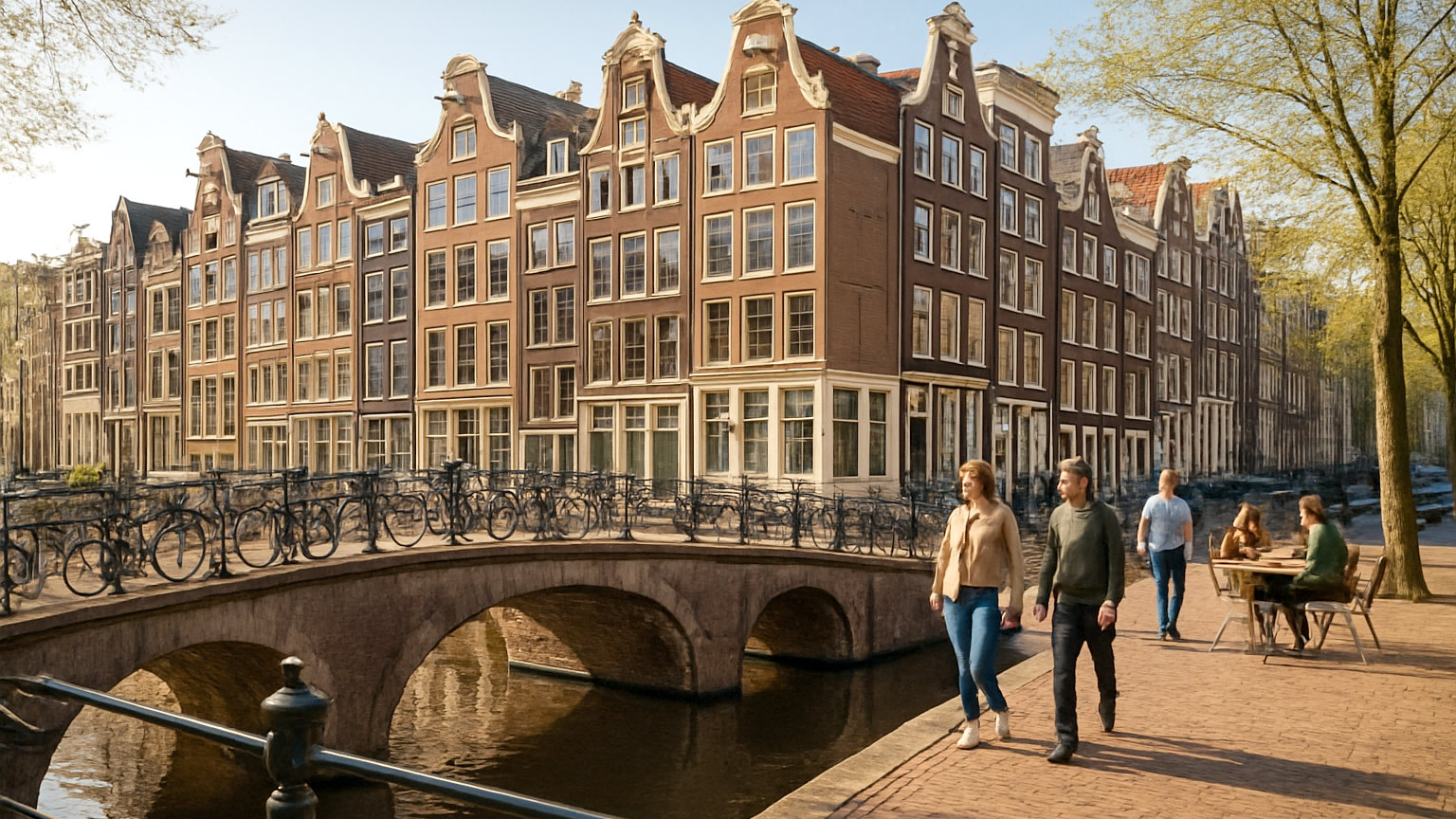
Most European historic centres are small enough to walk, and most visitors buy more transport than they use. The saving comes from working out in five minutes which ticket actually fits the trip rather than defaulting to single fares or to the most heavily marketed pass.
What are the ticket types?
Singles, which are the worst value and useful only if you make two or three journeys in total. Carnets or bundles of ten, which are common in France, Italy and Spain and can be shared between travellers. Day and multi-day passes, which win once you make three or four journeys a day. And city cards bundling transport with attractions, which are a separate calculation.
How do you choose?
Estimate the journeys you will actually make. Most city break visitors make two or three a day rather than six, because they walk between things in the centre. That usually points to a bundle of tickets rather than a pass. If your accommodation is outside the centre, the arithmetic reverses.
What about validation?
The thing that catches people out most. In Italy, Czechia, Poland, Hungary, Germany and several other countries, tickets must be stamped in a machine before or on boarding. Inspections are frequent, unannounced and unsympathetic, and the fine applies regardless of whether you understood the system. A valid unstamped ticket counts as no ticket.
Is contactless accepted?
Increasingly, and it varies by city. Several networks now accept contactless bank cards with automatic daily capping, which removes the decision entirely and is usually the best option where available. Others still require a local ticket or card with a deposit. Check before you land rather than at the barrier.
What about the airport link?
Often priced separately from the city network and excluded from day passes, which surprises people. Some cards include it and some charge a supplement. This is worth checking specifically, since the airport journey is frequently the most expensive single fare of the trip.
When is walking faster?
More often than people assume. In Paris, Rome, Florence, Prague, Amsterdam and Lisbon, journeys of two or three stops on the metro typically take longer than walking once you count the stairs, the platform wait and the exit. Anything under about twenty minutes on foot is usually quicker than the equivalent ride.
Are taxis worth it?
For late nights, luggage and groups of three or four, frequently yes. Use official ranks rather than anyone approaching you, check whether the city uses meters or fixed zone fares, and be aware that ride-hailing apps are restricted or banned in some cities and licensed in others.
What about bikes and scooters?
City bike schemes are cheap and excellent in Copenhagen, Amsterdam, Seville, Valencia and Ljubljana, all of which are flat with separated lanes. They are less suited to Lisbon, Porto or Rome, where hills and traffic make them hard work. Rental scooters are widely available and increasingly regulated, with helmet and pavement rules varying by city.
What about the tourist trams and buses?
Several cities have ordinary scheduled routes that cover the main sights for the price of a normal ticket, which makes the hop-on-hop-off bus poor value by comparison. Tram 22 in Prague, tram 2 in Budapest, trams 1 and 2 around the Vienna Ringstrasse and tram 28 in Lisbon all do this. Ride them early, before they fill.
Is a bike hire scheme worth it?
In flat cities with separated lanes, yes, and the daily rate is usually lower than a transport pass. Registration often requires a card and sometimes a deposit, so set it up before you need it rather than at a docking station.
Which European Cities Are Best for Art and Museums? answers a related question in more depth, and there is more of the same across our Holidays guides.
The short answer
Count the journeys you will genuinely make, which is usually two or three a day, and buy a bundle rather than a pass. Check whether contactless is accepted and whether the airport link is included, validate paper tickets every time, and walk anything under twenty minutes.