Bern is the Swiss capital and carries Swiss prices, which are among the highest in Europe. It is also a small, walkable city where the old town, the river and the views are free, which makes it cheaper to enjoy than its reputation implies.
Why is Switzerland so expensive?
High wages, a strong currency and high domestic costs across the board. It is not tourist pricing: residents pay the same, and the quality of infrastructure and service reflects it.
What costs most?
Eating out and accommodation. A simple restaurant meal costs what a good one does in France or Italy, and a coffee costs several times the southern European price. Transport is expensive by distance and excellent.
What is free in Bern?
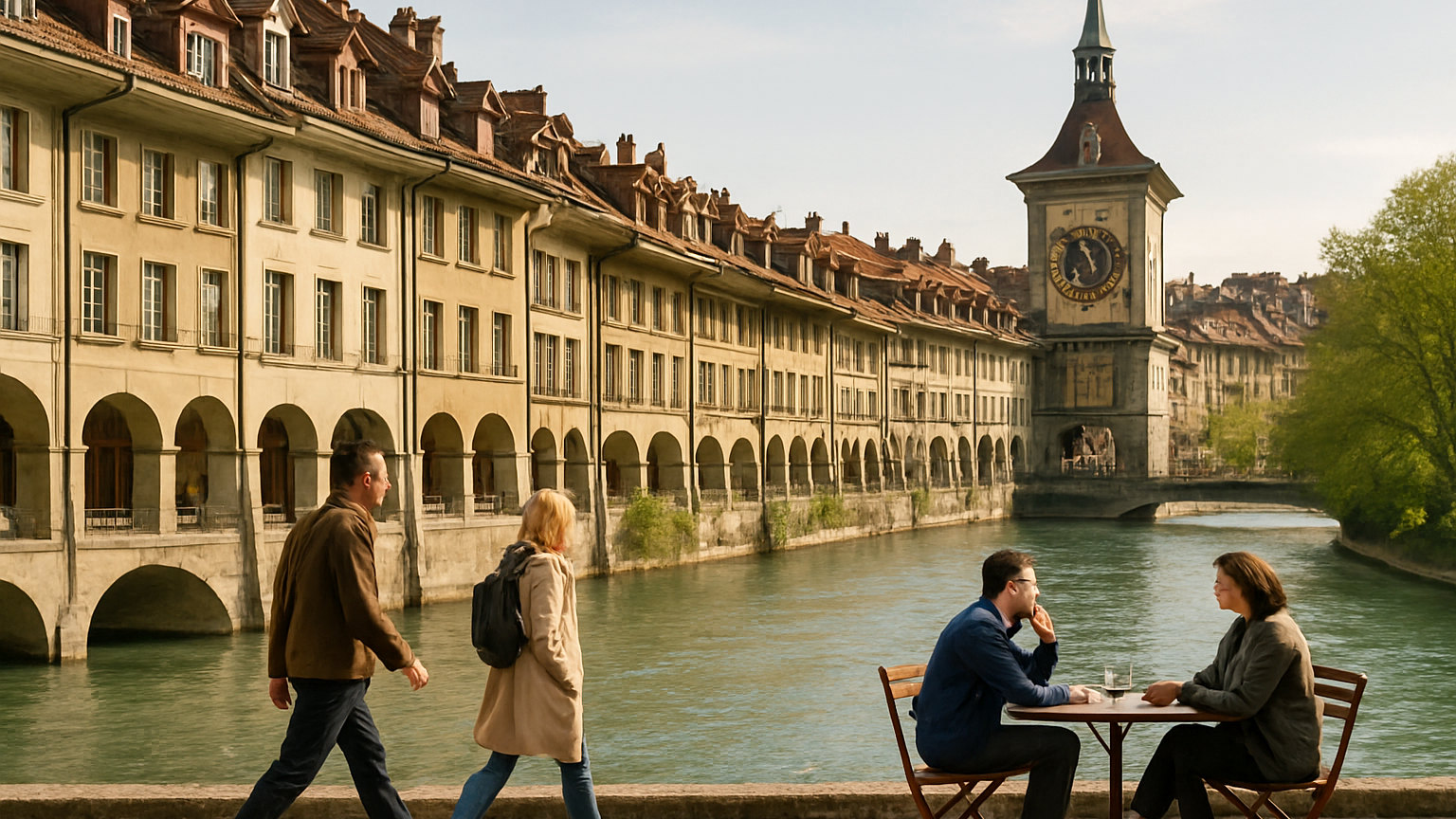
The old town, a world heritage site of arcaded streets with six kilometres of covered walkway. The Zytglogge clock tower performance from outside. The Rose Garden viewpoint. The bear park along the river. The federal parliament building has free guided tours.
What about swimming in the river?
The Aare loops around the old town and residents swim it in summer, floating downstream and getting out at marked exits. It is free, it is the defining local activity and it is genuinely the best thing to do in the city.
The current is strong and the exits must be known in advance, so it needs local guidance rather than improvisation.
How do you eat cheaply?
The weekday lunch menu, which is considerably cheaper than dinner. Supermarket meal deals, which are better than they sound in Switzerland. Bakeries and market stalls. Tap water is excellent and free from the many public fountains.
Is a travel pass worth it?
For a trip covering several Swiss cities and mountain railways, frequently yes, since Swiss transport is expensive individually. For a stay in Bern alone, no, since the city is walkable and many hotels include a guest transport card.
What is the guest card?
Many Bern hotels issue a card giving free local public transport for the stay, which is included in the accommodation. Ask when booking, since it removes the transport cost entirely.
How does it compare with Zurich and Geneva?
Slightly cheaper and considerably smaller. Bern is the political capital rather than the financial one, which means less business pricing and a quieter, more compact city.
How long do you need?
One or two nights. The old town is small and the museums are a half day, which makes Bern a stop on a Swiss trip rather than a destination for a week.
When is it cheapest?
Weekends and the shoulder months. Switzerland does not have a cheap season in the way southern Europe does, and the variation is modest.
Is it worth the money?
As part of a Swiss trip, yes, and the case rests on the old town and the river rather than on any single attraction. Pairing it with the Bernese Oberland an hour away is what justifies the journey.
How do you get there?
By train from Zurich or Geneva airports in around an hour and a half, both straightforward and both expensive by European standards. Swiss rail is punctual and comfortable, and booking advance supersaver fares reduces the cost considerably.
Is the tap water drinkable?
Everywhere, including from the ornate public fountains in the old town, which are fed by spring water and marked where not. Carrying a bottle and refilling saves a surprising amount across a trip.
What should you see in a day?
Walk the arcaded old town end to end, see the Zytglogge on the hour, climb to the Rose Garden for the view over the river bend, and visit the bear park below. That is a full and almost entirely free day.
Is Luxembourg Expensive to Visit? goes into more detail on a closely related question, and the rest of our Holidays section covers the wider subject.
The short answer
Swiss-expensive for eating and sleeping, and free for everything that makes it enjoyable. Take the weekday lunch menu, ask whether your hotel provides a guest transport card, drink from the public fountains, and swim the Aare if you can get local guidance.