A two or three hour European flight with a toddler is entirely survivable, and almost all of the difficulty is decided before you reach the airport. Seating, timing, what is in the bag and how you board matter far more than anything you do in the air.
Which flight should you book?
The earliest one that does not require getting up in the middle of the night. Early departures are more punctual, the airport is calmer and a delay later in the day has less chance of destroying the routine. Avoid flights that land close to bedtime, since an overtired toddler in a transfer coach is worse than an early start.
Flying during a nap window sounds appealing and rarely works, because the excitement of the airport overrides it.
Where should you sit?
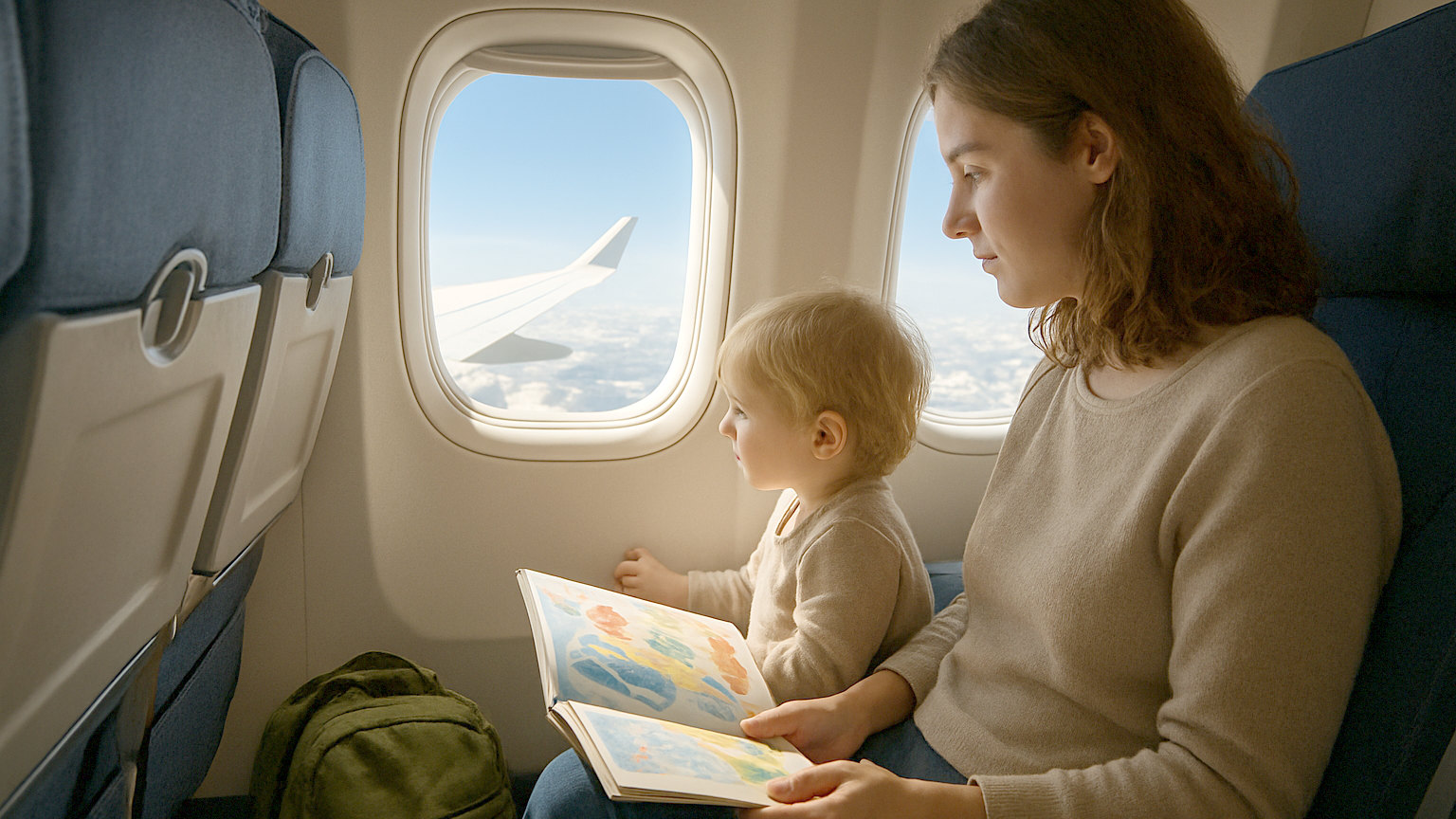
Book seats together and pay for it. Several airlines do not guarantee to seat a young child with an adult otherwise, and the alternative is negotiating at the gate. A window seat contains a toddler better than an aisle, and an aisle gives you easier access to the toilet. With two adults, taking a window and an aisle with the child between you works well on a three-seat row.
Should you board early?
Usually not. Priority boarding means twenty extra minutes strapped into a seat, which is twenty minutes of the sitting still you have to ration. If one adult can board early with the bags while the other stays in the gate area with the child until final call, that is the best of both.
What about ear pain?
Real and the commonest cause of crying on descent. Swallowing equalises the pressure, so a drink, a snack or a dummy during the descent rather than the climb is the thing that helps. Keeping a toddler awake for the final twenty minutes is worth it for this reason alone. If they have a heavy cold or an ear infection, it is worth asking a pharmacist or GP before flying.
What should be in the bag?
More snacks than seems reasonable, in small separate portions so each one takes time. A complete change of clothes for the child and a spare top for you. Wipes. A few small new things rather than familiar toys, introduced one at a time. A tablet with something downloaded and headphones that actually fit, checked before you leave.
What about the pushchair?
Take it to the aircraft door, where it is stowed in the hold and usually returned at the door on arrival, though at some airports it goes to the carousel. A compact folding pushchair is far easier than a large one, and a sling or carrier is the most useful item in an airport for a child under two.
What about security?
Baby food, milk and formula are permitted above the usual liquid limit and may need to be tasted or screened separately, so allow extra time and keep them accessible. Pushchairs go through the scanner. Families are often directed to a dedicated lane, which is worth asking about.
What if it goes badly?
It sometimes does, and the flight ends. Cabin crew on European routes deal with this daily and are generally helpful rather than disapproving, and most of the other passengers are less bothered than you think. Standing at the back with a restless toddler when the seatbelt sign is off is normal and allowed.
What about the return flight?
Usually harder, because the novelty has gone and everyone is tired. The same rules apply with more emphasis: a morning flight, snacks in reserve and something genuinely new held back for the descent. Building a quiet final morning into the holiday rather than a full day out helps more than anything done at the airport.
Which European Destinations Are Easiest With a Baby? goes into more detail on a closely related question, and the rest of our Holidays section covers the wider subject.
The short answer
Book an early flight and seats together, skip priority boarding, give a drink on descent rather than take-off, and pack small new distractions in many small portions. Almost all of it is decided before you leave the house.