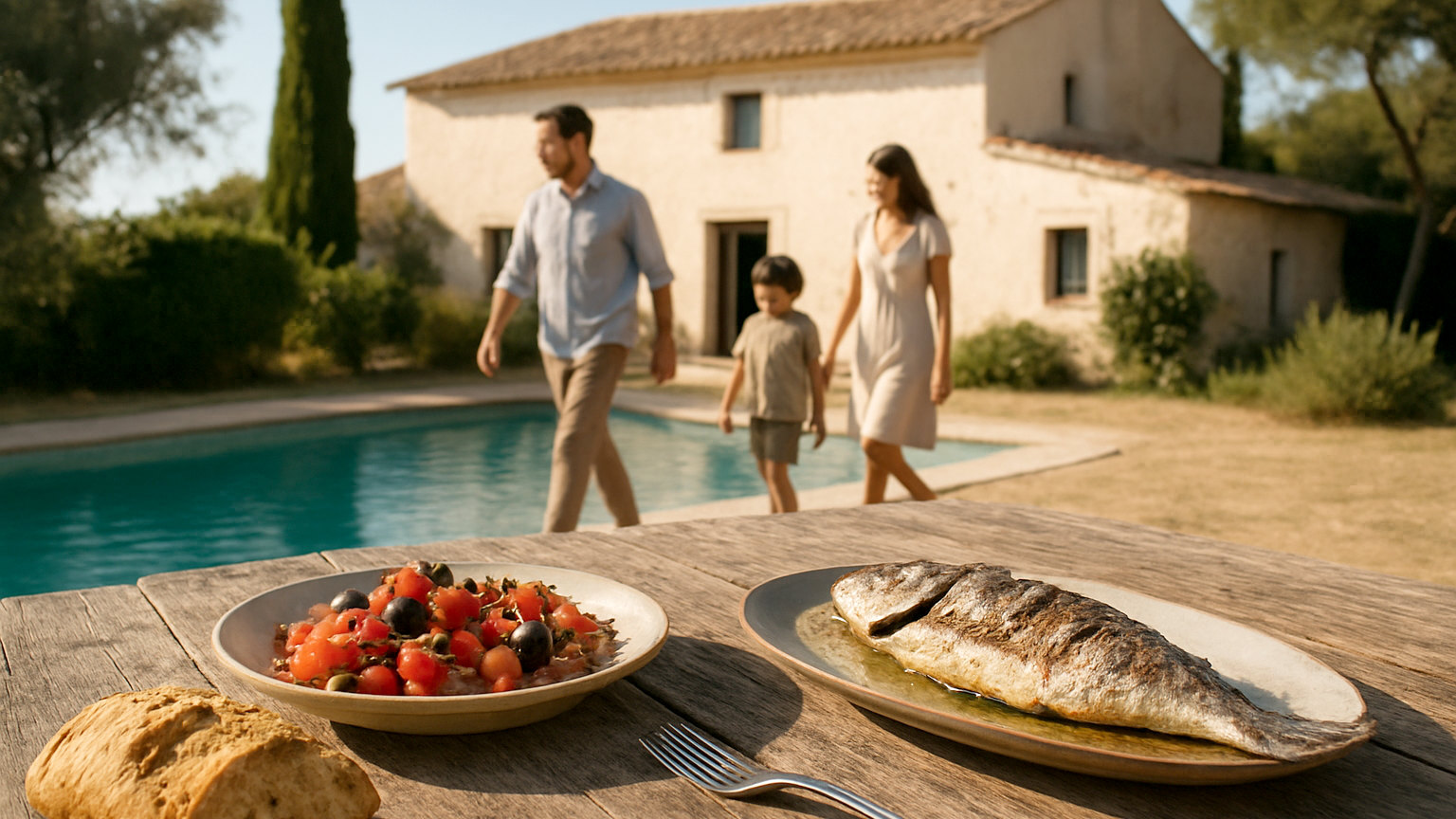
A child who eats reasonably at home can become considerably more difficult abroad, and the reasons are usually structural rather than wilful: dinner is three hours later than usual, the food is unfamiliar, the heat suppresses appetite and everyone is tired. Most of it is solved by changing the timing rather than the food.
Which countries are easiest?
Italy, by a wide margin. Plain pasta with butter or tomato, pizza, bread and simple grilled meat are available everywhere and are genuinely what Italians eat, so nothing about it is a compromise. Restaurants will make a plain portion for a child without being asked twice.
Greece and Spain are next, with chips, bread, grilled chicken, plain rice and omelettes universally available. Portugal similarly. France is harder outside the cities, where menus are more fixed and children menus less common than people expect.
What is the timing problem?
Southern European dinner starts around eight thirty or nine, which is bedtime for a small child. A tired child at nine will not eat, and the conclusion drawn is usually about the food rather than the hour.
The fix is to make lunch the main meal, which is also cheaper because of the set menu, and to have something light and early in the evening. This is how the holiday becomes easier rather than a nightly negotiation.
Does self-catering help?
Substantially, and it is the single most effective change for a genuinely particular eater. Breakfast and one other meal made from familiar ingredients removes the pressure from the meal you do eat out. A kitchen also lets you offer something known alongside something new, which works far better than presenting only the new thing.
What about all inclusive?
Buffets are the most reliable answer of all for fussy eaters, because the child can see the food and choose it. There is almost always pasta, bread, fruit and something plain. The trade-off is that a fortnight of buffets is dull for the adults and keeps you inside the resort.
How should you introduce new food?
Without making it the main event. Ordering something new for the table and letting a child take from it removes the pressure of it being their plate. Markets are useful here, since choosing a peach or a pastry themselves involves no obligation to finish it.
Pushing at every meal generally makes the whole week harder, and holidays are a poor place to fight a long-running battle.
What should you take?
A small supply of a few familiar things for the first day and for travel, rather than a suitcase of British food. Cereal bars, a favourite cereal, and whatever gets eaten at home when everything else fails. Supermarkets abroad carry more familiar brands than people expect.
What about allergies?
A different matter entirely and worth preparing properly for. Allergy cards printed in the local language are widely available and are worth carrying, packaged food across the European Union carries full allergen labelling, and restaurants are obliged to provide allergen information. Carry any prescribed medication in hand luggage with a copy of the prescription.
What about breakfast?
The meal that causes the most friction and the easiest to solve. Continental hotel breakfasts of bread, pastries and cold meat are unfamiliar to many British children, and hotel breakfast is often charged separately at a price well above a cafe. Buying cereal, milk and fruit for the room removes the problem entirely and costs very little.
Does it matter if they eat badly for a week?
Generally not, in a child who is otherwise well, and the anxiety often does more damage to the holiday than the eating does. Fluids matter considerably more than food in the heat.
For the next step, see Which European Cities Work With Children?, or browse the full Holidays section.
The short answer
Move the main meal to lunch, choose Italy, Greece or Spain, and use self-catering or a buffet to take the pressure off. Offer new things from a shared plate rather than on theirs, and treat allergies as a separate and properly prepared issue.