A kids club is either the thing that makes a family holiday work or a line in a brochure that turns out to be a room with some crayons. The difference is entirely knowable in advance, and the questions that reveal it are specific.
What separates a good one from a poor one?
Staff ratios and staff continuity. A good club has a consistent team who learn the children names across a week, a published programme with actual activities, and enough staff that children are supervised rather than contained. A poor one has a rotating cast, a television and a scheduled hour of face painting.
The second marker is whether the club runs in a dedicated space with its own shaded outdoor area and toilets, or borrows a corner of the lobby.
What should you ask before booking?
The age bands and whether they are separated, since a club mixing four-year-olds with eleven-year-olds works for neither. The opening hours, and specifically whether it closes for two hours at lunch, which many do. Whether it runs every day or only on weekdays. Whether there is an extra charge. And whether children can be dropped off or must be accompanied.
What are the age bands usually?
Typically four to seven, eight to eleven and twelve to fifteen, with some hotels starting at three if toilet trained and a small number offering a supervised creche from six months at extra cost. Anything described as being for four to twelve as a single group is a warning sign.
Do you actually need one?
It depends on the age and on what you want from the week. For children between about five and ten it is the single facility that reliably buys adults a few hours, and most children of that age enjoy it. Under four, the ratios and the separation anxiety usually mean it is not worth it. Over twelve, teenagers rarely go.
If your plan is a beach and a pool with the family together all day, a kids club is a facility you will pay for and not use.
What are the alternatives?
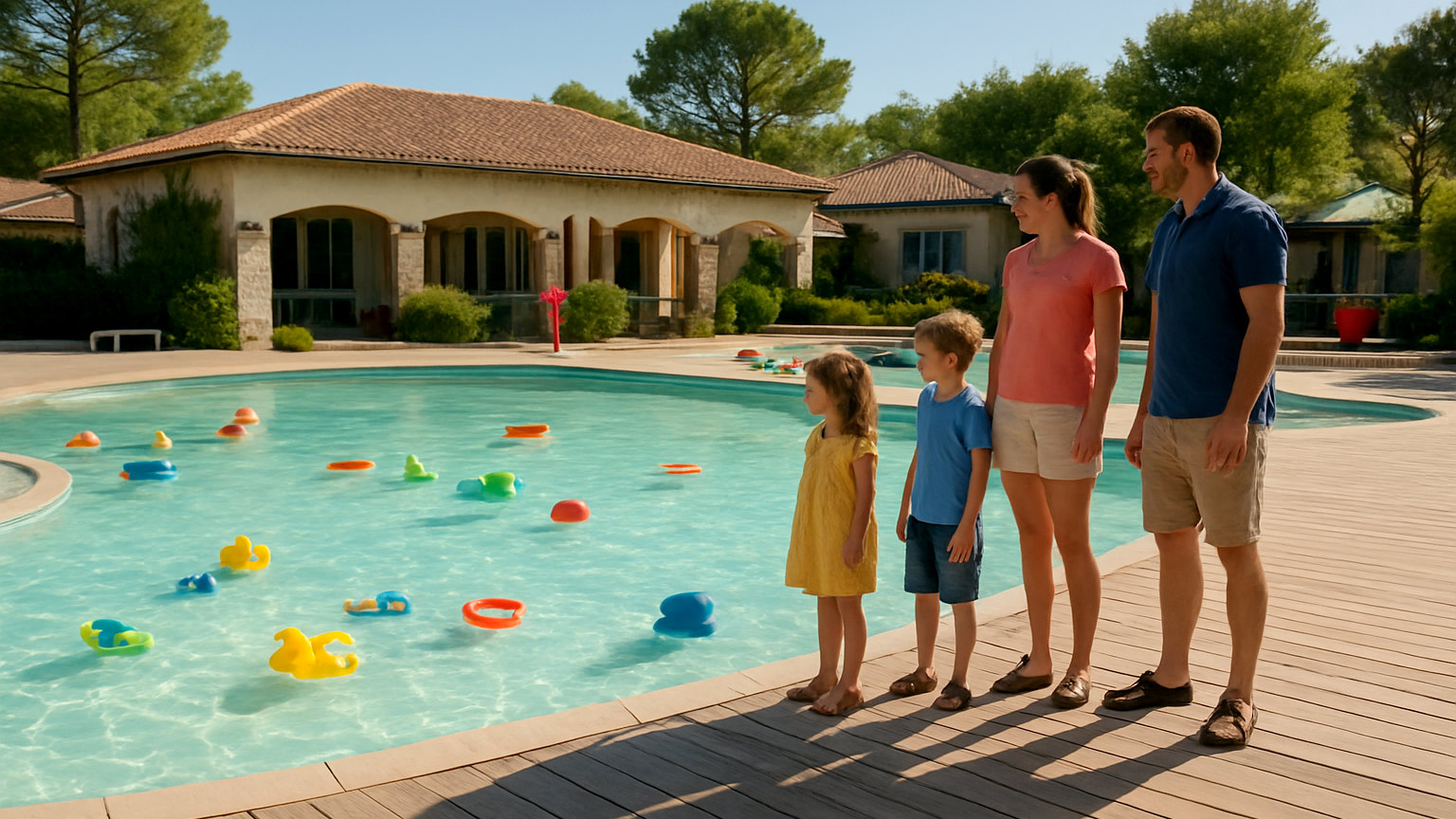
A hotel with a genuinely good pool complex, which occupies children for longer than any organised activity. A villa with a pool and another family. A resort with watersports, which suits from about eight upward. And a destination with enough going on that the entertainment is the place rather than the hotel.
Which countries do them best?
Turkey and the Greek islands have the largest concentration of hotels built around family facilities, and the standard at the upper end is high. Spain and the Canaries are strong, particularly in the larger resort hotels. Italy and Croatia have fewer, and independent hotels in either are unlikely to offer one.
How do you judge it from reviews?
Search the reviews for the word club specifically and read what parents say rather than the overall score. Repeated mentions of staff by name is the strongest positive signal there is. Mentions of the club being closed, understaffed or cancelled on quiet days are the clearest negative.
What about language?
Worth checking. In large resort hotels the club may run in several languages or in the majority language of the guests, which can leave a child excluded. Ask whether sessions are run in English and whether that applies every day or only in peak weeks.
What if your child will not go?
Common, particularly on the first day and with younger children. Good clubs allow a parent to stay for the first session, and most children settle by the second or third. Forcing it rarely works and a club that will not accommodate a gradual start is telling you something about how it is run.
For the next step, see How Do You Handle the Heat With Small Children?, or browse the full Holidays section.
The short answer
Ask about age bands, opening hours, lunch closures and whether it runs daily, and read reviews for staff named individually. It is most valuable between five and ten, and largely wasted under four or over twelve.