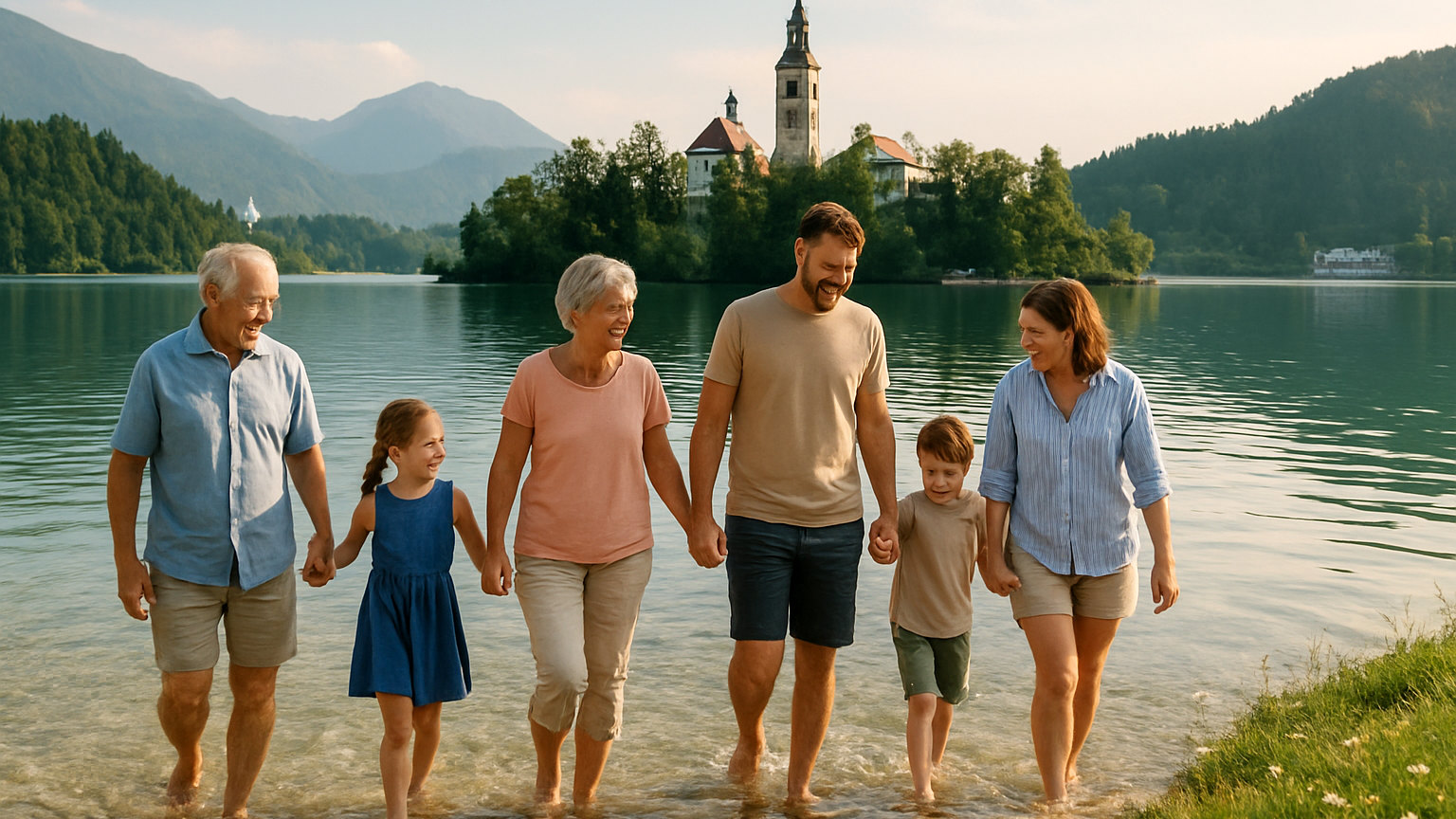
A holiday spanning three generations has to work for people with different energy levels, sleep patterns, budgets and ideas of a good day. The ones that succeed all solve the same problem: giving everyone somewhere to be together and somewhere to be apart.
What is the core problem?
Proximity without confinement. Grandparents usually want to see the grandchildren rather than supervise them all day, parents want some time without the children, and children want a pool and attention. A single hotel room per family fails all three, because the only communal space is public and the only private space is a bedroom.
Why does a villa usually win?
It provides a shared kitchen and terrace where people naturally gather, separate bedrooms with doors, and a pool that occupies children within sight of everyone. It also removes the evening problem, since parents of small children can put them to bed and still be part of the evening. For groups of six or more it is usually cheaper per head than hotel rooms.
What should you check in a villa?
Whether the pool is fenced or gated, which matters enormously with toddlers and is often not mentioned. How many bathrooms there are relative to bedrooms. Whether any bedrooms are on the ground floor, which matters for anyone with mobility limits. The distance to the nearest shop and restaurant, since a villa twenty minutes down a track means every trip is a drive.
When does a hotel work better?
When nobody wants to cook or drive. A resort hotel with interconnecting rooms, several restaurants, a pool complex and a kids club removes all the logistics, which suits groups where the grandparents are older or where nobody wants to be responsible for meals. All inclusive is particularly effective here because it removes the awkwardness of splitting bills.
Which destinations suit it?
Mallorca, the Algarve, Puglia, Tuscany, Crete and the Ionian islands all have a large supply of villas with pools, short transfers and enough nearby to fill a fortnight. The Costa Blanca and the Canaries are the strongest for a hotel-based version, with short transfers and flat, accessible resorts.
How should you structure the days?
With a default of everyone doing their own thing and one shared thing a day, usually dinner. Groups that plan every day together tend to fray by the middle of the week. Agreeing in advance that people can opt out of any given excursion without negotiation removes most of the friction.
How do you handle money?
Decide before travelling rather than at the first restaurant. A common arrangement is a shared kitty for groceries and communal meals, with individual spending separate. Ambiguity about who is paying for what is the most reliable source of tension on a group holiday.
What about mobility and access?
Worth planning around honestly. Hill towns, cobbled old towns and villas with steps are difficult for anyone with limited mobility, and southern European resorts vary widely in step-free access. Flat coastal resorts, ground floor rooms and lifts are worth prioritising over views.
How long should it be?
Seven to ten nights suits most groups. A fortnight with extended family works when the accommodation is large enough for people to disappear and less well when it is not. Some groups solve it by overlapping rather than matching, with grandparents arriving a few days in or leaving a few days early. That also spreads the cost, since the largest villas are priced steeply for the peak fortnight. Booking a year ahead is normal for the best properties in August, which go earlier than most people expect, often before the previous summer has finished.
It is worth reading alongside How Do You Keep Children Occupied on a Long Drive?, which takes a different angle, and the wider Holidays guides.
The short answer
A villa with a fenced pool, enough bathrooms and a shop within walking distance solves most of it, and a resort hotel with interconnecting rooms solves the rest. Plan one shared thing a day, agree the money before you go, and give everyone permission to opt out.