The villa or hotel question decides more about a family holiday than the destination does. Each solves one set of problems and creates another, and the right answer depends mainly on the age of the children and on whether you are willing to drive and cook.
What does a villa give you?
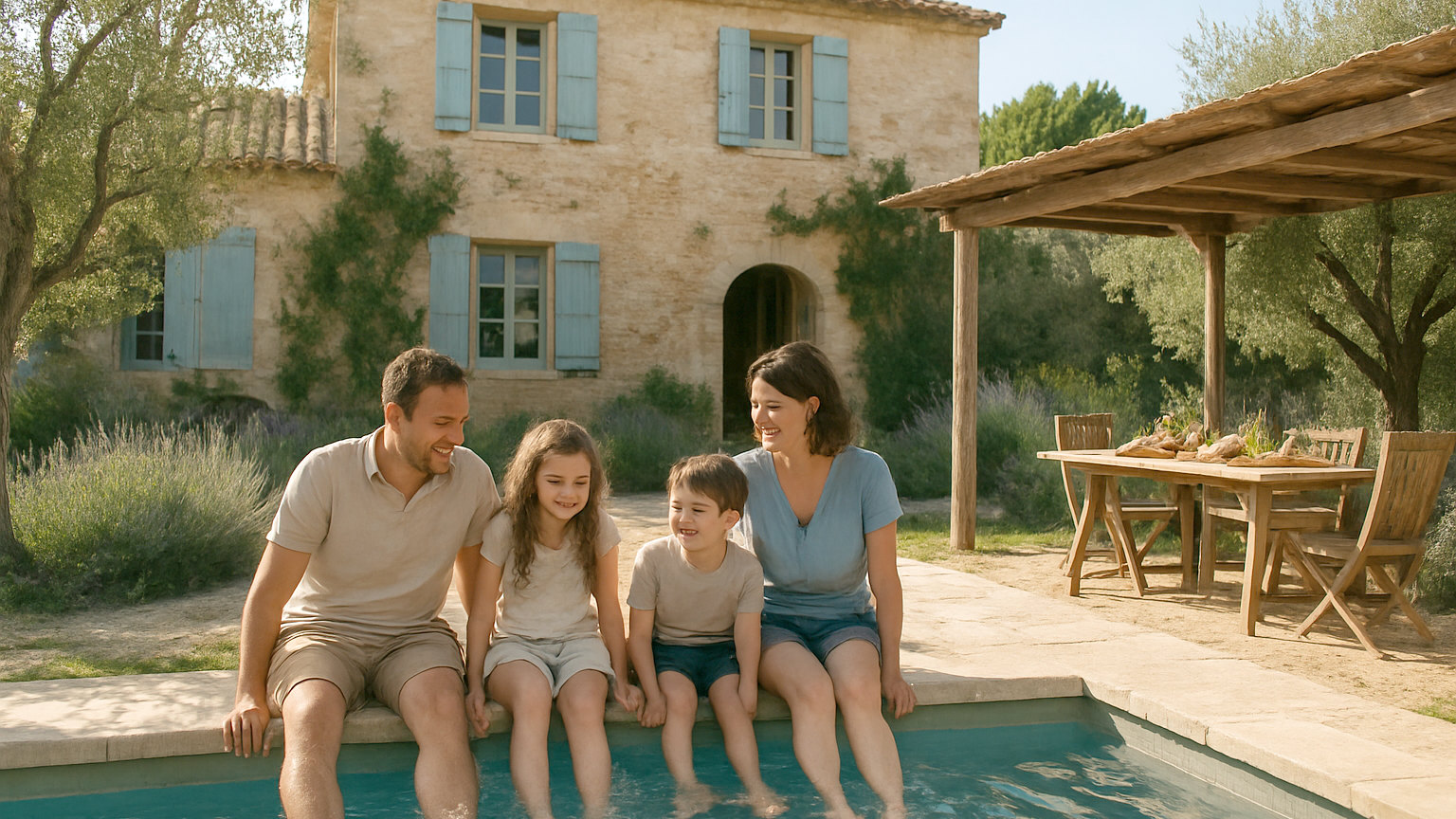
Space, separate bedrooms and an evening. The last is the one that matters most with young children: once they are asleep, adults in a villa have a terrace and a kitchen, while adults in a hotel room have the dark. It also gives a private pool, which occupies children for hours, and a kitchen that solves fussy eating and early dinners.
For four or more people it is usually cheaper per head than the equivalent hotel rooms.
What does it cost you?
A car, almost always, and the cooking and shopping that go with self-catering. Most villas are outside towns, which means every trip for bread, a meal or a beach is a drive. It also means no reception, no daily cleaning and nobody to solve a problem at ten at night.
What does a hotel give you?
The removal of all logistics. Food appears, rooms are cleaned, a pool is maintained, and a resort hotel adds a kids club, entertainment and often a beach. Transfers are arranged. With very young children or a short trip, that reduction in work is worth a great deal.
What does a hotel cost you?
The evening, unless you book a suite or interconnecting rooms. Parents of small children in a single hotel room are effectively confined from seven oclock, which over a fortnight becomes wearing. It also costs flexibility over meal times and what children will actually eat.
What should you check in a villa?
Whether the pool is fenced or gated, which is the most important question with any child under about six and is frequently not mentioned in the listing. Whether there is air conditioning and in which rooms. The real distance to the nearest shop and restaurant. Whether the road in is surfaced. And what the cleaning fee is, which on a short stay can be substantial.
What should you check in a hotel?
Whether the pool has a shallow end, since many do not. Whether the room has a separate sleeping area or a balcony you can sit on with the door closed. What time the restaurant opens for dinner. Whether the kids club runs daily and at what ages. And the noise from any evening entertainment.
Is there a middle option?
Aparthotels and apartment complexes, which give a kitchen and a separate bedroom with a shared pool, reception and some facilities, usually within walking distance of a town. For many families this is the best of both, and it is common across Spain, Portugal and the Canaries.
Which suits which age?
Under three, an apartment or villa for the separate room and the kitchen. Four to ten, a hotel with a kids club and a pool complex works very well. Over eleven, a villa near a town or an apartment in a resort, since teenagers want space and independence rather than organised activity.
What about cost?
For two adults and two children, a villa and a hotel are often closer than expected once meals are counted. The villa is usually cheaper on accommodation and adds a car and groceries; the hotel is dearer per night and removes both. Half board or all inclusive shifts the comparison further towards the hotel, and self-catering shifts it back. The clearest rule is that villas get cheaper per head as the group grows, while hotel rooms do not.
How Do You Manage Fussy Eaters on Holiday? goes into more detail on a closely related question, and the rest of our Holidays section covers the wider subject.
The short answer
Villa for space, evenings and groups, if you will drive and cook. Hotel for convenience and young children, if you can get a separate sleeping area. An aparthotel within walking distance of a town is the compromise that suits most families most of the time.