A hotel provides a room in a place. A resort provides the place itself, designed so that leaving is optional. That single difference explains the scale, the layout, the facilities and the pricing, and it explains why a resort is right for some trips and wrong for others.
What defines a resort?
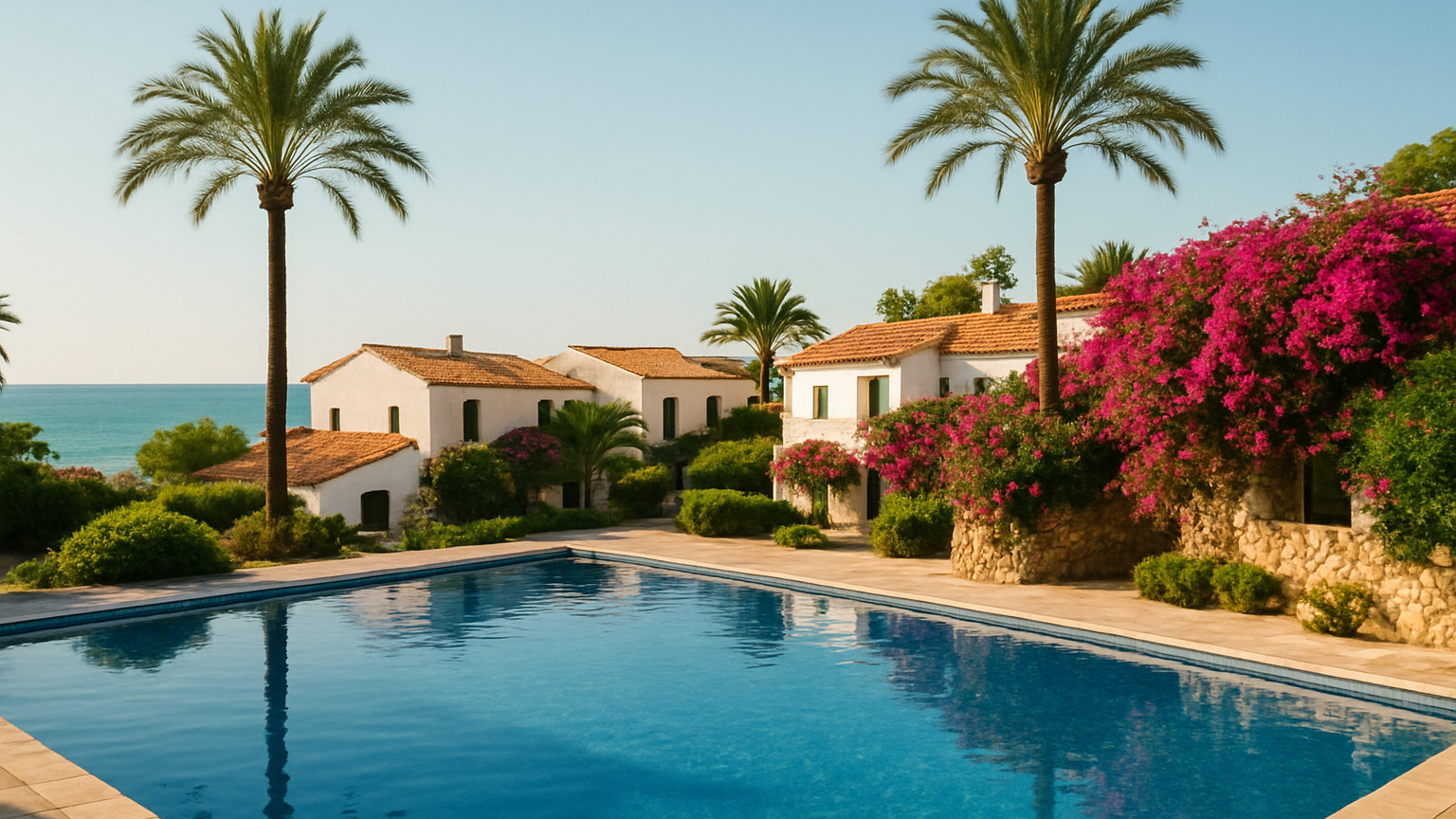
Self-containment. Several restaurants, bars, pools, a beach or a beach club, entertainment, sports, a kids club and shops, all within grounds you do not need to leave. The site is usually large enough to require walking between parts of it.
How big are they?
European resorts commonly run from about two hundred to a thousand rooms, spread across low blocks, bungalows or a single large building. Site size matters as much as room count, since a five-hundred-room property on a compact site walks very differently from the same number spread over a hillside.
Why does that matter?
Because walking distances are the hidden variable in a resort holiday. The route from the room to the pool, the restaurant and the beach is walked several times a day, and with children, equipment or limited mobility a sprawling site produces real work.
Where are they concentrated?
Turkey, Spain, the Canaries, Greece, Cyprus and Bulgaria, all of which developed purpose-built resort coasts. Italy, Croatia and Portugal have fewer, since their tourism grew around existing towns rather than new developments.
Is a resort always all inclusive?
No, though the two go together frequently because the model suits self-contained properties. Many resorts sell half board and bed and breakfast alongside, and the board basis is a separate decision from whether to choose a resort at all.
What does a resort do better?
Removing decisions. Everything is arranged, paid for and within reach, which with young children or on a trip where the point is rest is genuinely valuable. Facilities are also on a scale no town hotel can match.
What does a hotel do better?
Connection to where you are. A hotel in a town puts you in the place, with local restaurants, a market and streets that exist independently of tourism. A resort could be in several countries without the guest noticing, which is the trade being made.
Can you have both?
Frequently, and it is the best answer for many people. Resorts on the edge of a working town give you the facilities and a walk into somewhere real. Alcudia, Protaras, Albufeira and Hersonissos all have properties arranged this way.
Which suits which trip?
A resort for families with young children, for anyone wanting a genuine rest and for a fortnight where the aim is a pool and a beach. A hotel for shorter trips, for exploring, for food and for anyone who would be restless inside a perimeter.
What should you check?
The site size and the walking distances, the number of rooms, whether there is a town within walking distance, and whether the facilities you are paying for are ones you will use. Satellite view answers the first three in two minutes.
Do resorts vary in how closed they feel?
Considerably. A gated property on an empty stretch of coast with one road in is a different experience from one that opens onto a promenade. Satellite view shows immediately whether there is anything outside the perimeter worth walking to.
What about the board basis?
A separate decision. A resort can be booked room only, bed and breakfast, half board or all inclusive, and the right answer depends on whether there is anywhere to eat outside. At an isolated property all inclusive is close to necessary; beside a town it frequently is not.
How Do You Choose Between Resort Room Categories? answers a related question in more depth, and there is more of the same across our Hotels guides.
The short answer
A resort is designed so you never leave, with the scale and facilities to match; a hotel puts you in a place. Check the site size and walking distances on satellite view, and look for a resort beside a working town if you want both.