Europe has more historic buildings operating as hotels than anywhere else, and a substantial number are available at mid-range prices rather than as luxury properties. Two state-founded networks in particular make it possible to sleep in a castle or a monastery for the price of an ordinary hotel.
What are the paradores?
A Spanish network founded in the nineteen twenties to preserve historic buildings by putting them to use. Around a hundred properties occupy castles, monasteries, convents and palaces, alongside some modern buildings in exceptional positions. Prices are mid-range rather than luxury.
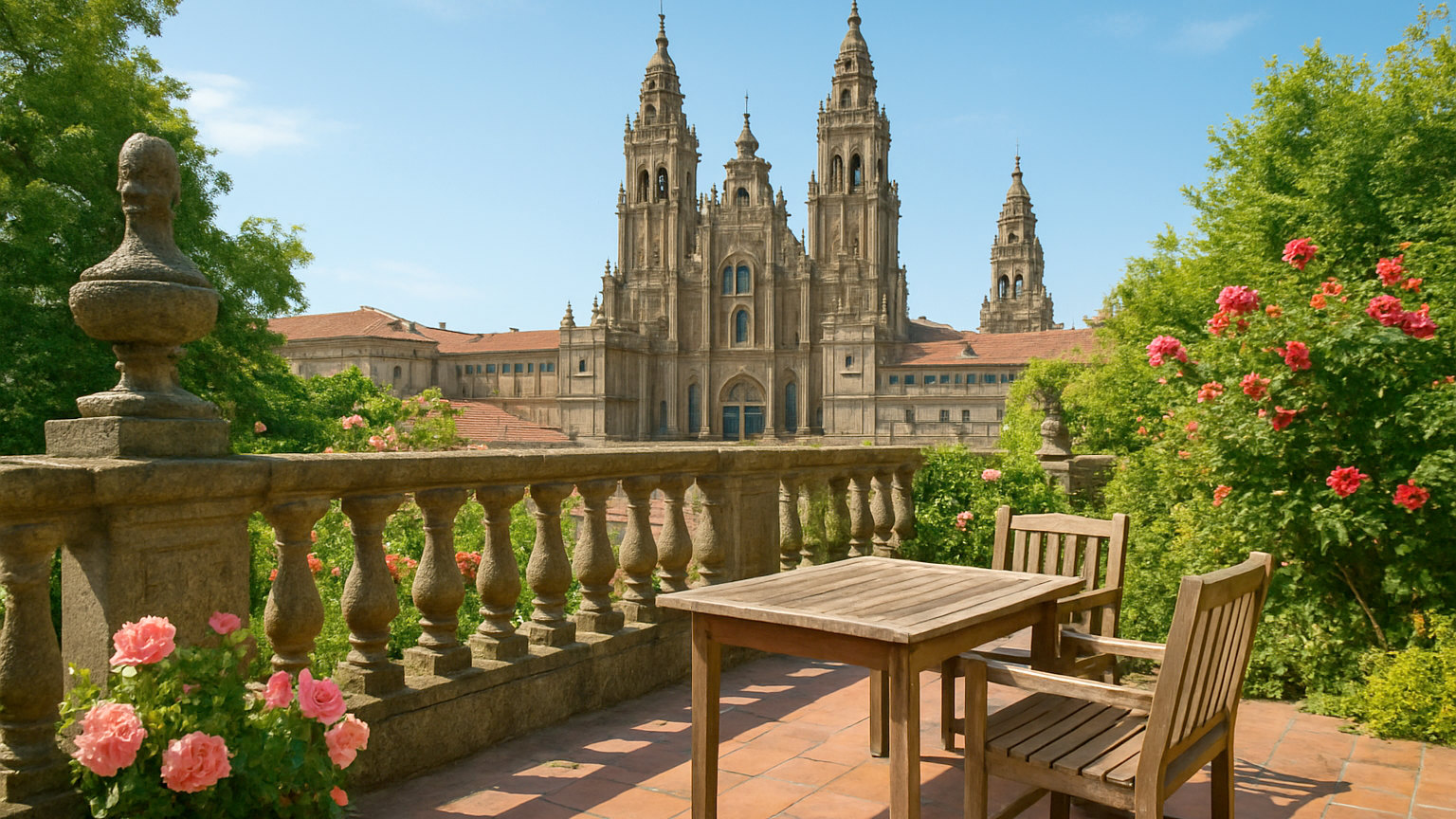
The parador at Santiago de Compostela, founded as a pilgrim hospital in the fifteenth century, claims to be the oldest hotel in the world.
And the pousadas?
The Portuguese equivalent, smaller and similarly founded to occupy castles, convents and manor houses. Obidos, Estremoz and the converted monastery at Amares are among the best known. Standards and pricing are comparable with the paradores.
What are they actually like?
Variable and generally good. The buildings are the point, with cloisters, courtyards, vaulted dining rooms and thick walls. Bedrooms are usually comfortable and sometimes plain, since the constraints of a protected building limit what can be done. Restaurants often serve strong regional cooking.
What other historic stays exist?
Monastery and convent guest accommodation in Italy, France and Spain, frequently very cheap, simple and occasionally subject to a curfew. Cave hotels in Matera and Cappadocia. Converted mills, lighthouses and farmhouses across the continent. Schlosshotels in Austria and Germany.
Where are the castle hotels?
Scotland and Ireland have the largest concentration at the luxury end. Austria, Germany and Czechia have schloss and zamek properties at more moderate prices. The Loire has several chateau hotels. Spain and Portugal cover the same ground through the state networks at lower cost.
What should you expect from an old building?
Uneven floors, stairs, limited or no lift access, variable soundproofing and sometimes weak air conditioning, all of which are consequences of listed status rather than neglect. Mobility access is frequently limited and worth checking specifically.
Are they good value?
The Spanish and Portuguese networks are the best value historic accommodation in Europe by a wide margin. Both run discount schemes for younger and older guests and for multiple-night stays, which are worth checking on their own websites.
Where are they located?
Frequently in small towns rather than cities, since that is where the castles and monasteries are. This makes them excellent for a driving tour and less convenient for a city break. A car is usually necessary.
How do you build a trip around them?
A parador route through Castile, Extremadura or Andalusia, or a pousada route through the Alentejo and the north of Portugal, both of which string together historic towns at comfortable driving distances. Several people plan whole holidays this way.
What should you check?
Whether there is a lift and parking, which matter in old buildings and hill towns. Whether the restaurant is open, since some operate seasonally. And recent reviews, since refurbishment standards vary considerably between properties in the same network.
Which countries have the most?
Spain, Portugal, Italy, Austria, Czechia, Scotland and Ireland, all with large numbers of protected buildings and an established tradition of converting them. France has the chateau hotels of the Loire and Dordogne. Central Europe is the best value of the group.
Are they suitable for families?
Frequently, and worth checking. Historic properties often have larger irregular rooms that suit families, alongside stairs, no lift and grounds that need supervising. Paradores and pousadas generally welcome children and have family rooms.
How do you book them?
Directly through the parador and pousada websites, which carry the discount schemes and frequently the best rates, since both networks sell their own inventory. Smaller monastery and convent stays often require an email or a phone call rather than an online booking.
Where Is the Best Place to Stay in Vienna? answers a related question in more depth, and there is more of the same across our Hotels guides.
The short answer
Spanish paradores and Portuguese pousadas offer castles, monasteries and palaces at mid-range prices and are the best value historic stays in Europe. Expect stairs, uneven floors and limited lifts, take a car, and consider building a driving route between several of them.