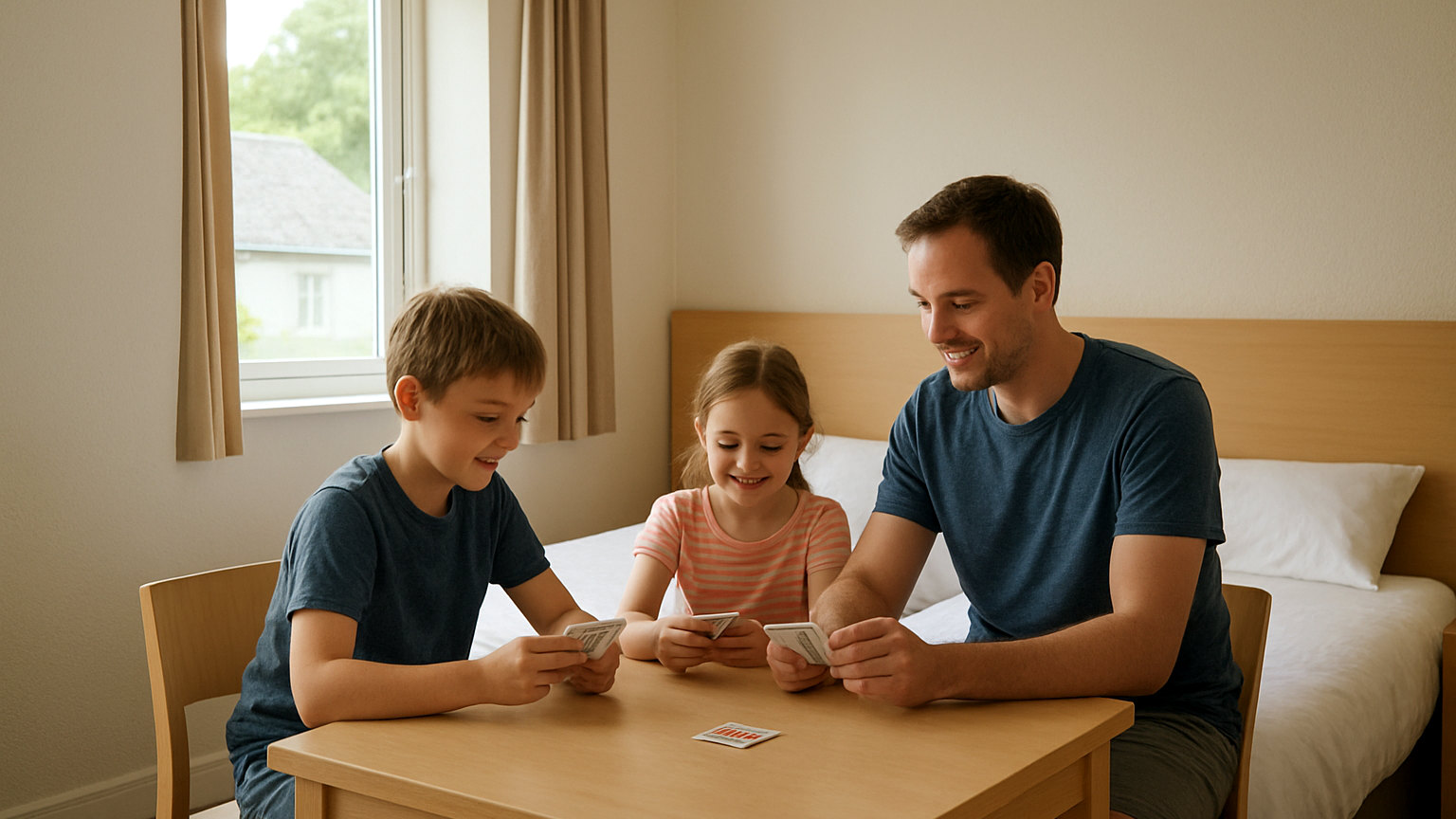
Budget hotels are built around two adults in a small room, which is the core problem for families. A good number of chains have no family rooms at all, and discovering that after booking two rooms is an expensive way to learn it.
What should you check first?
Maximum occupancy for the room type, stated in the listing. Many budget rooms are strictly two people, and adding a child is not possible rather than merely chargeable. This is the single check that prevents most family booking problems.
Which chains do family rooms well?
Several British and German budget brands include rooms sleeping four with a sofa bed, often allowing two children at no extra charge, which makes them unusually good value. French and Italian budget chains vary more, and some have no family option at all.
Checking by brand is unreliable, since it differs by property. Check the specific hotel.
Are two rooms better?
Sometimes cheaper than one family room and rarely better, since young children cannot be left alone in a separate room. Interconnecting rooms solve this and are limited in number, must be requested specifically, and are frequently not guaranteed. Confirm in writing.
What about aparthotels?
Usually the better answer. A studio or one-bedroom unit gives a separate sleeping area, a kitchen for fussy eaters and early dinners, and a price per unit rather than per person. From three nights it beats a hotel room on both space and total cost.
Are cots provided?
Commonly, usually free and always limited in number. Book it at the time of the room rather than assuming, and confirm it in writing. Some properties charge, and some have none at all.
What about the layout?
The thing that decides whether a family stay works. A room where the only place to sit is the bed means the adults go to bed when the children do. Any separate space, even a small sofa area or a balcony, changes the evening entirely.
Does breakfast make sense?
More often than for adults travelling alone, since the convenience of everyone eating at their own pace in one place is worth something. Many hotels also offer free breakfast for children under a set age, which improves the arithmetic considerably.
What about noise, both ways?
Worth requesting a room away from other guests where possible, both for your sleep and out of consideration. A high floor at the end of a corridor is the usual request. Families are normal in budget hotels and nobody minds, within reason.
What should you confirm in writing?
The number of people the room sleeps, any cot or extra bed, interconnecting rooms if requested, and whether children eat free at breakfast. Verbal assurances at booking are worth very little at check-in on a busy evening.
Is a lift necessary?
With a pushchair, effectively yes, and many older European buildings have none. Check rather than assume, particularly in Italy, Portugal and Spain where protected buildings frequently cannot install one.
Are there family-friendly extras?
Worth asking about rather than assuming. Some budget hotels keep a small stock of bed guards, bottle warmers, high chairs and children cutlery, none of which is advertised. A short email before arrival frequently produces more than the website suggests.
What about triple rooms?
Common in southern and eastern European guesthouses and rare in western chains. Where they exist they are usually the best value option for a family of three, since the third bed costs considerably less than a second room.
What age counts as a child?
Varies by property and is worth checking, since some set the cut-off at twelve and others at sixteen or eighteen. A teenager may be charged as an adult, which changes both the room options and the price, and occupancy limits count them as a full occupant regardless.
For the next step, see How Far Out Should You Stay to Save Money?, or browse the full Hotels section.
The short answer
Check the maximum occupancy first, since many budget rooms are strictly two people. Aparthotels usually beat hotel rooms for families from three nights, cots must be booked rather than assumed, and everything should be confirmed in writing.