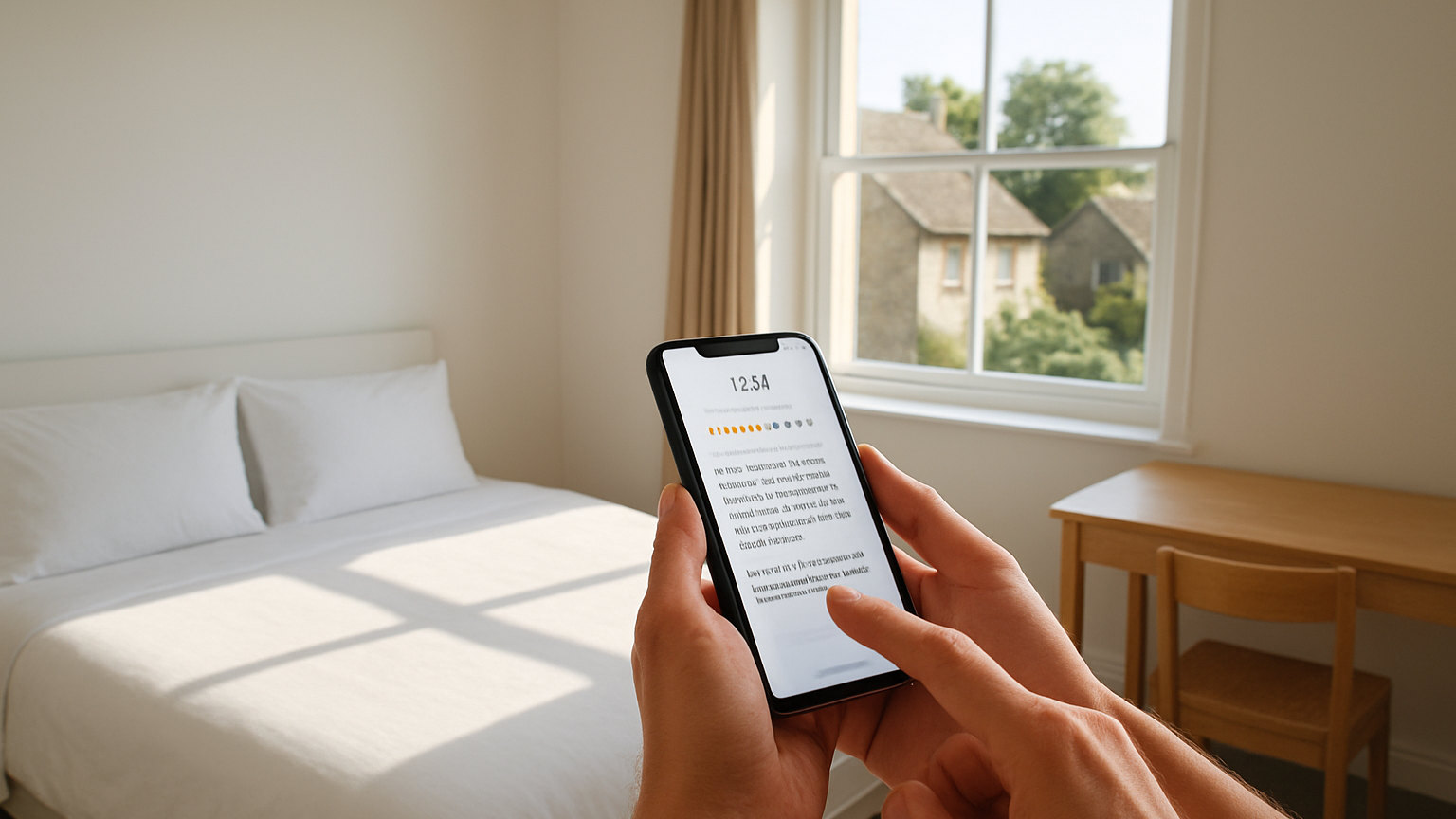
Review pages contain a great deal of information and most people read only the headline number, which is the least useful thing on the page. The sub-scores and the recent text tell you almost everything worth knowing, and it takes about three minutes.
Why is the overall score weak?
Because it is compressed. On platforms where most properties score above eight, the difference between an eight point two and an eight point six is small and heavily influenced by the mix of guests. It cannot distinguish a clean hotel in a bad location from a grubby one in a good one.
Which sub-scores matter?
Cleanliness above all, which correlates most strongly with satisfaction at the budget end. Then location, which is factual rather than subjective. Value is useful. Staff and facilities matter less, since they vary with expectation.
A property with a high overall score and a low cleanliness score is coasting on location.
How much does recency matter?
Enormously, since ownership, management and refurbishment all change frequently at the budget end. Sort by most recent rather than by relevance, and weight the last six months heavily. A review from three years ago describes a different hotel.
What should you search for?
Most platforms allow searching within reviews. The words worth trying are noise, clean, lift, breakfast, refurbishment, building, smell and air conditioning. Each of those produces the specific complaints that generic reading misses.
How do you judge a single bad review?
By whether anyone else says the same thing. One furious account of a rude receptionist is noise; four people mentioning thin walls across three months is a fact. Repetition is the signal and intensity is not.
Which complaints should you discount?
Those about things that will not affect you: a complaint about the pool from someone travelling in January, about a specific dish, or about a price the reviewer chose to pay. Also reviews that describe a different property, which usually means a name change.
What about the distribution?
More informative than the average. A property with many nines and a scattering of threes is inconsistent, which usually means the rooms differ a great deal and room allocation is a lottery. Consistent sevens indicate a property that is reliably adequate.
Are fake reviews a problem?
Less so on platforms that require a verified stay, which is most of the large booking sites, and more so on open review platforms. Warning signs are a burst of very positive short reviews in a short period, generic language, and a profile of reviewers with no other activity.
What about the photographs?
Guest photographs are the most useful part of the page. Hotel photography uses wide lenses, flattering light and careful angles; guest photographs show the actual room size, the actual view and the state of the bathroom. Look at those before the listing images.
Should you cross-check platforms?
Yes, since each attracts a different guest profile and produces a different picture. Two platforms agreeing is a stronger signal than one scoring highly.
Does the reviewer profile matter?
Yes, and platforms usually show it. A business traveller rating a hotel on wifi and a family rating it on breakfast are answering different questions. Reading reviews from guests travelling as you are gives a far better prediction than the aggregate.
What about management responses?
Informative in both directions. A hotel that answers complaints specifically and offers to put things right is usually well run. Defensive or template responses, or a hotel that argues with every reviewer, tell you how a problem during your stay would be handled.
How many should you read?
Twenty recent ones is enough for most decisions, and reading a hundred rarely changes the answer. Look for the three or four points that recur, decide whether they would affect you, and move on. Over-researching a budget room is a poor use of the time it saves.
If you are planning further, What Should You Check Before Booking a Budget Hotel? covers the next part of the decision, and there is more in our Hotels guides.
The short answer
Ignore the overall score, weight cleanliness heavily, sort by most recent and read the last six months. Search the reviews for noise, lift, refurbishment and building, look at guest photographs rather than hotel ones, and treat repetition as the signal.