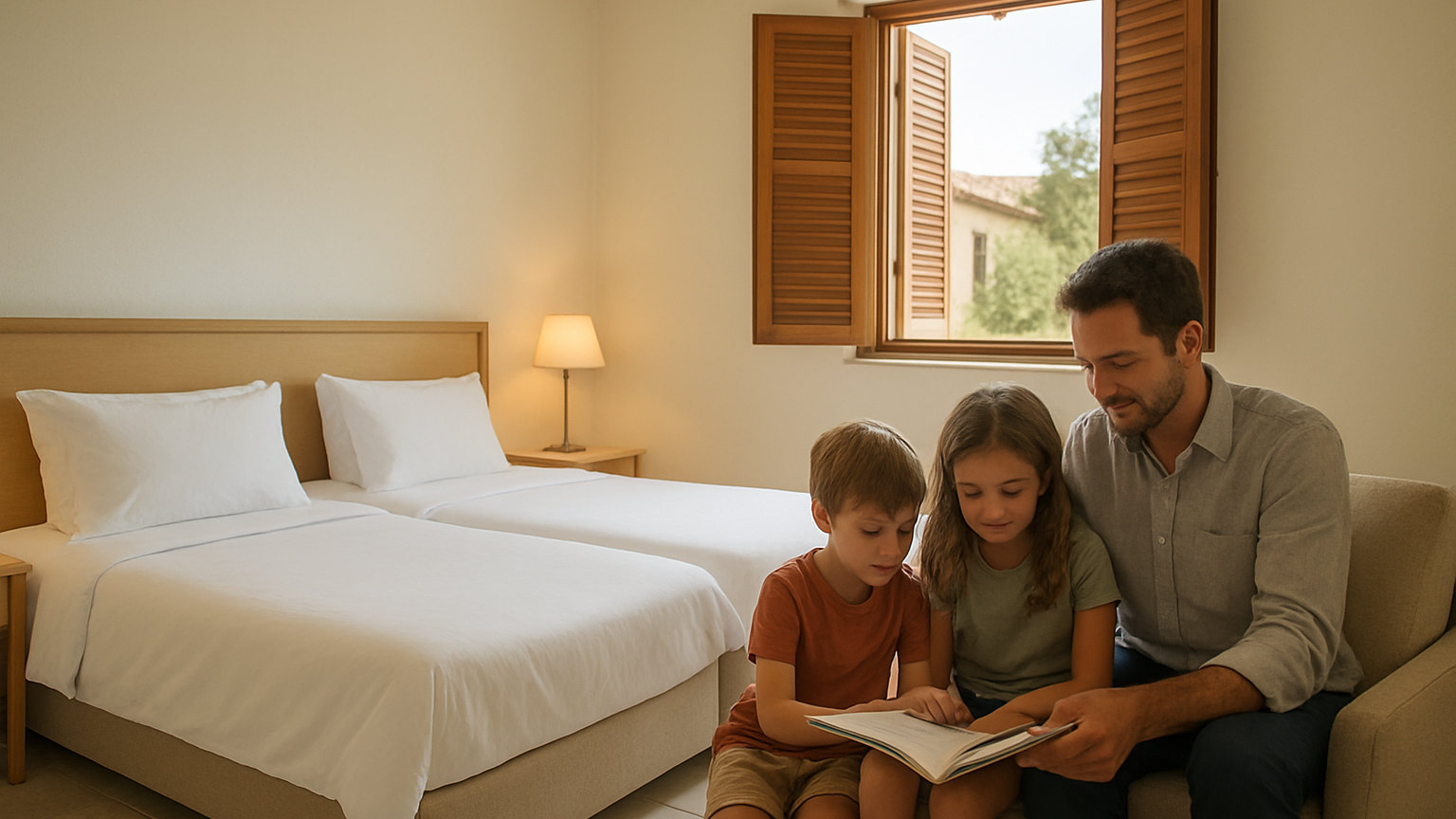
The single greatest constraint of a family hotel holiday is that everyone sleeps in the same room. Without planning, the adults sit in the dark from seven in the evening for a fortnight. Several practical measures change that considerably.
What is the best solution?
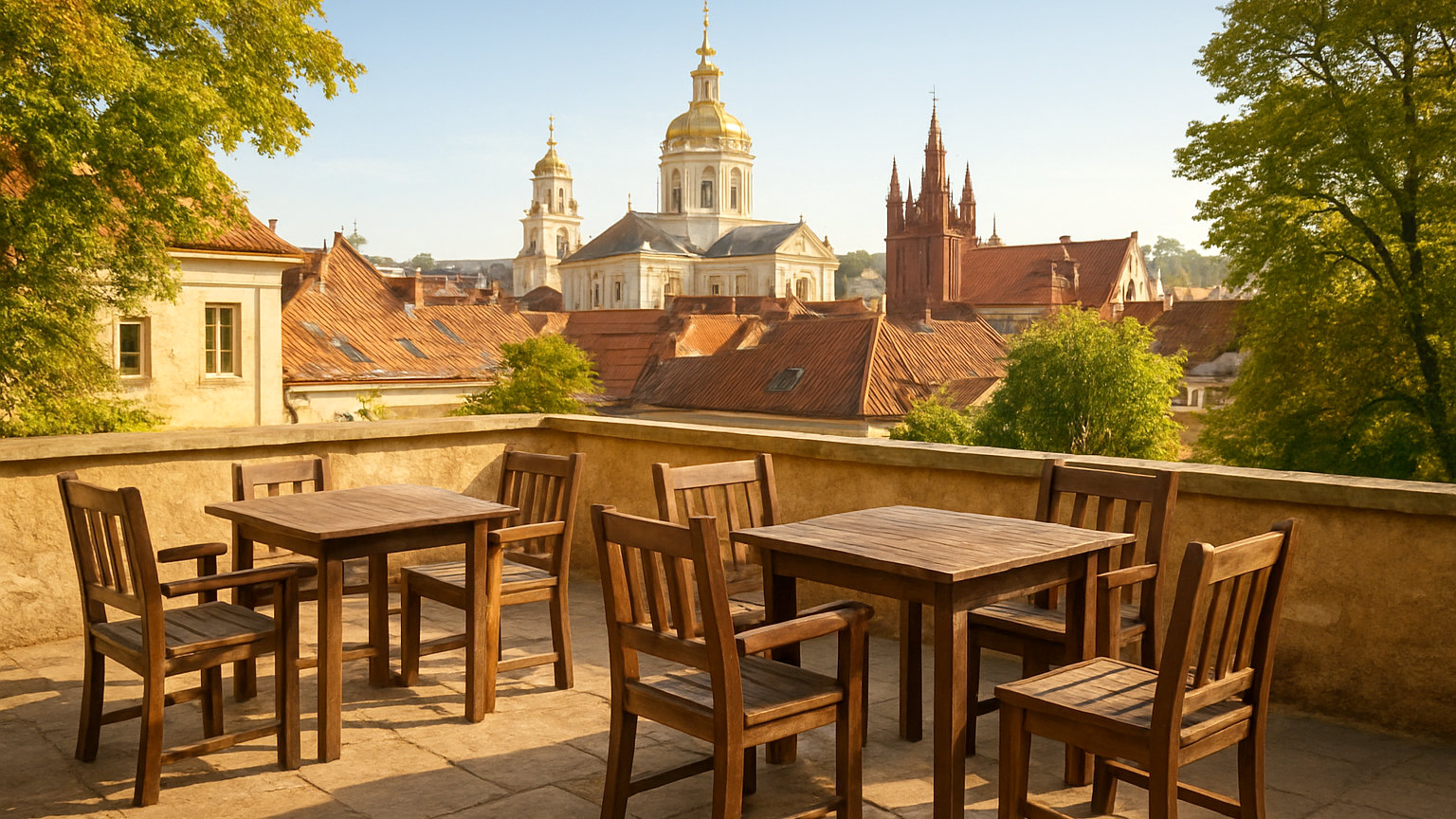
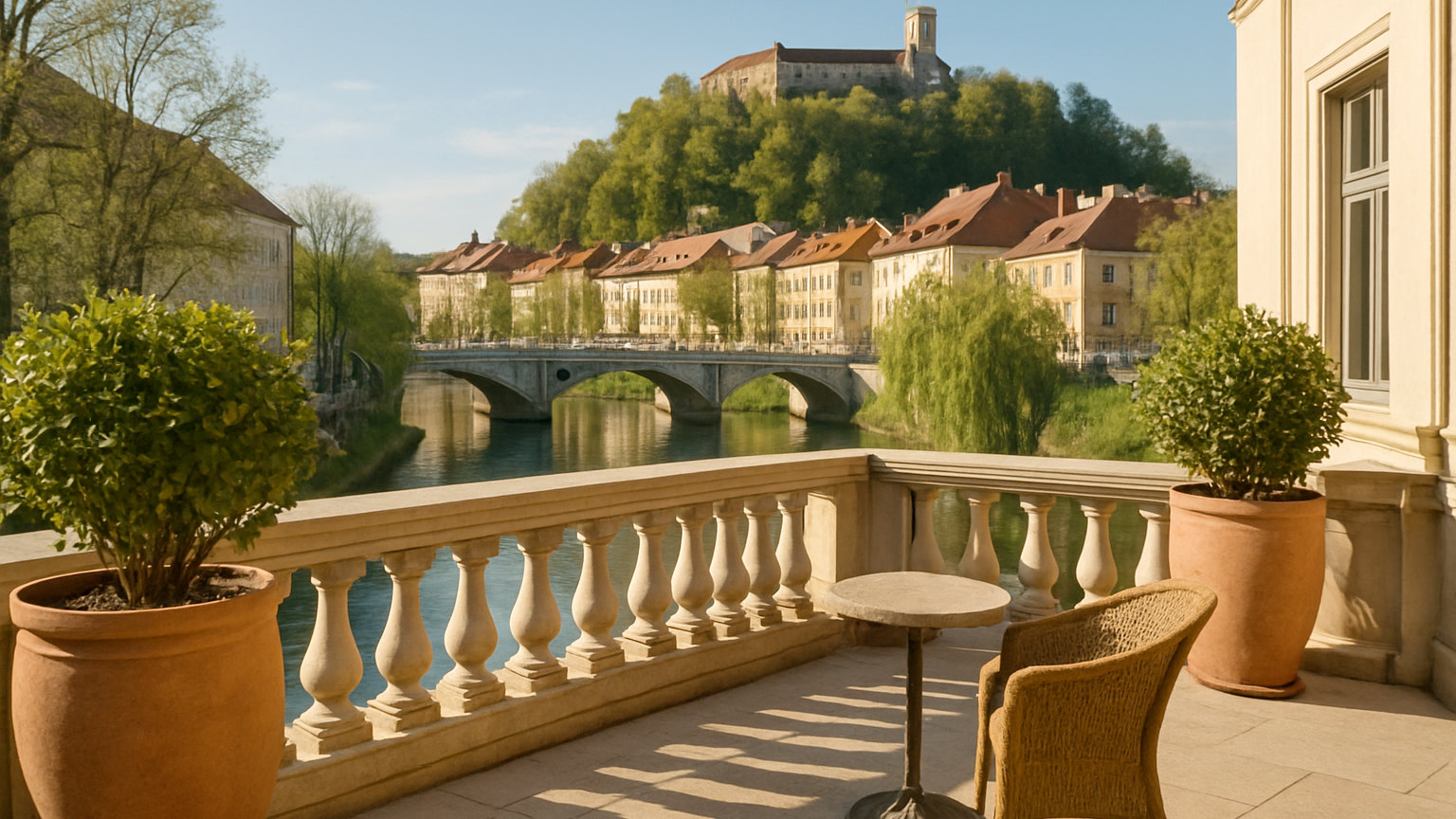
A balcony or terrace, which is why it is the most valuable upgrade a family can buy. Once children are asleep, a balcony with a chair and a light turns the evening back into an evening. Request one and, if there is a supplement, it is usually worth paying.
What about the light?
Summer evenings in southern Europe stay light until nine or later, which is the other half of the problem. Hotel curtains are frequently inadequate. A portable blackout blind, or a few bin bags and masking tape, is a standard family travel item for good reason.
An eye mask works for older children who will tolerate one.
Does white noise help?
Considerably, and in both directions. It masks corridor noise, other guests and street sound, and it allows adults to move around and talk quietly without waking anyone. A phone app or a small travel device both work, and the familiar sound also helps in an unfamiliar room.
How do you keep the routine?
By keeping the sequence rather than the clock. The same order of bath, story and bed in a different room at a different hour works better than trying to hold British bedtimes in a country where the sun sets at nine. Most children adjust within two or three days.
Should you shift bedtime later?
Usually, and it is the simplest adaptation. A later bedtime with a later start and an afternoon rest matches the local rhythm, suits the heat and means children are awake for dinner. Fighting the local timetable is harder than joining it.
What about the afternoon nap?
Worth protecting even for children who have dropped it at home, since the heat and the activity make it necessary. An hour in the room between two and four also gives the adults a break and is the standard pattern in hot countries.
Which room should you request?
Away from the lift, the bar and the entertainment area, on a high floor if possible. Ground floor is easier with a pushchair and noisier. A room at the end of a corridor has fewer people passing, which matters at seven in the evening.
What should you pack?
A blackout solution, a familiar sleeping bag or sheet, a night light, and whatever the child associates with sleep at home. None of it takes space and together it solves most of the unfamiliar room problem.
What if there is no balcony?
A bathroom with a door becomes the reading room, which is not glamorous and works. Otherwise a room with any alcove or seating area, or booking a suite or apartment instead, which is the real answer for a fortnight.
Does it get easier?
From about five or six, when children go to bed later and sleep more soundly, and it largely disappears by nine or ten when they stay up for dinner. The single room problem is a phase rather than a permanent condition.
What about jet lag and time changes?
Within Europe the shift is one or two hours at most, which most children absorb in a day. The larger adjustment is the local rhythm rather than the clock, with later dinners, later bedtimes and an afternoon rest, and it is easier to adopt than to resist.
Does it work in an apartment?
Far better, which is the honest answer. A separate bedroom removes the problem rather than managing it, and for a family with a baby or toddler staying a fortnight that is worth more than any hotel facility.
For the next step, see Which Hotels Suit Babies and Toddlers?, or browse the full Hotels section.
The short answer
Book a room with a balcony, take a blackout solution and use white noise. Keep the bedtime sequence rather than the clock, shift bedtime later to match the local rhythm, protect the afternoon nap, and request a room away from the lift and the entertainment.